As a supplier of aluminum hydroxide, I am often asked about the potential applications of our product. One question that comes up quite frequently is whether aluminum hydroxide can be used in the production of sealants. In this blog post, I will explore this topic in detail, discussing the properties of aluminum hydroxide, the requirements of sealant production, and the benefits and challenges of using aluminum hydroxide in this application. Aluminum Hydroxide
Properties of Aluminum Hydroxide
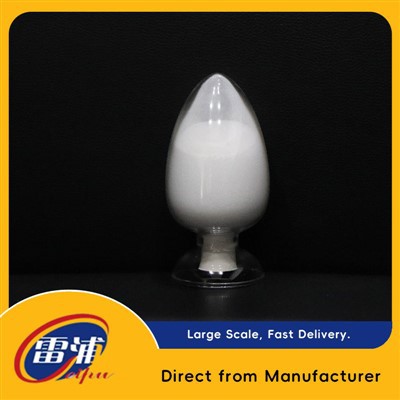
Aluminum hydroxide, with the chemical formula Al(OH)₃, is a white, odorless powder that is commonly used in a variety of industries. It has several key properties that make it an attractive option for many applications:
- Flame Retardancy: One of the most well – known properties of aluminum hydroxide is its ability to act as a flame retardant. When heated, aluminum hydroxide decomposes endothermically, absorbing heat and releasing water vapor. This process can help to slow down the spread of flames and reduce the heat release rate in a fire situation.
- Smoke Suppression: In addition to its flame – retardant properties, aluminum hydroxide can also suppress the production of smoke during combustion. This is crucial in applications where visibility and air quality are important, such as in buildings and transportation.
- Low Toxicity: Aluminum hydroxide is considered to be a relatively non – toxic substance. It has a low level of reactivity and is not known to cause significant harm to human health when used in normal industrial applications. This makes it a safer alternative to some other flame retardants and additives.
- Chemical Stability: Aluminum hydroxide is chemically stable under normal conditions. It does not react easily with other substances, which means it can be used in a wide range of formulations without causing unwanted chemical reactions.
Requirements of Sealant Production
Sealants are materials used to prevent the passage of fluids, gases, or solids through joints, gaps, or openings. They need to meet several important requirements:
- Adhesion: Sealants must be able to adhere strongly to the surfaces they are applied to. This ensures a tight and long – lasting seal.
- Flexibility: Many sealant applications require the material to be flexible. This allows the sealant to accommodate movement and expansion in the substrate without cracking or losing its sealing ability.
- Weather Resistance: Sealants are often exposed to various environmental conditions, including sunlight, rain, and temperature changes. They need to be resistant to these factors to maintain their performance over time.
- Chemical Resistance: Depending on the application, sealants may come into contact with different chemicals. They should have good chemical resistance to prevent degradation.
- Flame Retardancy and Smoke Suppression: In some applications, such as in construction and automotive industries, sealants need to have flame – retardant and smoke – suppression properties to meet safety standards.
Benefits of Using Aluminum Hydroxide in Sealant Production
1. Flame Retardancy and Smoke Suppression
As mentioned earlier, the flame – retardant and smoke – suppression properties of aluminum hydroxide are highly beneficial in sealant production. Sealants are often used in areas where fire safety is a concern, such as in buildings and transportation vehicles. By incorporating aluminum hydroxide into the sealant formulation, manufacturers can ensure that the sealant meets the required fire safety standards.
2. Improved Adhesion
Aluminum hydroxide can improve the adhesion of sealants to various substrates. It can act as a filler and help to create a more uniform surface for the sealant to bond to. This results in a stronger and more reliable seal.
3. Cost – Effectiveness
Compared to some other flame retardants and additives, aluminum hydroxide is relatively inexpensive. This makes it an attractive option for sealant manufacturers looking to reduce production costs without sacrificing quality.
4. Environmental Friendliness
The low toxicity of aluminum hydroxide makes it an environmentally friendly choice. In an era where environmental concerns are becoming increasingly important, using aluminum hydroxide in sealant production can help manufacturers meet environmental regulations and appeal to eco – conscious customers.
Challenges of Using Aluminum Hydroxide in Sealant Production
1. Dispersion
One of the main challenges of using aluminum hydroxide in sealant production is achieving a good dispersion of the powder in the sealant matrix. If the powder is not properly dispersed, it can lead to uneven properties in the final product, such as reduced flame – retardant efficiency and poor mechanical performance.
2. Particle Size and Shape
The particle size and shape of aluminum hydroxide can also affect its performance in sealants. Smaller particle sizes generally provide better dispersion and improved mechanical properties, but they can also be more difficult to handle. The shape of the particles can also influence the viscosity and thixotropy of the sealant.
3. Moisture Absorption
Aluminum hydroxide has a tendency to absorb moisture from the environment. This can cause problems in sealant production, as moisture can affect the curing process of the sealant and reduce its long – term performance. Manufacturers need to take appropriate measures to prevent moisture absorption during storage and processing.
Overcoming the Challenges
To overcome the challenges associated with using aluminum hydroxide in sealant production, several strategies can be employed:
- Surface Treatment: Surface – treating the aluminum hydroxide particles can improve their dispersion in the sealant matrix. This can be done using various coupling agents or surfactants.
- Particle Size Control: By carefully controlling the particle size and shape of the aluminum hydroxide, manufacturers can ensure that it has the desired performance in the sealant. This can be achieved through milling and classification processes.
- Moisture – Proof Packaging and Storage: Using moisture – proof packaging and storing the aluminum hydroxide in a dry environment can prevent moisture absorption. Additionally, adding desiccants to the storage containers can help to keep the powder dry.
Conclusion

In conclusion, aluminum hydroxide can be a valuable additive in the production of sealants. Its flame – retardant, smoke – suppression, adhesion – improvement, cost – effectiveness, and environmental – friendliness make it an attractive option for sealant manufacturers. However, there are also some challenges associated with its use, such as dispersion, particle – size control, and moisture absorption. By employing appropriate strategies to overcome these challenges, manufacturers can take advantage of the benefits of aluminum hydroxide and produce high – quality sealants that meet the strict requirements of various applications.
Other Fused Alumina-Based Materials If you are a sealant manufacturer and are interested in exploring the use of aluminum hydroxide in your production process, I would be more than happy to discuss how our high – quality aluminum hydroxide products can meet your needs. Please feel free to get in touch with us to initiate a discussion about potential procurement and collaboration opportunities.
References
- Horrocks, A. R., & Price, D. (Eds.). (2001). Fire retardancy of polymeric materials. Marcel Dekker.
- Weil, E. D., & Levchik, S. V. (Eds.). (2004). Fire retardancy of polymeric materials. CRC Press.
- Bianco, P., & Rzaigui, M. (2019). Flame retardant polymer nanocomposites: The role of fillers. John Wiley & Sons.
Shandong Leipu New Material Technology Co., Ltd.
With abundant experience, we are one of the most professional aluminum hydroxide manufacturers and suppliers in China. Please feel free to buy high quality aluminum hydroxide for sale here and get quotation from our factory. For price consultation, contact us.
Address: Advanced Ceramic Industry Innovation Park, No. 125, Liuquan Road, High-tech Zone, Zibo City, Shandong Province
E-mail: 2330389088@qq.com
WebSite: https://www.sdleipu.com/
