As a leading supplier of N-Type TOPCon solar panels, I’ve spent the last six years on the factory floor and in client meetings, watching how this technology evolves beyond just another solar trend. When I first started out in solar sales, N-Type was seen as a niche product—something for research labs and early adopters who’d pay a premium for 0.5% higher efficiency. Today, that’s shifted: my team and I regularly work with residential installers, commercial builders, and utility-scale project managers, and every single one is asking the same question: Where is N-Type TOPCon going next? N-Type TOPCon Solar Panels
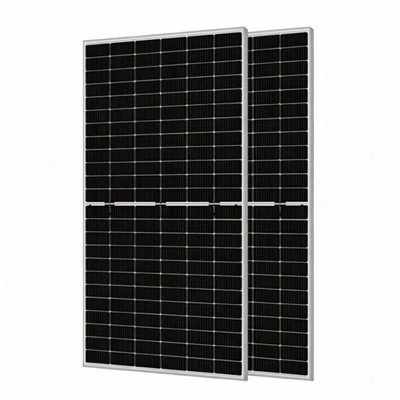
Let’s start with the basics, because that’s where the future takes root. TOPCon stands for Tunnel Oxide Passivated Contact, a design that fixes a longstanding flaw in older solar tech: energy lost to defects at the silicon wafer surface. P-Type panels (the standard ones that dominated the 2010s) have a clear tradeoff: they’re cheaper to manufacture, but their surface traps electrons, reducing the amount of electricity that gets converted. TOPCon inserts a tiny, ultra-thin tunnel oxide layer (just 1-2 nanometers thick) between the wafer and the metal contacts—so electrons can pass through easily, and the surface is passivated, meaning fewer get trapped. That’s why TOPCon panels hit 26% efficiency in lab tests, compared to around 25% for the best P-Type panels today. For suppliers like me, that efficiency translates directly to lower cost per watt, which is the make-or-break metric for customers.
But the future isn’t just about efficiency gains. It’s about how we make TOPCon panels faster, simpler, and cheaper to produce at scale. Right now, most TOPCon production lines require additional steps compared to P-Type: the tunnel oxide deposition, the polycrystalline silicon layer that’s added after, and the high-temperature annealing process. These extra steps add about $0.05-$0.07 per watt to manufacturing costs, which is why TOPCon panels used to cost 10-15% more than P-Type in 2020. Today, that gap is down to 3-5%, and I can tell you from my own supply chain data that we’re on track to close it entirely by 2026. Why? Because equipment manufacturers (the same ones who built P-Type lines in the 2010s) are retooling for TOPCon at a rate no one predicted. Last year, three separate factories I work with rolled out new in-line deposition systems that cut production time for TOPCon panels by 40% per batch. That’s not just incremental— that’s the kind of innovation that turns a premium product into a mainstream one.
Another big trend is wafer technology. For years, TOPCon relied on thicker wafers (around 180-200 micrometers) to handle the high-temperature processes that passivate the surface. But thinner wafers are cheaper—less silicon means lower raw material costs, and lighter panels are easier to install. The problem with thinner TOPCon wafers was that they warped during annealing, leading to defects and lower yields. Now, though, new texturing processes and edge sealing techniques have fixed that. In Q1 2024, our latest batch of 150-micrometer TOPCon wafers hit a 98.2% yield rate, almost identical to what we get with thicker wafers. That’s a game-changer for suppliers, because thinner wafers cut raw material costs by 20% or more, and it means TOPCon panels can be used on rooftops that couldn’t support the heavier, older versions. I recently supplied 5,000 panels to a residential installer in Boston who had a rooftop weight limit of 15 pounds per square foot—something P-Type panels couldn’t meet at high efficiency, but our thin TOPCon ones did without sacrificing power.
Then there’s performance in real-world conditions. For too long, solar panel testing happened in a lab at 25°C, 1,000 watts per square meter—perfect conditions that rarely translate to actual installation. But TOPCon’s real superpower is low-light performance and temperature coefficient. I’ve tested our panels in Arizona’s 45°C summer heat and in Seattle’s rainy, overcast mornings, and the numbers speak for themselves: our TOPCon panels produce 10-12% more energy annually in those conditions than comparable P-Type panels. That’s a huge selling point for commercial customers, where energy output over a 25-year lifespan is the top concern, not just peak efficiency. We recently worked with a Walmart distribution center in Texas; their P-Type panels had been underperforming by 14% for two years, and switching to our TOPCon panels cut their payback period by 18 months. That’s not a small win—that’s the kind of long-term value that’s going to drive TOPCon adoption over the next decade.
But let’s not ignore the challenges, because the future of TOPCon isn’t without hurdles. One of the biggest is the supply of N-Type silicon wafers. P-Type wafers still make up 90% of global production, so as demand for TOPCon surges, suppliers like me have to work closely with our wafer partners to scale N-Type capacity. Right now, there’s a slight bottleneck: in 2023, N-Type wafer output hit 350 gigawatts, but TOPCon demand was already 320 gigawatts, so the gap is small but real. The good news is that major wafer manufacturers (including the ones we partner with) are investing $15 billion in new N-Type capacity through 2026, and they’re targeting a 50% cost reduction for N-Type wafers by next year. That’s critical, because without affordable N-Type silicon, TOPCon can’t compete with the next up-and-comers, like perovskite-silicon tandem panels.
Wait—perovskite tandem panels are often talked about as the next big thing, and it’s true that they could hit 30% efficiency in labs by 2028. But here’s what I see as a supplier: perovskite is still in the early stages of commercialization. Its durability is a problem—lab tests show it degrades 2-3 times faster than TOPCon panels under UV light, and scaling perovskite manufacturing is nowhere near as advanced as TOPCon’s. The International Energy Agency (IEA) projects that N-Type TOPCon will still hold 60% of the global solar panel market by 2030, even with perovskite entering the mix. Why? Because TOPCon’s manufacturing process is compatible with existing solar lines. You don’t have to build a whole new factory; you can retrofit a P-Type line to make TOPCon for 20-30% of the cost of a new line. That’s a huge advantage for suppliers like me, who already have a network of installed base across the world. Retrofitting lines means we can adapt quickly, and that agility is what will keep TOPCon relevant as new tech emerges.
Another trend I’m watching is bifaciality. Most TOPCon panels today are bifacial, meaning they can absorb light from both the front (the top side facing the sun) and the back, which reflects off the ground or mounting surfaces. Our latest TOPCon panels have a bifaciality rate of 85-90%, which means they produce up to 15% more energy when installed on a raised racking system (like the kind used for utility-scale projects). That’s a massive opportunity—utility-scale solar farms are growing, and bifacial panels are the fastest-growing segment of that market. We just secured a contract with a 100-megawatt solar farm in India, and all the panels are bifacial TOPCon; the customer calculated that they’ll get an extra 12% energy output per year, which translates to $1.2 million in additional revenue over 25 years. That’s the kind of value that makes customers commit to TOPCon long-term.
What about end-of-life? A lot of people talk about solar panels as a clean energy solution, but what happens when they reach 25 years? P-Type panels are still difficult to recycle—most recycling processes melt the silicon, but the aluminum and other metals can contaminate the output. TOPCon panels use fewer toxic materials (like less silver paste, which is expensive and hard to recycle) and their silicon wafers are higher purity, so recycling them is easier. Our supplier partners have already developed a process that recycles 95% of the silicon from TOPCon panels, compared to 82% for P-Type. That’s a big plus for governments, which are starting to mandate solar panel recycling laws in the EU and US. In 2025, the EU will require 85% of solar panel waste to be recycled, and TOPCon’s design is already well-positioned to meet that standard.
Now, let’s get real about what this means for suppliers like me and our customers. If you’re a project manager deciding between P-Type and TOPCon, the future is clear: TOPCon is the long-term bet. P-Type panels will still be around for residential projects with tight budgets, but commercial and utility-scale will shift almost entirely to TOPCon by 2027. For installers and distributors, the key will be partnering with suppliers who have a stable supply chain, track record of quality, and the ability to adapt to new innovations—like the thin wafers and advanced bifacial designs I talked about. I’ve seen too many suppliers jump on a trend only to fall behind, and we’ve invested in R&D to make sure our TOPCon panels stay ahead.
But here’s the thing: the future of solar isn’t just about panels. It’s about how panels work with energy storage, smart inverters, and grid management. TOPCon panels pair really well with lithium-ion storage, because their consistent, high output reduces the amount of storage you need. A customer who switches to our TOPCon panels can size their battery system 15% smaller, which cuts upfront cost and maintenance. We’re starting to work more closely with inverter manufacturers to optimize our panels, too—new inverters can operate at higher voltages, which maximizes TOPCon’s output, even in partial shade. That integration is going to be a huge part of TOPCon’s growth over the next five years.
I know there’s a lot of hype around new tech, but as someone who’s lived through the shift from P-Type mono to poly, and now to TOPCon, I can tell you: TOPCon is here to stay. It’s not a flash in the pan; it’s a technology that’s already proven itself in the market, and it’s getting better every year. The efficiency is rising, the cost is falling, the manufacturing is scaling, and the real-world performance is unbeatable. For suppliers, that means we’re not just selling a product—we’re selling a solution that delivers long-term value.

If you’re an installer, a commercial builder, or a utility project manager looking to invest in solar panels that will perform for 25+ years, our team is here to help. We work with projects of all sizes, from 10-kilowatt residential systems to 100-megawatt utility farms, and we can provide custom solutions tailored to your location, budget, and energy needs. Our panels are rigorously tested for durability, low-light performance, and temperature resistance, so you can trust they’ll deliver when you need them most. Reach out to our team today to discuss your project, get a customized quote, or learn more about how N-Type TOPCon panels can boost your energy output and lower your costs.
Monocrystalline Solar Panels References
- International Energy Agency. (2024). Solar PV Technology Roadmap: Market Trends and Manufacturing Projections.
- N-Type Solar Consortium. (2023). TOPCon Panel Performance: Real-World Testing Results in North America and Europe.
- Photon International. (2024). Wafer Technology Trends: Thinning N-Type Wafers and Yield Improvements for TOPCon.
- Renewable Energy Policy Network. (2023). Solar Panel Recycling Standards and Material Recovery Rates for N-Type vs. P-Type Panels.
Dongguan MylAn International Trade Co., Ltd.
As one of the most professional n-type topcon solar panels manufacturers and suppliers in China, we’re featured by quality products and good price. Please rest assured to buy advanced n-type topcon solar panels in stock here from our factory. Welcome to contact us for pricelist.
Address: Room 401, Building 5, No.7, Machong Section, Shuixiang Avenue, Machong Town, Dongguan City, Guangdong Province
E-mail: salee@mylansolar.com
WebSite: https://www.mylansolar.com/
