If you’re running a workshop in a garage, a tiny backyard shed, or a shared commercial bay with zero extra square footage, you know how frustrating it is when tools, scrap wood, and half-finished projects crowd the space so bad you can barely move. That’s where a good workshop fence comes in— it’s not just a thing to mark off a spot, it’s your sidekick to keep work safe, organized, and actually doable in a small area. As a workshop fence supplier, I’ve spent years talking to folks who thought their tiny space was too cramped for a functional fence, and let me tell you— those people were missing out on all the clever, space-saving hacks we’ve put together for exactly these scenarios. Workshop Fence
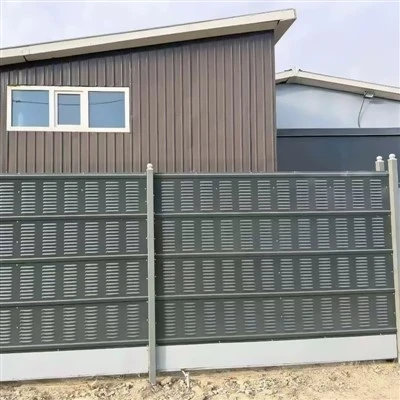
First off, let’s get one thing straight: a small space workshop fence doesn’t have to be a huge, clunky 8-foot barrier that eats up your only floor space. Most of the best options are designed to use vertical real estate or slide in spots you’d never think to check. Let’s start with the most obvious but underrated pick: the wall-mounted retractable fence. Wait, I know what you’re thinking— “retractable? In a workshop? That sounds flimsy.” Nope, not the ones we make. Our retractable workshop fences are built with heavy-duty aluminum slats, so they’re not going to snap if you’re routing a long piece of wood or leaning a shelf against them. The key here is you mount the base straight to your workshop’s wall— no floor brackets taking up precious square footage. When you need it up (say, to contain a miter saw’s kickback, or to block off a scrap pile from your workbench), yank the slats out and lock them in place with quick-release clips. When you’re done, just push the button, and it rolls back into a compact wall mount that’s less than 6 inches deep. Perfect for workshops where every foot counts— we’ve had customers install these above their workbench or even on the back wall of a tiny garage, and suddenly they’ve got a 6-foot tall barrier that takes up zero floor space.
Another game-changer for small spaces: fold-down corner fences. Corners in a workshop are usually wasted space— they’re too tight to set a table or stack tools, so why not put them to work? Fold-down corner fences mount to both adjacent walls of your corner, so when you fold them up, they lie flat against the wall and disappear. When you need a barrier, just swing them out until they lock into place, forming a 90-degree fence that wraps around one end of your work area. I’ve seen guys use these to cordon off their table saw from the rest of the workshop, so when they’re ripping plywood, there’s no risk of a stray board flying into a stack of ladders or a lawnmower. The best part? They’re only 12 inches wide when folded, so they don’t block your path when you’re moving around. We actually adjusted our line a few years back to make these even slimmer, because so many small-space customers were complaining that standard fold-downs stuck out too far. Now they’re a top seller for anyone with a workshop under 200 square feet.
If you’re the kind of person who hates even small additions that take up wall space, let’s talk about the freestanding sliding fence. Wait, freestanding but sliding? Yeah, it works in small bays because it glides along tracks that you mount to your workshop’s ceiling, not the floor. No legs to trip over, no base taking up floor space— just thin, lightweight panels that roll back and forth along the track. For a small workshop, you can install the track from one wall to the other, so the fence slides completely out of the way when you don’t need it, and covers half your work area when you do. We had a customer in a 150-square-foot shared bay at a commercial workshop, and he used this sliding fence to split his space from the guy next door. When he’s using his planer, he slides the fence closed to keep noise in (and dust from drifting over), and when he needs to park a vehicle in the bay on weekends, he slides it all the way to one wall and has the whole space back. That’s the thing about these fences— they do double duty, so you’re not wasting space on a one-trick accessory.
Now, let’s get into the nitty-gritty of actually using your fence in a small space— because even the best fence won’t help if you’re arranging your workshop wrong. A lot of small-space workshop owners make the mistake of putting their workbench dead in the middle of the room, which means half the time you’re stepping over your fence to get to the other side. Instead, tuck your workbench against one wall, and mount your fence along the other adjacent wall. That way, your fence runs parallel to the back of your workbench, so you don’t have to step over it. If you’re using a miter saw, mount the saw on a rolling stand— that way, when you need to extend a long board (say, a 10-foot 2×4), you can roll the stand up to the edge of the fence, and the fence acts as a support for the overhang. No more holding the end of the board with one hand and trying to operate the saw with the other— that’s a safety hazard, and a fence fixes it without making your workspace smaller.
Another space hack: add a small tool shelf to the top of your workshop fence. Wait, your fence is already tall enough— why not use that vertical space for storage instead of letting it go to waste? We’ve designed a bunch of our fences with optional clip-on shelves that are only 8 inches deep, so they don’t stick out into your walkway. You can hold your tape measure, safety glasses, and a few clamps up there, instead of stacking them on your workbench and taking up surface space. For people with tiny workshops, every square inch of counter space is gold, so this is a no-brainer. I had a customer with a 180-square-foot garage workshop tell me that adding that shelf to his retractable fence freed up almost 2 square feet of space on his workbench— enough to fit a small drill press he’d been storing on the floor. That’s the kind of win people don’t expect when they start shopping for a fence.
Now, let’s talk about mistakes to avoid when picking a workshop fence for a small space. The biggest one? Buying a fence that’s too tall. Yeah, you want a barrier to keep things contained, but a 7-foot tall fence in a 8-foot ceiling workshop will make the space feel way more cramped than it is. Stick to 5 to 6 foot tall fences for small spaces— that’s high enough to stop most kickback from power tools and keep scrap from falling off your workbench, but not so high that it closes you in. Another mistake: picking a heavy, wood fence. Wood might look nice, but it’s bulky, and it absorbs dust and oil in a workshop, so it gets gross fast. All of our small-space fences are made with lightweight aluminum, so they’re easy to move if you need to rearrange your workshop, and they’re water-resistant, so if you have a workshop that’s in a shed with occasional leaks, they won’t warp or rot. We also add a powder coat finish that resists rust, which is perfect for garages or basements that get damp.
Wait, what if your workshop is really tiny— like under 100 square feet— and you don’t have wall space to mount a fence? That’s the scenario where our adjustable-height portable fence works. It’s freestanding, but only weighs 15 pounds, so you can move it around wherever you need it. It has telescoping legs that adjust to different heights, so you can set it up around your miter saw, planer, or even just to cordon off a small scrap pile. When you’re done, you can fold the legs flat and tuck it in the corner of your workshop, or even lean it against the wall behind your door. We had a customer who works out of a 80-square-foot storage unit workshop use three of these portable fences to section off different work areas— one for cutting, one for sanding, one for finishing. That way, he’s not mixing dust from sanding with his finishing work, and he’s using the same small space way more efficiently.
I get it— when you’re working with a tiny workshop, it’s easy to feel like you have to choose between safety and space. But a good workshop fence doesn’t force that choice. It actually gives you more space, because it keeps your tools and materials organized, so you’re not wasting time digging through a pile of scrap or stepping over a stray board. And as someone who’s been in this industry for years, I can tell you that safety isn’t something you want to skimp on just because your space is small. A fence prevents kickback, keeps your work from falling, and stops kids or pets (if you have them hanging around the workshop) from getting hurt.
If you’re tired of your small workshop feeling chaotic and unsafe, it’s time to stop settling for a fence that’s too big or too bulky for your space. We build workshop fences specifically for small areas, so you don’t have to sacrifice an inch of your floor or wall space. If you have questions about which option works best for your layout, or you want to get a quote for a custom-sized fence, reach out to our team to chat through your needs. We don’t do one-size-fits-all, because every small workshop is different— we’ll help you find a fence that fits your space, not the other way around.
Steel Fence References
- Small Workshop Design & Organization, Professional Tool & Equipment Association, 2022
- Safety Standards for Workshop Barriers, Occupational Safety and Health Administration (OSHA), 2021
- Space-Saving Workflow Solutions for Compact Workshops, DIY Workshop Magazine, 2023
- Aluminum vs. Wood Workshop Fence Durability Test, Industrial Hardware Association, 2022
Anping County Chengrun Metal Products Co., Ltd.
With abundant experience, we are one of the most professional workshop fence manufacturers and suppliers in China. Please feel free to buy premium workshop fence for sale here from our factory. All customized metal products are with high quality and competitive price.
Address: Anping County, Hengshui City, Hebei Province, China
E-mail: sales@chengrunfence.com
WebSite: https://www.chengrunfence.com/
