If you’ve ever ordered a custom-printed label that arrived smudged, a bag of chips that went stale before its expiration date, or a pharmaceutical strip that split mid-production, you’ve likely encountered the quiet failure of a packaging roll film. As someone who’s worked in the packaging roll film supply space for 12 years—walking the floors of our production facility at 5 a.m. to pull a random roll for thickness testing, staying late to troubleshoot a client’s printing press misalignment issue, and talking through 2 a.m. emergency calls when a batch is off-spec—I can tell you this isn’t a “one-size-fits-all” product. The quality standards that make a roll film reliable, compliant, and cost-effective vary by end use, but there are non-negotiables that every supplier should hold themselves accountable to. Let’s break these down, not from a textbook, but from the messy, real-world work of getting packaging right for brands and their customers. Packaging Roll Film
First, we have to start with the foundation of any roll film: material integrity. Most of the films we supply fall into three core categories—polyethylene (PE) for food and industrial liners, polypropylene (PP) for labeling and flexible packaging, and polyethylene terephthalate (PET) for heavier-duty applications like candy wrappers or medical devices—but regardless of the polymer, consistency is everything. Let’s talk about thickness, for example. Too thin, and the film tears during high-speed converting lines (those machines that stamp, fold, and seal packaging at 500 feet per minute? Even a 0.5-micron thickness variation can throw their registration off, leading to thousands of wasted units per hour). Too thick, and you’re forcing your client to spend more than they need to on material that doesn’t add any performance benefit. Our standard here is a tolerance of ±2 microns for films under 50 microns thick, and ±3 microns for thicker rolls—we test every 500 feet of production, not just at the start and end of a run. This isn’t arbitrary; we’ve had a craft snack client switch to a cheaper supplier who allowed ±5-micron tolerance, and within a month, their sealing machines were jamming so often they lost $12,000 in production downtime in three days. We fixed that for them by adjusting our testing and tolerancing, and they’ve stayed with us since.
Another part of material integrity is surface uniformity, which directly impacts printing and converting. If a roll has inconsistent surface tension, a flexographic or digital printer won’t lay ink evenly—you get faded logos, smudged text, or spots where the ink beads up and rubs off after a week on a shelf. For food-contact films, this is even more critical: if ink doesn’t adhere properly, it can transfer to the product, which is a compliance risk. We use a tensiometer to test surface energy across the entire width of the roll, and require a minimum of 38 dynes/cm for printable films, with no variation of more than 2 dynes/cm across any 10-foot section. I’ve seen a supplier skip this step to cut costs, and their client’s holiday limited-edition line had to be recalled because 15% of the rolls had ink that transferred to the chocolate inside. That’s not just a quality fail—it’s a reputation killer for the brand, and a avoidable mistake that comes down to skipping basic surface testing.
Next, compliance is a non-negotiable quality standard, and it’s one that’s often overlooked by suppliers who chase low prices. If you’re packaging food, medical devices, or products that come into contact with people, you can’t just use any film. For food-contact materials in the U.S., that means compliance with FDA 21 CFR Part 174, 175, and 177—these specify what materials can be used, how they’re manufactured, and what levels of extractables (chemicals that can leach into the product) are allowed. For clients exporting to the EU, that means EU 10/2011 regulations, and for food intended for specific markets like Japan, there are additional Japan Food and Hygiene Organization (JFHO) standards. We don’t ship any roll without a full certificate of compliance (CoC) that lists the polymer type, testing date, and regulatory references, and we keep batch records on file for 7 years—longer than the average product shelf life—so if a brand needs to trace a batch back to its source, we have it. A few years ago, we had a small organic baby food brand come to us after a different supplier sent them rolls that didn’t meet FDA standards; their testing found trace amounts of a processing additive that wasn’t allowed for infant food. We now have a separate line for baby food and organic product films, with dedicated equipment to cross-contamination, which is a small step that makes a huge difference for our clients’ trust.
Then there’s the performance-related standards that depend on end use, but still require strict testing. For flexible food packaging, heat seal strength is critical—if a bag of coffee or nuts seals too weakly, it opens during shipping and the product is ruined. If it seals too strongly, consumers can’t open it without scissors, which is a bad user experience. Our standard for heat seal strength for snack bags is 25-35 Newtons per inch (N/in) at 120°C—hot enough to create a strong, airtight seal, but not so hot that it deforms the film. For frozen food packaging, we also test low-temperature seal integrity, because a seal that works at room temperature can crack when a bag of frozen vegetables is dropped into a freezer. For medical packaging, like sterile strips for bandages or syringes, we have to test not just seal strength, but also microbial barrier performance—any film that’s supposed to keep out bacteria can’t have pinholes, which let pathogens in. We use a bubble leak test for every roll destined for medical clients: we submerge a section of film in water, apply pressure, and watch for air bubbles that would indicate a pinhole. Last year, a medical device client had a batch of packaging that failed this test from another supplier; their product had to be destroyed, costing them $80,000, and they lost a major hospital contract because of it. That’s why we run every medical roll through this test, plus an additional 10,000-foot random sample check per run.
Roll consistency is another quality standard that’s easy to take for granted, but makes all the difference for our clients’ operations. Imagine a printer that’s set up to run a 12-inch wide roll, but the supplier sends a roll that’s 11.8 inches wide—they have to re-calibrate the entire press, which takes 45 minutes and wastes 200 feet of film. That’s not a small cost for a production line that runs 24/7. Our dimensional tolerances for roll width are ±0.005 inches, and roll length is accurate within ±0.1% of the ordered length—so a 10,000-foot roll is actually 9,990 to 10,010 feet, not 9,800 feet like we’ve seen from some cut-rate suppliers. We also test roll core alignment: a roll that’s wound off-center will wobble on the press, causing wrinkles or misalignment. I once visited a client’s facility and watched their press operator spend two hours re-aligning a roll from a new supplier, when a quick check of the core runout (we use a dial gauge to test this) would have caught the problem before shipment. Now we test every roll’s runout to be less than 0.02 inches, which eliminates that headache for our clients.
But here’s the thing: quality standards aren’t just about numbers and tests. They’re also about flexibility and responsiveness, which is a quality that many generic suppliers miss. We know that every client’s needs are different— a small craft brewery needs small batches of labeled roll film with a quick turnaround, while a global cereal brand needs 500,000-foot rolls with consistent printing for 10 different markets. We don’t have a “one roll fits all” standard; we work with each client to adjust our testing and specs to their specific use case. For a dog treat brand that’s packaging for the U.S. and EU, we add an extra layer of oxygen barrier to keep the treats fresh longer, and we run separate compliance tests for each market. For a local craft soap maker, we offer smaller roll sizes (as small as 500 feet) that larger suppliers won’t even quote, because we know small businesses can’t afford to waste money on 10,000-foot rolls they’ll never use.
I also want to be clear: quality doesn’t have to mean overpaying. Too many brands think that cheaper films are the way to go, but the hidden costs of downtime, recalls, and unhappy customers almost always outweigh the upfront savings. We’ve structured our pricing to be transparent, with no hidden fees, because we know that trust is built on being upfront about what you’re getting. If a client needs a film that meets a stricter standard than our baseline—like a UV-resistant film for sun care products, which we test to resist fading for 12 months instead of 6—we quote that clearly, no bait-and-switch.

At the end of the day, packaging roll film is what stands between a brand’s product and the world: it keeps food fresh, protects medical devices, and showcases what’s inside for consumers. The quality standards we uphold—material integrity, compliance, performance, consistency, and flexibility—aren’t just rules we follow to make our work harder. They’re how we make sure our clients’ products get to their customers in the best possible condition, and that their production lines run smoothly.
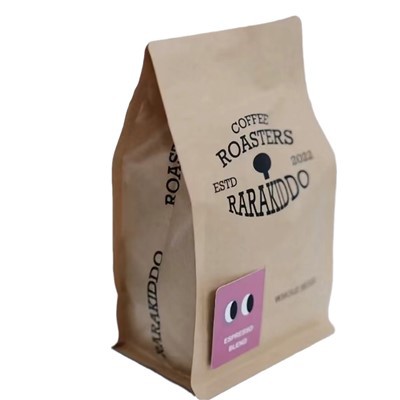
Flat Bottom Bag If you’re a brand owner, production manager, or procurement specialist looking for a packaging roll film partner that’s transparent, reliable, and committed to quality standards that work for your specific needs, we’d be glad to discuss your requirements in more detail. We’re here to help you avoid the costly mistakes that come with cutting corners on packaging quality, and to provide you with films that meet every test, from lab compliance to real-world production floor demands.
References
- Food and Drug Administration. (2024). CFR Code of Federal Regulations Title 21: Parts 170–199 – Food and Drugs. U.S. Food and Drug Administration.
- European Commission. (2011). Regulation (EU) No 10/2011 on plastic materials and articles intended to come into contact with food. Official Journal of the European Union.
- American Society for Testing and Materials. (2023). Standard Test Method for Heat Seal Strength of Flexible Barrier Materials (ASTM F88/F88M-23). ASTM International.
- International Organization for Standardization. (2022). Flexible packaging — Determination of the resistance to gas transmission of flexible barrier materials — Part 1: Differential pressure method (ISO 15105-1:2022). ISO.
- Japan Food and Hygiene Organization. (2021). Standards for Food Additives (2021 Edition). Japan Food and Hygiene Organization.
Shenzhen Hongbang Packaging Production Co., Ltd.
We are one of the most experienced packaging roll film manufacturers and suppliers in China, specialized in providing high quality custom service. Please feel free to buy bulk packaging roll film made in China here from our factory. For quotation and free sample, contact us now.
Address: Room 601, BLDG D, Wisdom Centre, No. 58 Nanlian Road, Longgang, Shenzhen China 518116
E-mail: pm@hongbangpack.com
WebSite: https://www.hongbangpack.com/
