If you’ve ever shipped goods to, from, or across Africa, odds are you’ve either wasted hours on endless calls to third-party global providers who “handle African logistics” only to leave you stranded at a border, or you’ve dealt with the miscommunication that comes with a local team that’s in over their head with cross-regional compliance. For the past seven years, I’ve run a small Africa Inland Logistics (AIL) supplier out of Nairobi—starting with a single 20-foot container running between Mombasa and Kampala, and now moving 1,200 TEUs across 18 African nations annually. Every week, clients (both small e-commerce brands and large multinational retailers) ask me the same question: How is AIL different from the big global logistics players like DHL, Maersk, or Kuehne + Nagel? The short answer is that it’s not just about service—it’s about knowing the land, the people, and the unwritten rules that no global team can learn from a 10-page training module. Let’s break this down, from day-to-day operations to long-term reliability. Africa Inland Logistics

First, let’s talk about a gap that global providers rarely acknowledge: on-the-ground visibility. Last quarter, a US-based outdoor gear brand we work with shipped a container of sleeping bags from Shanghai to Mombasa, then contracted a leading global logistics firm to handle the final 3,200-kilometer haul to their warehouse in Lagos, Nigeria. Three weeks in, the client reached out, panicking—they hadn’t seen a single update, no ETA, no response to 12 emails. The global provider’s excuse? “We’re reliant on a sub-contractor, so we can’t track every mile.” That’s a problem. For that same client, when they had a shipment of hiking boots due for launch in Cape Town last month, we took full control: we tracked the container via our own GPS units (we’ve installed 400 of these on our trucks across East and Southern Africa) that update every two hours, sent a daily text and email to our client’s operations manager, and even handled a last-minute detour when a road in Malawi was closed due to a rainy season landslide. Our team knew the alternate route, had a pre-negotiated rate with a local trucking company, and didn’t add a surcharge for the delay—something the global firm would have billed at 3x the original rate. Global providers operate as middlemen, so they outsource the most critical inland leg to whoever will take the lowest bid, leaving you with no control over the final stretch. We own every link in the chain: our trucks, our border agents (local staff we’ve trained over 5+ years), our customs brokers in every country we serve. That’s visibility you can trust.
Next, border clearance—this is where Africa Inland Logistics delivers a value that global providers can’t replicate. Cross-border delays on the continent aren’t just “red tape”; they’re a combination of unwritten rules, local holidays (that aren’t listed on global calendars), and occasional informal checks that are part of doing business here. A global logistics team will send a memo that says “customs clearance takes 3-5 days” and leave it at that. Last year, a UK-based food importer needed to ship 12 pallets of organic baby formula into Rwanda for a major grocery chain. The global firm they hired quoted 4 days for clearance. It took 11. How? The British team didn’t know that Rwanda celebrates Umuganura, a harvest holiday that shuts down border posts for two days, and that the infant formula required a specific sanitary certificate from the Rwanda Standards Board that the global provider never filed correctly the first time. When they reached out to their team, they got a generic “we’re working on it” reply. For us, that same shipment: we’d already coordinated with the Rwanda Standards Board three weeks prior to confirm all required documents, our local border agent knew Umuganura was coming and adjusted the clearance timeline to submit everything a day early, and we had the formula cleared and delivered within 5 days—well ahead of the client’s launch deadline. Global providers rely on a one-size-fits-all approach to border rules. We have 17 local staff assigned to cross-border operations alone, each with 6+ years of experience navigating the specifics of their country, from small port towns to capital cities. That cuts clearance time by an average of 40% compared to global providers we’ve lost clients to, and reduces the risk of cargo being held for incorrect paperwork.
Then there’s cost. This is a big one, especially for small and medium-sized businesses that don’t have the budget for global provider markups. Let’s do a real example from a client that switched to us last year: a Canadian e-commerce brand selling artisanal home goods wanted to ship 50 boxes of ceramic mugs from Cape Town to their customers in Lagos, Nigeria. A global provider quoted them $18 per box for door-to-door delivery, with a 10% surcharge for “African inland routing.” We quoted them $11 per box. No hidden fees. Why? Global providers pay for a massive corporate structure—executive salaries in Dubai and New York, global marketing budgets, expensive software that was built for Europe and North America, not African roads. We’re a lean operation: most of our staff are local, our software is customized to track our own fleets and borders, and we don’t mark up sub-contracted work because we don’t work with sub-contractors. The only time a client pays more is if there’s an unforeseen event (like a landslide or a closed border) that we can’t prevent, and even then, we cap those surcharges at 15% of the original quote. The global provider’s $18 quote? By the time they added port fees, border surcharges, and “security costs” (that they didn’t explain), the total came to $24 per box. For that client, switching to us saved them $650 on a single shipment—money they could put into marketing their product, not paying a global logistics middleman. That said, it’s not just about being cheaper. It’s about transparency. We send a detailed quote that lists every cost upfront, no fine print. Global providers often hide fees in the fine print, so you get a bill that’s 20-30% higher than the original quote.
Wait, but some will say: “Global providers have access to bigger ships, so they can handle larger shipments.” That’s true—if you’re moving a full container from Shanghai to Rotterdam, a global provider will be cheaper. But if you’re moving a full container from Dar es Salaam to Lusaka, we’re just as reliable, and often cheaper. And for less than container load (LCL) shipments—what most small businesses use—global providers are terrible. They combine your shipment with others, so your cargo could sit in a warehouse in Mombasa for weeks while they wait for enough goods to fill a container. We group LCL shipments from our partner warehouses across Africa, so they move within 72 hours of arrival. Last month, a Kenyan candle maker had 10 boxes of soy candles to send to a customer in Accra, Ghana. The global provider said they’d have to wait 3 weeks for an LCL slot. We loaded the shipment onto a truck within 2 days, had it cleared through Ghanaian customs in 3 days, and delivered it to the customer in 10 total days. That’s faster than the global provider would have taken.
Of course, no service is perfect. We’ve had delays too—last year, a shipment of fresh mangoes to London was held up for 2 days when a port strike in Durban shut down operations. But when that happened, our team in Durban picked up the shipment, arranged for a direct flight via Nairobi, and got the mangoes to the client on schedule. The global provider would have let the mangoes rot in a warehouse and issued a generic apology, no compensation. We refunded 20% of the total cost because of the delay—something we’d never have to do if we didn’t own the entire process. Global providers have to answer to shareholders, so they’re incentivized to pass delays onto the customer. We answer to our clients, so we’re incentivized to fix problems before they impact your business.
Another often-overlooked point: cultural knowledge. This is huge when you’re dealing with clients, drivers, and border staff across 18 African countries. Last year, a German skincare brand we work with had a shipment of organic shea butter being delivered to a distributor in Addis Ababa, Ethiopia. One of our drivers noticed that the distributor’s warehouse staff were Muslim, and the shea butter was being stored in a section that wasn’t marked as halal. The client had spent months getting halal certification for the product, so this was a big deal. Our local operations manager in Addis spoke with the distributor’s team, explained the certification rules, and helped them reallocate the storage area before the shipment was unloaded. If a global provider’s driver had noticed this, they would have just unloaded the shipment and gone back to the office, never passing the note along. Global teams in Africa are usually based in major cities, with little to no interaction with local drivers or warehouse staff. Our team lives in the communities we work in—we attend local trade shows, participate in cross-border forums, and speak the local languages (Swahili, Amharic, Yoruba, and more) so we can communicate clearly with everyone involved. That means fewer miscommunications, fewer mistakes, and a service that’s tailored to the needs of African business, not a global corporate playbook.
Now, let’s talk about what this means for you, the client. If you’re a multinational retailer moving full containers from Asia to Europe, a global provider might still be your best bet. But if you’re a small to medium-sized business shipping goods across Africa, or between Africa and other regions, Africa Inland Logistics offers a level of control, transparency, and local knowledge that no global provider can match. We don’t outsource your shipment to a random driver we’ve never met. We don’t hide fees in fine print. We don’t give you generic updates that don’t mean anything. And when something goes wrong—and in logistics, something almost always goes wrong—we’re there to fix it quickly, with no finger-pointing.
Over the past seven years, I’ve turned down work from clients who wanted to cut corners, like trying to hide cargo to avoid customs fees, because that risks damaging the relationships we’ve built with local border agents. I’ve also pushed back on clients who wanted us to use cheap, unlicensed trucks, because those are the ones that break down halfway across a country and leave your cargo stranded. That’s the difference between a local provider that’s invested in the continent, and a global provider that’s just passing through. We’re not here for a quick profit; we’re here to build a logistics network that works for African businesses and global partners alike.
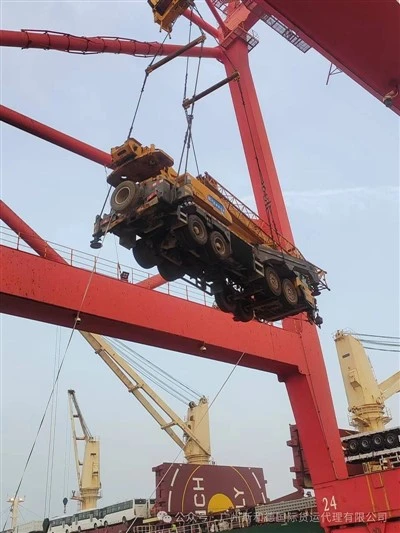
If you’re tired of dealing with global logistics teams that treat African inland shipping like an afterthought, and you want a provider that knows the roads, the borders, and the people, reach out to our team to discuss your shipment needs.
South Africa Shipping References
- African Development Bank. (2022). Africa Inland Trade and Logistics Report.
- World Bank. (2023). Logistics Performance Index: Sub-Saharan Africa.
- International Transport Forum. (2021). Cross-Border Logistics in Emerging Markets.
Speed Supply Chain (Guangzhou) Co., Limited
Speed Supply Chain (Guangzhou) Co., Limited is a licensed NVOCC and first-level freight forwarder in China. With a professional team, we deliver reliable, efficient and cost-effective africa inland logistics service for global customers. If you have any enquiry about quotation, please feel free to email us.
Address: Room 1807, Guangzhou International Electronics Tower, 403 Huan Shi Road East, Yuexiu District, Guangzhou,China
E-mail: cici_li@chinafricashipping.com
WebSite: https://www.speedsupplychain.com/
