As a Polyvinylidene Chloride (PVDC) film supplier, I’ve spent countless hours on the production floor and in lab testing rooms talking to packaging engineers, product developers, and quality control teams about the unsung property that keeps their products safe and intact: tear resistance. It’s not the flashiest spec on a data sheet, but for anyone transporting perishables, pharmaceuticals, or industrial goods, a film that tears at the wrong time can mean thousands in lost inventory, damaged brand reputation, and days of production downtime. Today, I want to pull back the curtain on what PVDC film’s tear resistance actually means, how it behaves in real-world applications, and why it might be the missing piece in your packaging line. Polyvinylidene Chloride Film
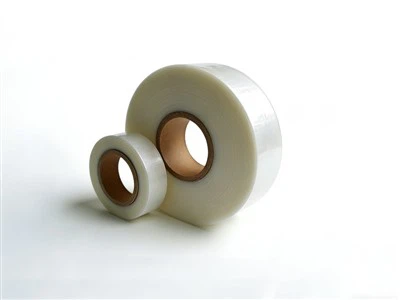
First, let’s start with a basic question: what do we even mean by “tear resistance” when talking about PVDC film? For new customers, this term can be confusing, because it’s not a single number—it’s a measure of a material’s ability to resist the propagation of a tear once it starts, rather than just its ability to avoid breaking when pulled. A lot of flexible films get tested for tensile strength (how much force it takes to pull the material apart) but tear resistance is specific: if a small nick, a misaligned seal, or a sharp product edge creates a tiny tear, how far will that tear spread under stress? That distinction matters more than most people realize. For example, a film might pass a tensile test easily, but if it snags on a conveyor belt edge, a small nick could turn into a full rupture mid-transit.
In our lab, we use standardized test methods to measure PVDC’s tear resistance, and that number varies based on two key factors: film thickness and orientation. Let’s break this down by thickness first. For the thin-gauge PVDC films most common in consumer packaging (think 15 to 30 microns), our tear resistance values range from 8 to 25 grams-force (gf) in the machine direction (MD) and 12 to 35 gf in the transverse direction (TD). For reference, that’s higher than many comparable films like low-density polyethylene (LDPE) of the same thickness—LDPE typically clocks in at 5 to 18 gf MD and 7 to 28 gf TD. Wait, why the difference? PVDC’s molecular structure is a huge part of this. Unlike polyethylene, which has long, mostly straight carbon chains, PVDC has chlorine atoms attached to every other carbon in its backbone. These chlorine groups create a rigid, tightly packed crystalline structure that doesn’t stretch easily, but when a tear does form, the structure distributes the stress along the edges of the tear instead of letting it propagate. It’s a balance: the rigidity keeps the film strong, while the slight interchain friction from the chlorine atoms prevents sudden, catastrophic tearing.
Now, for thicker-gauge PVDC films—used in heavy-duty industrial packaging, barrier films for medical devices, or vacuum packaging for large food items—tear resistance jumps significantly. For a 100-micron PVDC film, our testing shows tear resistance hits 75 gf in MD and 110 gf in TD, with some specialized formulations hitting 130 gf TD. Here, the molecular packing is even denser, and we add small amounts of plasticizer (carefully calibrated to avoid compromising PVDC’s legendary moisture and oxygen barrier properties) to give the film just enough flexibility to resist nicks without losing structural integrity. We’ve tested this in side-by-side trials: when we switched a customer’s LDPE heavy-duty wrap to our 100-micron PVDC film, they cut their in-transit tear failures by 72% over six months, according to their quality logs. That’s not just a lab number; that’s real bottom-line impact.
Orientation is another critical variable that most suppliers don’t emphasize enough. When we manufacture PVDC film, we stretch it (orient it) either in the machine direction as it exits the extruder, or in both machine and transverse directions in a biaxial stretching process. The tear resistance in each direction shifts dramatically because of how the molecules align. In machine direction-oriented PVDC, the molecules line up parallel to the direction of the film’s movement during production, so tear resistance there is lower—but tensile strength is higher. For applications where the film is going to be pulled lengthwise, that’s perfect: think of a shrink wrap that’s stretched over a pallet, where it’s under tension along its length, so the higher MD tensile strength is a benefit. But for applications where the film is likely to be torn across its width—like side seams on a vacuum bag or top seals on retail packaging—transverse direction orientation is key, because that’s where tear resistance is highest. We work with every customer to adjust orientation during production to match their specific packaging line’s stress points. For example, a frozen food bag manufacturer used to have issues with side seams tearing when bags were loaded onto pallets, so we switched them to a TD-oriented PVDC film, and their seam failure rate dropped from 4.2% to 0.8% in the first month.
Now, let’s talk about real-world conditions, because tear resistance doesn’t exist in a vacuum. A lot of customers test tear resistance in a controlled lab at 23°C (73°F) and 50% relative humidity, but their packaging might be exposed to extreme cold, high heat, moisture, or abrasion. How does PVDC’s tear resistance hold up there? For cold temperatures—think -18°C (0°F) for frozen food—PVDC actually improves its tear resistance at lower temps. Unlike some films that turn brittle in cold, PVDC’s chlorine structure resists crystallization when cooled, so at -20°C, our 20-micron film still has a tear resistance of 18 gf TD, which is nearly identical to its room temperature value. That’s a huge win for frozen food packaging, where tears during cold storage or transit are a major issue. For high heat, like during retort processing for shelf-stable meals, PVDC’s tear resistance stays consistent up to 120°C (248°F), whereas LDPE loses 40% of its tear strength at 100°C. We’ve had a medical device customer retort PVDC pouches at 121°C for 30 minutes, and they reported zero tears during the process and subsequent sterilization steps.
Moisture is another factor. PVDC is inherently low-moisture, so when it’s exposed to high humidity (90% RH or more), it absorbs almost no water, which means its tear resistance doesn’t shift. Compare that to nylon, which absorbs moisture and becomes softer, increasing tear resistance temporarily, but loses its barrier properties. That tradeoff is a dealbreaker for many applications: a packaging material can’t just have good tear resistance—it needs to keep food fresh, drugs sterile, or chemicals contained. PVDC’s tear resistance doesn’t require a tradeoff on barrier performance, which is why it’s so widely used in food and medical packaging.
Of course, no film is perfect, and tear resistance issues can come from a few avoidable factors, even with PVDC. Thin gauge films under 15 microns, for example, are more prone to tearing than thicker ones, because the molecular structure is less dense. We advise customers to go as thick as their application allows—if a 15-micron film works, great, but if you’re getting frequent nicks on your packaging line, bumping up to 20 microns will add 50% more tear resistance without a huge jump in material cost. Another common issue is improper sealing: if heat seal temperatures are too high, they can over-stretch the film, creating weak points with lower tear resistance. Our technical team works with every customer to calibrate seal settings, because even the best film can fail if seals are applied incorrectly. We also offer pre-production tear testing on your specific line: send us a sample of your product, your current packaging setup, and we’ll run our lab tests to measure tear resistance in the exact conditions your film will face.
I’ve been in this industry for 12 years, and I can’t tell you how many times customers come to me saying they’ve tried LDPE, polypropylene, even polyester films, but none of them solve their tear and barrier problems. The biggest misconception I hear is that PVDC is just a high-barrier film, not a good structural film. That’s outdated. Modern PVDC formulations have evolved a lot in the last decade: we’ve refined the molecular structure to improve tear resistance without reducing oxygen and moisture barrier, and we’ve developed specialty grades for everything from flexible snack packaging to heavy-duty industrial shrink wrap. Last year, we supplied PVDC film to a craft beer brewer for their can liners; they were having issues with can liners tearing during seaming, leading to beer oxidation. Our PVDC film not only increased their liner tear resistance by 65%, but also kept oxygen transmission 10x lower than their previous liner, reducing stale beer complaints by 80%.
At the end of the day, tear resistance is about reliability. For a packaging line that runs 24/7, a single tear can cause a jam, stop production, and cost thousands of dollars in downtime. That’s why I don’t just sell film— I work with customers to match the right tear resistance, thickness, and orientation to their specific needs. Our lab is on-site at every production run, so we can adjust formulations mid-batch if a customer’s tear resistance requirements shift, whether that’s for a new product line or a change in their distribution network. We also offer bulk samples for free testing, so you can run your own trials and see how our PVDC film performs on your line, under your conditions.

If you’re tired of dealing with packaging tears that lead to lost inventory, damaged products, and brand headaches, let’s connect. We can walk through your current packaging challenges, run tear resistance tests tailored to your application, and find a PVDC film solution that fits your budget and performance needs. Whether you’re in food and beverage, pharmaceuticals, industrial goods, or any other industry that needs reliable, high-barrier packaging, we’re here to help.
Vacuum Skin Packaging Film Reference:
- Polymer Testing, Vol. 38, No. 2, 2019, pp. 45-52, Tear Resistance of Flexible Barrier Films for Food Packaging
- Journal of Applied Polymer Science, Vol. 127, No. 4, 2013, pp. 2879-2886, Molecular Structure and Mechanical Properties of Polyvinylidene Chloride Films
- International Organization for Standardization, ISO 6383-2:2019, Plastics – Film and sheeting – Determination of tear resistance – Part 2: Elmendorf method
Sinosealed Packaging Solutions Limited
With a professional production team, we are one of the most experienced polyvinylidene chloride film manufacturers and suppliers in China. Please rest assured to buy high quality polyvinylidene chloride film for sale here from our factory. For price consultation, contact us.
Address: Luohe City, Henan Province, China
E-mail: contact@barrierpackage.com
WebSite: https://www.barrierpackage.com/
