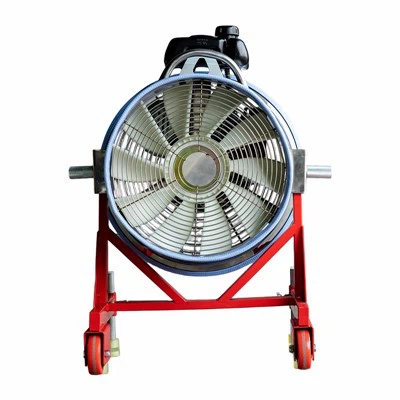
When it comes to fire safety systems in commercial and industrial buildings, fire exhaust fans play a crucial role. As a supplier of fire exhaust fans, I often receive inquiries about the air volume capacity of these fans. In this blog post, I will delve into the concept of air volume capacity, its importance in fire exhaust systems, and how to determine the appropriate air volume capacity for different applications. Fire Exhaust Fan
Understanding Air Volume Capacity
Air volume capacity, also known as airflow rate, is a measure of the volume of air that a fire exhaust fan can move in a given period of time. It is typically expressed in cubic feet per minute (CFM) or cubic meters per hour (m³/h). The air volume capacity of a fire exhaust fan is a critical parameter as it directly affects the fan’s ability to remove smoke and hot gases from a building during a fire.
The air volume capacity of a fire exhaust fan is determined by several factors, including the size and design of the fan, the power of the motor, and the system resistance. Larger fans with more powerful motors generally have higher air volume capacities. However, the system resistance, which includes factors such as ductwork length, bends, and obstructions, can also significantly impact the actual air volume delivered by the fan.
Importance of Air Volume Capacity in Fire Exhaust Systems
During a fire, the primary function of a fire exhaust fan is to remove smoke and hot gases from the building, creating a safe environment for occupants to evacuate and for firefighters to carry out their operations. A fan with an insufficient air volume capacity may not be able to effectively remove the smoke and hot gases, leading to poor visibility, increased heat levels, and a higher risk of injury or death.
On the other hand, a fan with an excessive air volume capacity can be wasteful in terms of energy consumption and may also cause unnecessary noise. Therefore, it is essential to select a fire exhaust fan with an appropriate air volume capacity for the specific application.
Determining the Appropriate Air Volume Capacity
The appropriate air volume capacity for a fire exhaust fan depends on several factors, including the size and layout of the building, the type of occupancy, and the fire safety requirements. Here are some general guidelines to help you determine the appropriate air volume capacity:
1. Building Size and Layout
The size and layout of the building play a significant role in determining the air volume capacity required. Larger buildings with more complex layouts generally require higher air volume capacities to ensure effective smoke removal. For example, a large warehouse with high ceilings and multiple aisles may require a higher air volume capacity than a small office building.
2. Type of Occupancy
The type of occupancy also affects the air volume capacity requirements. Different types of buildings have different fire loads and occupancy densities, which can impact the amount of smoke and hot gases generated during a fire. For example, a commercial kitchen may generate more smoke and heat than an office space, and therefore may require a higher air volume capacity.
3. Fire Safety Requirements
Fire safety codes and regulations typically specify the minimum air volume capacity requirements for fire exhaust systems. These requirements are based on factors such as the building’s use, size, and location. It is important to consult the relevant fire safety codes and regulations in your area to ensure compliance.
4. Calculation Methods
There are several methods available for calculating the air volume capacity required for a fire exhaust system. One common method is the zone method, which involves dividing the building into different zones based on the fire risk and occupancy type. The air volume capacity for each zone is then calculated based on the size of the zone and the expected fire load.
Another method is the performance-based approach, which involves conducting a fire simulation to determine the air volume capacity required to achieve a specific level of fire safety. This method takes into account factors such as the building’s design, ventilation system, and fire suppression system.
Our Fire Exhaust Fans and Air Volume Capacity
As a supplier of fire exhaust fans, we offer a wide range of fans with different air volume capacities to meet the needs of various applications. Our fans are designed and manufactured to meet the highest standards of quality and performance, ensuring reliable operation in the event of a fire.
We understand that selecting the right fire exhaust fan with the appropriate air volume capacity is crucial for the safety of your building and its occupants. That’s why our team of experts is available to provide you with professional advice and guidance on selecting the right fan for your specific application. We can help you calculate the air volume capacity required based on your building’s size, layout, occupancy type, and fire safety requirements.
Conclusion
The air volume capacity of a fire exhaust fan is a critical parameter that directly affects the fan’s ability to remove smoke and hot gases from a building during a fire. By understanding the concept of air volume capacity, its importance in fire exhaust systems, and how to determine the appropriate air volume capacity for different applications, you can make an informed decision when selecting a fire exhaust fan for your building.
Fire Ventilator If you are in need of a fire exhaust fan or have any questions about air volume capacity, please do not hesitate to contact us. Our team of experts is ready to assist you in selecting the right fan for your specific needs and ensuring the safety of your building and its occupants.
References
- National Fire Protection Association (NFPA) codes and standards
- International Building Code (IBC)
- ASHRAE Handbook of Fundamentals
Taizhou Mingxin Fire Protection Technology Co., Ltd.
As one of the most professional fire exhaust fan manufacturers in China, we warmly welcome you to buy bulk high quality fire exhaust fan made in China here from our factory. Good service and low price are available.
Address: Group 3, Xinzhouqiao Community, Jingtai Road Subdistrict, Hailing District, Taizhou City (within Taizhou Station North Logistics Management Co., Ltd.)
E-mail: mingxinxf@163.com
WebSite: https://www.mxfiretech.com/
