Hey there! As a supplier of PVC stabilizers, I’ve been getting a bunch of questions lately about how these stabilizers impact the calendering performance of PVC. So, I thought I’d sit down and share my thoughts on this topic. PVC Stabilizer
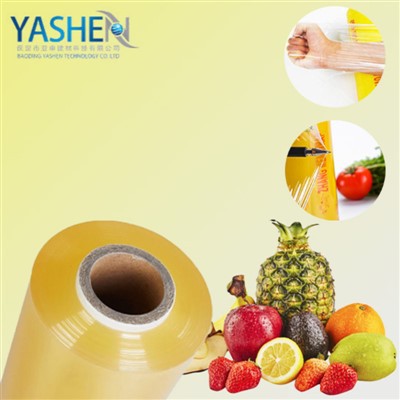
First off, let’s talk a bit about what PVC is and why stabilizers are so important. PVC, or polyvinyl chloride, is a super versatile plastic that you can find in all sorts of products, from pipes and window frames to flooring and packaging. But here’s the thing: PVC isn’t the most stable material on its own. When you heat it up during the manufacturing process, like in calendering, it can break down and release hydrogen chloride gas. That’s where PVC stabilizers come in.
PVC stabilizers are like the guardians of PVC. They prevent the degradation of PVC during the calendering process, which is crucial for getting high – quality end products. Calendering is a process where PVC resin is passed through a series of heated rollers to form a continuous sheet or film. The quality of this calendering process depends a lot on how well the PVC is stabilized.
One of the most obvious effects of PVC stabilizers on calendering performance is thermal stability. During calendering, the PVC has to be heated to a certain temperature to make it malleable. Without proper stabilizers, the heat can cause the PVC to degrade, leading to discoloration, loss of mechanical properties, and even the formation of charred spots on the final product. Good stabilizers can withstand high temperatures and keep the PVC in a stable state throughout the calendering process. This means you get a nice, consistent, and high – quality sheet or film at the end.
For example, I’ve seen cases where customers were using a low – quality stabilizer. The PVC sheets they were producing had a yellowish tint, which was a clear sign of thermal degradation. Once they switched to our high – performance stabilizers, the color of the sheets improved significantly, and they were much more uniform in appearance.
Another important aspect is the processing speed. PVC stabilizers can have a big impact on how fast you can run the calendering process. If the PVC isn’t well – stabilized, you have to slow down the calendering speed to avoid degradation. But with the right stabilizers, you can increase the processing speed without worrying about the quality of the product. This is a huge advantage for manufacturers because it means they can produce more in less time, which ultimately saves them money.
I remember a client who was struggling with slow production rates. Their calendering line was running at a snail’s pace because they were afraid of overheating the PVC. After they started using our stabilizers, they were able to double their production speed. They were really happy with the results, and it made a big difference to their bottom line.
The rheological properties of PVC during calendering are also affected by stabilizers. Rheology is all about how a material flows and deforms under stress. In the calendering process, you want the PVC to flow smoothly between the rollers to form a uniform sheet. Stabilizers can modify the rheological properties of PVC to make it more fluid and easier to process.
Some stabilizers act as lubricants, reducing the friction between the PVC and the calendering rollers. This not only helps the PVC flow better but also reduces wear and tear on the equipment. It’s a win – win situation. You get a better – looking product, and your equipment lasts longer.
I’ve had customers who were having problems with the PVC sticking to the rollers. This was causing uneven sheets and a lot of downtime for cleaning. After switching to our lubricating stabilizers, the sticking problem was solved, and they were able to produce consistent sheets with ease.
In addition to these processing – related effects, PVC stabilizers can also impact the long – term properties of the final product. For instance, they can improve the weatherability and aging resistance of PVC. If you’re making outdoor products like window frames or siding, you need the PVC to be able to withstand the elements for years. Good stabilizers can protect the PVC from UV radiation, moisture, and temperature changes, ensuring that the product maintains its appearance and performance over time.
I know a company that was producing PVC roofing sheets. They were using a sub – standard stabilizer, and after a few years, the sheets started to crack and fade. Once they switched to our stabilizers, the new sheets showed much better resistance to weathering. They were able to guarantee a longer lifespan for their products, which gave them a competitive edge in the market.
Now, I’ve talked a lot about the benefits of our PVC stabilizers, but I also want to mention that choosing the right stabilizer is crucial. There are different types of PVC stabilizers out there, such as lead – based, calcium – zinc – based, and organic – based stabilizers. Each type has its own advantages and disadvantages, and the choice depends on factors like the specific application of the PVC, environmental regulations, and cost.
Lead – based stabilizers have been around for a long time and are known for their excellent heat stability. But they’re not very environmentally friendly, and there are a lot of regulations restricting their use in many countries. Calcium – zinc – based stabilizers are a more eco – friendly alternative. They offer good thermal stability and are widely used in food packaging and other applications where environmental safety is important. Organic – based stabilizers are relatively new and offer a unique combination of properties, such as good compatibility with other additives and low odor.
As a supplier, we offer a wide range of PVC stabilizers to meet different needs. We can help you choose the right stabilizer for your specific calendering process and end – product requirements. Our team of experts is always available to answer your questions and provide technical support.

If you’re in the PVC manufacturing business and you’re looking to improve your calendering performance, I strongly recommend giving our PVC stabilizers a try. You’ll be amazed at the difference they can make in terms of product quality, processing speed, and cost – efficiency. And if you have any questions or want to discuss your specific needs, don’t hesitate to reach out to us. We’re here to help you take your PVC manufacturing to the next level.
Teflon References
- "PVC Additives: Principles and Practice" by Norman S. Allen and Mark Edge
- "Plastics Additives Handbook" by Hans Zweifel
Baoding Yashen Technology Co., Ltd.
Baoding Yashen Technology Co., Ltd. is well-known as one of the leading pvc stabilizer manufacturers and suppliers in China. If you’re going to buy bulk high quality pvc stabilizer in stock, welcome to get free sample from our factory. For customized service, contact us now.
Address: Qingyuan Industrial Area, Baoding, Hebei, China.
E-mail: info@yashenchina.com
WebSite: https://www.yashenchina.com/
