Hey there! I’m an active ingredient in the pharmaceutical game as an Active Pharmaceutical Ingredient (API) supplier. In the wild world of pharmaceuticals, APIs are the real MVPs. They’re the chemical components that pack the therapeutic punch in drugs. But how do these raw APIs get transformed into the pills, capsules, and syrups we pop or swig? Let’s dig into the whole process. Active Pharmaceutical Ingredient
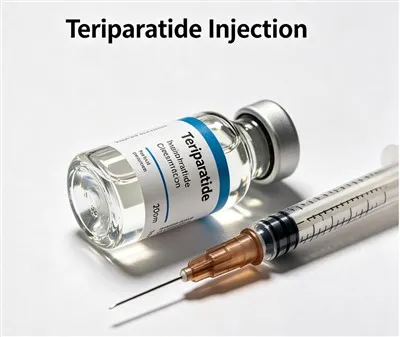
First things first, let’s understand what an API is. It’s basically the key ingredient in a drug responsible for the intended health effects. Whether it’s treating a headache, lowering cholesterol, or fighting off an infection, the API’s what does the heavy – lifting. Think of it as the star of the show, while all the other stuff in a drug are the supporting cast.
Now, formulating an API into a drug is no simple feat. It’s a multi – step journey that involves a lot of science, research, and precision. The very first step in this process is pre – formulation. Scientists need to know the ins and outs of the API. They study its physical and chemical properties like solubility, stability, melting point, and particle size.
Solubility is super important. If an API doesn’t dissolve well, it won’t be absorbed by the body properly. So, researchers play around with different solvents and techniques to figure out the best way to make it soluble. Stability is another biggie. APIs can break down over time, especially when exposed to things like heat, light, and moisture. Scientists have to find ways to protect the API and make sure it stays effective throughout the drug’s shelf life.
Particle size also matters. Smaller particles usually mean better absorption. So, they might use methods like milling or micronization to reduce the particle size of the API.
Once they’ve got a handle on the API’s properties, it’s time for formulation development. This is where they start combining the API with other ingredients to make a proper drug product. These other ingredients are called excipients. Excipients are like the sidekicks to the API. They help with things like giving the drug its shape, improving its taste, or making it easier to swallow.
There are different types of excipients. For example, binders are used to hold the drug together. If you’ve ever seen a tablet, it’s the binder that keeps all the powder in a solid form. Disintegrants are the opposite. They make the tablet break apart in the stomach so the API can be released. Lubricants are used to prevent the drug from sticking to the manufacturing equipment, and flavors and sweeteners are, well, obvious. They make the drug taste better, especially important for kids’ medicines or syrups.
The choice of excipients depends on a bunch of factors. The route of administration is a major one. If it’s an oral drug, they’ll need excipients that work well in the digestive system. For creams or ointments, they’ll use excipients that are good for skin application.
Now, let’s talk about the different dosage forms. There are tons of them, and each has its own advantages and challenges.
Tablets are one of the most common dosage forms. They’re easy to produce, transport, and store. But making a tablet isn’t as simple as just pressing the API and excipients together. There are different types of tablets, like immediate – release tablets that release the API right away, and extended – release tablets that release it slowly over time. To make an extended – release tablet, they might coat the API with a special polymer that controls its release.
Capsules are another popular option. They come in two main types: hard – shell capsules and soft – shell capsules. Hard – shell capsules are usually made of gelatin or a vegetarian alternative like hydroxypropyl methylcellulose (HPMC). They’re great for filling with powders or granules of the API and excipients. Soft – shell capsules are made of a flexible shell and are often used for oils or liquids containing the API.
Injections are also a big deal. They can be given intravenously (into a vein), intramuscularly (into a muscle), or subcutaneously (under the skin). Injections need to be sterile, so the formulation process involves strict quality control. The API has to be dissolved or suspended in a suitable liquid vehicle, and it might also contain other additives like preservatives or buffers to keep it stable.
Topical formulations like creams, ointments, and gels are used for skin conditions. The API is mixed with a base that can penetrate the skin. The base can be made of things like petroleum jelly for ointments or water – based gels. The challenge here is to make sure the API can reach the right layer of the skin and be effective.
After the formulation is developed, it goes through a whole bunch of testing. Quality control is crucial at every step. They test for things like the API’s content in the drug. It has to be within a certain range to be effective and safe. They also test for impurities. Even small amounts of impurities can have a big impact on the drug’s safety and efficacy.
Stability testing is another important part. They expose the drug to different conditions like high temperature, high humidity, and light to see how it holds up over time. This helps them determine the drug’s shelf life and the best storage conditions.
Once the formulation passes all the tests, it’s ready for large – scale manufacturing. This involves using specialized equipment to produce the drug in large quantities. The manufacturing process has to be carefully controlled to ensure consistent quality.
As an API supplier, I play a crucial role in this whole process. I need to provide high – quality APIs that meet the strict standards of the pharmaceutical companies. I work closely with their R & D teams to make sure the API is suitable for the formulation they’re developing.
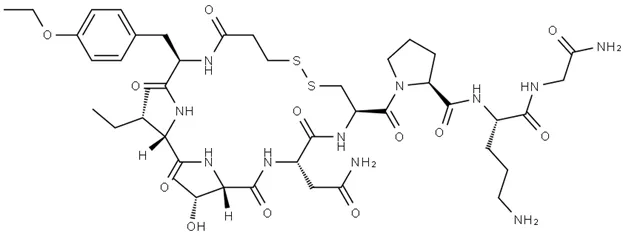
If you’re in the pharmaceutical business and are looking for a reliable API supplier, you’ve come to the right place. I’ve got a wide range of APIs, and I’m committed to providing top – notch quality. Whether you’re working on a new drug or need to restock your supply, I’m here to help. Reach out to me, and we can start a conversation about your API needs. Let’s work together to bring more effective drugs to the market!
Ophthalmic Agents References
- "Remington: The Science and Practice of Pharmacy"
- "Pharmaceutical Dosage Forms and Drug Delivery Systems"
- "Handbook of Pharmaceutical Excipients"
HK Neopharm Limited
HK Neopharm Limited is one of the most professional active pharmaceutical ingredient manufacturers and suppliers in China, also supports customized service. Welcome to buy high quality active pharmaceutical ingredient in stock here and get quotation from our factory. For price consultation, contact us.
Address: Room W Unit 6086/f Metro Loft 38kwai Hei St Kwai Chung, Hong Kong
E-mail: sales@hkneopharm.com
WebSite: https://www.hkneopharm.com/
