What is the Braking Method of a Right Angle Bevel Gear Reduction Motor?
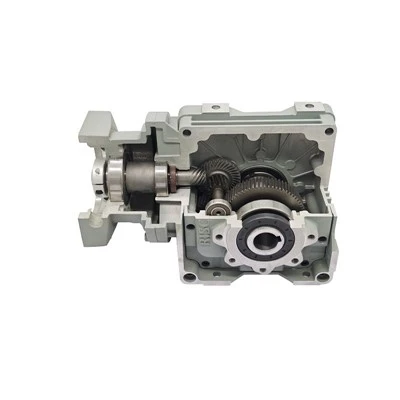
As a supplier of right angle bevel gear reduction motors, I’ve been asked numerous times about the braking methods of these motors. In this blog, I’ll delve into the different braking methods available, their working principles, advantages, and disadvantages, to help you make an informed decision when choosing a braking solution for your right angle bevel gear reduction motor. Right Angle Bevel Gear Reduction Motor
1. Mechanical Braking
Mechanical braking is one of the most common methods used in right angle bevel gear reduction motors. It involves the use of physical components to slow down or stop the rotation of the motor shaft.
1.1 Friction Brakes
Friction brakes work on the principle of generating friction between two surfaces to dissipate the kinetic energy of the rotating motor. There are two main types of friction brakes commonly used in right angle bevel gear reduction motors: disc brakes and drum brakes.
Disc Brakes
Disc brakes consist of a disc attached to the motor shaft and a caliper that houses brake pads. When the brake is applied, the caliper squeezes the brake pads against the disc, creating friction and slowing down the rotation of the shaft. Disc brakes offer several advantages, including high braking torque, quick response time, and good heat dissipation. They are also relatively easy to maintain and adjust. However, they can be more expensive than other types of brakes and may require periodic replacement of the brake pads.
Drum Brakes
Drum brakes, on the other hand, use a drum attached to the motor shaft and brake shoes that press against the inner surface of the drum to create friction. When the brake is applied, the brake shoes expand and come into contact with the drum, slowing down the rotation of the shaft. Drum brakes are generally less expensive than disc brakes and offer good braking performance in a relatively compact design. However, they tend to generate more heat and require more maintenance compared to disc brakes.
1.2 Magnetic Particle Brakes
Magnetic particle brakes use magnetic particles suspended in a fluid to transfer torque between the input and output shafts. When an electrical current is applied to the brake, a magnetic field is created, causing the magnetic particles to align and form chains. These chains transmit torque between the input and output shafts, providing a smooth and adjustable braking force.
Magnetic particle brakes offer several advantages, including precise control over the braking torque, fast response time, and the ability to operate in a wide range of speeds. They are also relatively compact and require minimal maintenance. However, they can be more expensive than other types of brakes and may generate heat during operation.
2. Electrical Braking
Electrical braking involves the use of electrical energy to slow down or stop the rotation of the motor shaft. There are two main types of electrical braking commonly used in right angle bevel gear reduction motors: dynamic braking and regenerative braking.
2.1 Dynamic Braking
Dynamic braking works by converting the kinetic energy of the rotating motor into electrical energy and dissipating it as heat through a resistor. When the motor is decelerating, the electrical energy generated by the motor is fed back into a resistor, which converts it into heat. This process slows down the rotation of the motor shaft and brings it to a stop.
Dynamic braking is a simple and cost – effective method of braking. It is suitable for applications where the braking torque requirements are relatively low and the motor does not need to be stopped quickly. However, dynamic braking generates a significant amount of heat, which can be a problem in some applications. It also does not recover the energy dissipated as heat, making it an inefficient braking method.
2.2 Regenerative Braking
Regenerative braking, on the other hand, converts the kinetic energy of the rotating motor into electrical energy and feeds it back into the power supply. When the motor is decelerating, the electrical energy generated by the motor is converted into a form that can be used by the power supply or other electrical devices in the system. This process not only slows down the rotation of the motor shaft but also recovers the energy that would otherwise be lost as heat.
Regenerative braking offers several advantages, including energy savings, reduced heat generation, and the ability to provide a smooth and controlled braking force. It is suitable for applications where the braking torque requirements are high and the motor needs to be stopped quickly. However, regenerative braking systems are more complex and expensive than dynamic braking systems, and they require additional components such as a rectifier and an inverter to convert the electrical energy back into a usable form.
3. Hydraulic Braking
Hydraulic braking uses hydraulic fluid to transmit force and generate braking torque. In a hydraulic braking system, a hydraulic pump is used to create pressure in the hydraulic fluid, which is then applied to a brake cylinder. The brake cylinder converts the hydraulic pressure into mechanical force, which is used to slow down or stop the rotation of the motor shaft.
Hydraulic braking offers several advantages, including high braking torque, smooth and precise control, and the ability to operate in harsh environments. It is suitable for applications where the braking requirements are extremely high, such as heavy – duty industrial machinery. However, hydraulic braking systems are complex and expensive, and they require regular maintenance to ensure proper operation.
4. Choosing the Right Braking Method
When choosing a braking method for your right angle bevel gear reduction motor, several factors need to be considered, including the application requirements, the braking torque required, the speed of operation, the cost, and the environmental conditions.
- Application Requirements: Different applications have different braking requirements. For example, in a conveyor system, a quick – stop braking method may be required to prevent the conveyor from overshooting its position. In a crane or hoist application, a reliable and high – torque braking method is necessary to ensure the safety of the load.
- Braking Torque: The braking torque required depends on the inertia of the load, the speed of the motor, and the time required to stop the motor. Higher inertia loads and faster – moving motors require higher braking torque.
- Speed of Operation: The speed of operation of the motor also affects the choice of braking method. Some braking methods, such as magnetic particle brakes, are better suited for high – speed applications, while others, such as friction brakes, may be more suitable for low – speed applications.
- Cost: Cost is an important factor in any decision – making process. Some braking methods, such as dynamic braking, are relatively inexpensive, while others, such as regenerative braking and hydraulic braking, can be more costly.
- Environmental Conditions: The environmental conditions in which the motor operates also need to be considered. For example, in a dusty or dirty environment, a sealed brake system may be required to prevent the ingress of contaminants. In a corrosive environment, a brake system made of corrosion – resistant materials may be necessary.
5. Conclusion
In conclusion, there are several braking methods available for right angle bevel gear reduction motors, each with its own advantages and disadvantages. Mechanical braking, including friction brakes and magnetic particle brakes, offers simple and reliable braking solutions. Electrical braking, such as dynamic braking and regenerative braking, provides energy – efficient options. Hydraulic braking is suitable for high – torque applications.
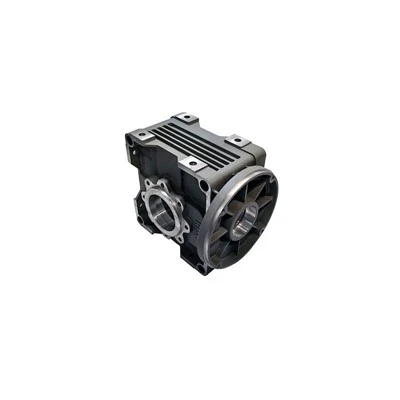
RF Hypoid Gear Motor As a supplier of right angle bevel gear reduction motors, we understand the importance of choosing the right braking method for your specific application. Our team of experts can help you evaluate your requirements and select the most appropriate braking solution for your motor. If you are interested in purchasing right angle bevel gear reduction motors or need further information about our braking options, please feel free to contact us for a detailed discussion and a customized solution. Our experienced sales team is available to answer all your questions and guide you through the purchasing process.
References
- "Electric Motors and Drives: Fundamentals, Types and Applications" by Austin Hughes and Bill Drury
- "Mechanical Engineering Design" by Joseph E. Shigley, Charles R. Mischke, and Richard G. Budynas
- "Hydraulic Systems Design and Maintenance" by David Crolla
GuangDong Ruisico Transmission Technology Co., Ltd.
Guangdong Ruisico Transmission Technology Co., Ltd. is one of the most reliable right angle bevel gear reduction motor manufacturers and suppliers in China, also supports customized service. Welcome to buy durable right angle bevel gear reduction motor made in China here and get quotation from our factory. For price consultation, contact us.
Address: No. 70, Anjing Road, Shengfeng Community, Xiaolan Town, Zhongshan City
E-mail: info@risc-drive.com
WebSite: https://www.risc-motor.com/
