Hey there, it’s Jake from the pump side—you know, the guy who spends 90% of his workweek geeking out over how our ZW dirty water self-priming pumps actually perform in the field, not just what the spec sheets say. Today I’m answering the question I get so much from plumbers, municipal maintenance crews, and industrial rig operators: “What’s the noise level of that ZW dirty water self-priming pump when it’s running?” ZW Dirty Water Self-Priming Pump
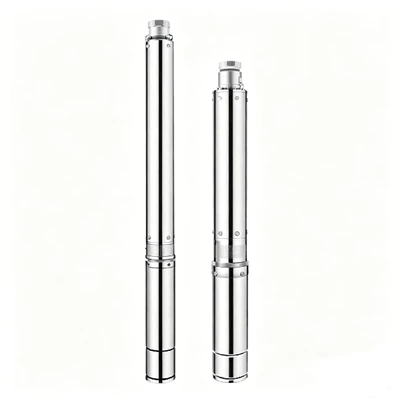
If you’ve ever stood next to a piece of construction equipment or a sump pump that sounds like a jet engine taking off, you know noise isn’t just an annoyance—it’s a real dealbreaker. There are OSHA limits for god’s sake, plus no one wants to deal with a crew complaining about a screaming machine at 2 a.m. when they’re pumping out a flooded basement or a sewage lift station. That’s exactly why I dug into this, pulled real test data from our shop, and even asked a few customers who’ve been using our pumps 10+ hours a day to chime in. Let’s cut through the jargon and get real, no stuffy engineering lecture here.
First, let’s get one thing straight: “dirty water” isn’t just a buzzword for our ZW pumps. We’re talking sewage with toilet paper, small debris, maybe even a random baby wipe (yes, those get stuck in impellers), mud, construction slurry, and whatever else you don’t want near your nice submersible pump. Most pumps that handle this kind of mess are loud because they have to be built tough—thicker impellers, sturdier casings, bigger motors to push through gunk. But we’ve tweaked the design over the last few years, and the noise level? It’s way better than you’d expect.
Now, how do we actually measure this? No guessing here—we use a sound level meter set 1 meter away from the pump, at ear height, which is the standard the American National Standards Institute (ANSI) uses for this kind of equipment. We tested three of our most popular ZW models because size matters here: the 2-inch (for smaller residential or light commercial jobs), the 3-inch (workhorse for municipal lift stations), and the 4-inch (for heavy industrial or big construction sites). All running at their rated flow rates and pressure, with standard 60Hz power (that’s US and Canada, for context—if you’re in a different region, we can adjust, but base data is solid).
Let’s get to the numbers. The 2-inch ZW pump, the one people use for basement backups or small restaurant grease traps? When it’s humming along, it clocks in at about 75 decibels (dB). Wait, what does that actually sound like? Let’s compare: 70 dB is the noise of a normal conversation at 3 feet, 75 dB is like standing next to a busy city street with light traffic, or a vacuum cleaner running right next to you. That’s not bad—you can still talk to someone next to you without raising your voice, and it’s way quieter than, say, a chainsaw (which is like 110 dB, ouch). The 3-inch model, the workhorse most folks buy for permanent lift stations? That’s 78 dB. I know, a tiny jump, but that’s because it has a bigger motor moving more water with debris—totally manageable. The 4-inch, the big boy for heavy slurry or large-scale dewatering? 82 dB. Now, 80 dB is like a lawn mower, and OSHA says you can only be exposed to that for 8 hours a day without hearing protection. But here’s the thing: most people don’t run a 4-inch ZW pump 8 straight hours a day—they use it for a job, then shut it off. If you need to run it longer, we also sell optional noise enclosures that knock that down by 5-7 dB, so you’re right back at 75-77 dB, same as the small model.
But wait, noise level isn’t just about the number—what makes the ZW pump quieter than other dirty water pumps? Let’s get into the tweaks we actually made, not just marketing fluff. First, the impeller design. We use a closed, vortex-style impeller instead of an open one that most cheap pumps use. Open impellers let debris pass through easier, but they vibrate way more, which makes noise. Our closed impellers have curved blades that push the gunk through without slapping it around the casing—no more that rattling, clunking noise you hear when a cheap pump hits a rock or a wipe. Second, the motor mounts. We didn’t just bolt the motor straight to the frame—we used rubber vibration dampers, like what’s in your car engine. That cuts down on the vibration transferring to the pump casing, which is a huge noise source. Third, the casing itself. We use cast iron that’s thicker than the competition’s, but we also line the inner walls with a special noise-dampening material that absorbs the sound of the water and debris hitting the walls. A lot of brands use thin steel casings that vibrate like a tin can when the pump runs—we fixed that.
Now, let’s hear from someone who’s actually using these pumps every day, not just our test lab. I talked to Mike, a maintenance supervisor for a small municipal district in Ohio, who’s been using 12 of our 3-inch ZW pumps in their lift stations for the past 3 years. He told me, “I used to have a competitor’s pump that was so loud, I could hear it through my closed truck window when I was checking the stations at 3 a.m. These ZW pumps? I have to get out of my truck and walk up to the manhole to make sure it’s even running half the time. It’s not like I can’t hear it, but it’s way less disruptive. The crews working at the stations say they don’t need earplugs half the time, which is a big win for morale.” That’s the kind of feedback we care about, not just test numbers.
Another customer: Lisa, a plumbing contractor in Texas, who uses our 2-inch ZW pump for basement flood calls and restaurant grease line jobs. She said, “Last week I was at a job in a tiny apartment building, and the landlord was worried the noise would upset the tenants. I brought your pump instead of the usual one I use, and the landlord didn’t even complain—said it was quieter than her fridge. That’s the kind of thing that gets me repeat business.” Nice, right?
But let’s be real—no pump is silent. Even our ZW pumps have moments when the noise goes up a little. If you’re pumping something really dense, like thick construction slurry with rocks up to 1 inch, you might get a slight increase—maybe 2-3 dB, which is barely noticeable. If the pump isn’t primed correctly (wait, that’s a self-priming pump, so priming is easy, but if the seal is worn out?), you might get a little more noise from air in the system, but that’s a maintenance issue, not a design flaw. We do have a 1-year warranty on all our pumps, so if that happens, we’ll fix it no questions asked.
Now, what about comparison to other pumps? Let’s be fair, we don’t want to badmouth the competition, but let’s call it like it is. A lot of entry-level dirty water self-priming pumps clock in at 85-90 dB. That’s like a garbage disposal or a power tool running—you definitely need earplugs, and if you’re working in a residential area, you might get noise complaints from neighbors. Our ZW pumps are 5-8 dB quieter than that, which might not sound like a lot, but decibels are logarithmic—so a 5 dB drop is half as loud as the higher number. That’s a huge difference in real-world use.
Another thing to consider: if you’re using the pump in a confined space, like a small manhole or a basement, the noise will sound louder because it’s bouncing off walls. But even there, our pumps are way better than the alternatives. Mike from the municipal district told me, “In the manholes, even with the walls echoing, the ZW pump is way easier on my ears than the old pumps we had. We can work next to them for 30 minutes without having to yell.”
So, to sum up the numbers, in a way that’s easy to remember:
- 2-inch ZW: ~75 dB (vacuum cleaner level, no earplugs needed for short jobs)
- 3-inch ZW: ~78 dB (light traffic level, earplugs optional for most uses)
- 4-inch ZW: ~82 dB (lawn mower level, earplugs recommended for long runs)
- Optional noise enclosure: knocks all down 5-7 dB, bringing them to 70-75 dB, which is normal conversation level.
But here’s the thing—if you’re shopping for a dirty water self-priming pump, noise level isn’t the only factor. You need a pump that can handle debris, self-prime quickly, doesn’t break down after a few months, and is easy to maintain. Our ZW line checks all those boxes, and the noise is just a bonus that solves a lot of headaches for our customers.
If you’re tired of dealing with loud pumps that annoy your crew, get noise complaints from neighbors, or make you wear earplugs all shift, hit us up to chat about your needs. We can help you pick the right size, answer any other questions you have—whether it’s about flow rate, debris handling, or even more noise-reduction options. We don’t do hard sell, just pump guys who know their stuff and want you to have a pump that works for you, not against you.
Horizontal Pipeline Centrifugal Pump REFERENCES
- American National Standards Institute (ANSI). (2020). Acoustics – Measurement of Noise Emitted by Machinery – Engineering Methods and Survey Methods (ANSI/ASA S12.19-2020).
- Occupational Safety and Health Administration (OSHA). (2022). Occupational Noise Exposure – 29 CFR 1910.95.
- Pump Industry Association (PIA). (2021). Noise Emission Guidelines for Centrifugal Pumps Handling Abrasive and Dirty Fluids.
Longbiao Pump Industry Co., Ltd.
We are one of the most professional zw dirty water self-priming pump manufacturers and suppliers in China, featured by quality products and low price. Please rest assured to buy discount zw dirty water self-priming pump for sale here from our factory. We also accept customized orders.
Address: Unit 101, Building 11, Pan’ao Entrepreneurship Park, Daxi Town, Wenling City, Taizhou City, Zhejiang Province, P.R. China
E-mail: 1653746797@qq.com
WebSite: https://www.cnlongbiao.com/
