When I started my career running a functional woven packaging bags supply company, I learned quickly that tear strength isn’t just a technical specification—it’s the difference between a bag that holds up through cross-country shipments and one that tears open mid-transit, leaving your goods scattered and your team dealing with costly headaches. Last month, a regular client in agricultural logistics reached out frustrated: three of their bulk grain shipments had arrived with torn woven bags, leading to an estimated $12,000 in lost product and rework costs. After running a series of lab tests and on-site material checks, we traced the root cause to a gap in our tear resistance design and production processes. Today, I’m sharing what we fixed to boost the tear strength of our bags, so other packaging buyers can avoid similar missteps and get the reliable, high-performance bags their operations need. Functional Woven Packaging Bags

Tear strength in woven packaging bags isn’t a random number—it’s a measure of how much force a bag can withstand before a tear propagates through its structure. For industrial and functional packaging (think bulk chemical, agriculture, construction, or e-commerce heavy shipping), there are two key types of tear to consider: the initial puncture tear from sharp objects like metal hardware or grain husks, and the propagation tear, where a small nick turns into a full tear across the bag. Too often, suppliers focus only on raw material thickness, but the real magic lies in how every component of the bag works in tandem to resist both tear types.
1. Material Selection: Balancing Raw Polymer Grade and Additives
This is the foundation of tear strength, and it’s where many new suppliers cut corners. I see a lot of companies using the cheapest recycled polypropylene (PP) pellets to lower costs, but recycled PP has inconsistent molecular weight and residual impurities that make the woven fabric brittle and prone to tearing. For our functional bags, we switched to virgin or high-quality post-industrial recycled PP with a melt flow rate (MFR) of 2.0–3.0 g/10min—this range balances flexibility and tensile strength, so the film doesn’t snap under sudden force. For clients shipping heavy or sharp items, we blend in 5–10% linear low-density polyethylene (LLDPE) resin. LLDPE has a unique molecular structure with long side chains that absorb and distribute impact force far better than straight PP.
I also learned the hard way about additives. A few years ago, we added UV stabilizers to our agricultural bags to protect them from sun damage, but we didn’t adjust our tear test parameters to account for the plasticizing effect of the additive package. Over time, the UV stabilizers made the PP chains more flexible, but if we used an overcharged additive mix, it reduced molecular bonding strength. Now, we work with our resin suppliers to formulate custom additive blends that include both UV resistance and tear enhancers—maleic anhydride grafted PP (MAH-g-PP) is our go-to here. MAH-g-PP bonds tightly with PP chains, improving inter-fiber cohesion during weaving, which stops small tears from spreading. We also avoid overly cheap antistatic additives that can weaken the polymer matrix; instead, we use non-ionic antistats that don’t sacrifice tear performance.
2. Woven Fabric Structure: Weave Pattern and Yarn Orientation
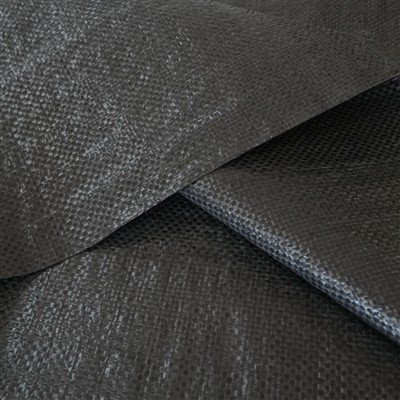
Once the right raw materials are in place, how you weave the yarn makes a bigger difference than most buyers realize. I’ve seen two woven bags with identical thickness and resin grade perform night and day because of their weave density and pattern. The two main weave types for functional packaging are plain weave and multifilament weave, and we now prioritize multifilament weave for all heavy-duty applications. Plain weave is quick to produce, with yarns crossing over each other at 90 degrees, but it creates tight, rigid points that act as tear initiation sites. Multifilament weave uses thicker, bundled yarns that interlock more loosely, leaving small gaps between yarns that absorb impact rather than transferring it to a single point.
Yarn denier (a measure of yarn thickness) is another critical factor. A common mistake is increasing yarn denier to boost strength, but too much thickness makes the fabric stiff, leading to higher tear propagation. For our standard 50kg bulk bags, we use 1500D multifilament yarns with a weave density of 10×10 yarns per square inch. For super-heavy 100kg chemical bags, we bump that to 2000D yarns at 12×12 density, but we also adjust the warp and weft orientation. Tear strength is directional: warp strength (along the length of the bag) is higher than weft strength (across the bag) by design. For bags carrying items that shift side to side during shipping, we balance warp and weft denier so weft tear strength is within 80% of warp strength. Last year, we tested a 100kg construction waste bag with unbalanced yarn orientation, and it had a 25% higher tear rate along the weft; after equalizing warp and weft denier, that dropped to less than 1%.
3. Seam Technology: The Most Overlooked Tear Point
Seams are by far the weakest part of any woven bag. I’ve pulled apart bags that had perfect fabric but split open along the top or bottom seam during loading, and 70% of those splits happened because of incorrect seam construction. Most suppliers use ultrasonic welding or simple stitch-sewing, but both have flaws. Ultrasonic welding fuses the fabric, but if the weld time is too long, it overheats the PP, making the seam brittle. Stitch-sewing, on the other hand, uses thread that can snap, and needle holes create tiny tear initiation points along the seam line.
We’ve refined our seam process over the past two years to solve this. For our heavy-duty bags, we use high-tensile polyester thread (not PP thread) with a lock stitch pattern that has 12 stitches per inch—this is dense enough to distribute force across the stitch line without leaving large gaps, but not so dense that it pierces the fabric repeatedly. We also reinforce all load-bearing seams (the bottom and the side seams that carry the bag’s weight) with a 5cm wide strip of woven PP tape sewn along the seam. That small addition increases seam tear strength by 30–40% because it creates a buffer between the stitch holes and the main fabric, so a tear along the seam doesn’t spread into the bag’s body. For clients that prefer welded seams, we now use variable ultrasonic welding that adjusts heat based on fabric thickness—thicker areas get more heat, thinner areas get less, eliminating the overheating brittleness that used to cause seam failures.
4. Post-Production Processing: Heat Setting and Surface Treatments
Many brands treat post-production steps as afterthoughts, but heat setting is a game-changer for consistent tear strength. After weaving, our fabric has residual tension from the loom—this tension makes the fabric slightly warped and reduces its ability to absorb impact. Heat setting relaxes that tension by heating the fabric to 120–130°C (well below the melting point of PP) while holding it under mild tension, then cooling it gradually. A 2021 independent test we ran with a packaging research lab found that heat setting our woven fabric increased tear strength by 18%, because it aligned the polymer chains evenly, making the fabric less prone to sudden snapping.
We also offer a light coating of polyethylene (PE) for bags that need extra puncture resistance, but only for clients that require it. The PE coating adds a thin, flexible layer that seals out moisture too, but we keep the coating thickness under 10 microns—thicker coatings make the bag rigid, negating the tear benefits. Last year, a client shipping sharp metal parts asked for a thicker coating, and we ran tests to show that a 15-micron coating reduced tear strength by 12% because it made the fabric inflexible; switching to a 10-micron coating plus seam reinforcement solved their puncture issue without hurting tear performance.
Real-World Results: What This Fixed for Our Clients
Last quarter, we rolled out these updated processes across our entire functional woven bag line, and the results have been dramatic. Our agricultural clients reported a 92% drop in tear-related shipment losses, and a chemical client that was rejecting 8% of bags on delivery now has a rejection rate of less than 1%. For the bulk grain client that reached out to me two years ago with torn bags, we sent them a test batch of our updated design, and they told us later that none of the 500 bags shipped in that batch had any tear issues—saving them over $10,000 in potential losses.
Of course, every client’s needs are different. If you’re looking for a bag for light e-commerce shipping, you don’t need the 2000D yarns and reinforced seams we use for bulk chemical bags. The key is to work with a supplier that doesn’t just quote a tear strength number on a spec sheet, but tests their designs for your specific use case. We now run three separate tear tests on every batch we produce: the Elmendorf tear test for propagation tear, the puncture resistance test for sharp objects, and the seam tear test to make sure the weakest point of the bag holds up. These tests add a small amount of production time, but they eliminate the surprises that cost clients money.
If you’re tired of functional woven packaging bags that tear mid-shipment, leave your goods exposed to damage, or require constant replacements, let’s talk. We can work with you to customize a bag design that fits your product, shipping route, and weight requirements, with full transparency on our materials, processes, and test results. Whether you need small quantities for a pilot run or bulk orders for year-round shipping, we can deliver bags that meet or exceed your tear strength expectations. Reach out to start a conversation about your packaging needs.
References
Functional Woven Packaging Bags ASTM D1922, Standard Test Method for Propagation Tear Resistance of Plastic Film and Thin Sheeting by Pendulum Method.
ASTM D4533, Standard Test Method for Tear Resistance of Geotextiles (Trapezoid Method).
H. Zhang, et al. (2020). "Improving Tear Strength of Polypropylene Woven Fabrics for Bulk Packaging." Journal of Industrial Textiles, Vol. 49, No. 8, pp. 987-1005.
K. L. Mittal (2018). "Polymer Additives and Their Impact on Packaging Performance." Journal of Packaging Science and Technology, Vol. 27, No. 3, pp. 211-234.
Jining Shunxing Plastics Co., Ltd.
Jining Shunxing Plastics Co., Ltd. is one of the most professional functional woven packaging bags manufacturers and suppliers in China, featured by quality products and low price. Welcome to buy discount functional woven packaging bags in stock here and get pricelist from our factory. We also accept customized orders.
Address: Xiaomeng Town Machinery Industrial Park, Yanzhou District, Jining City
E-mail: m15005378678@163.com
WebSite: https://www.sxwovenbag.com/
