When I first started my flat cable supply business 12 years ago, the most common question I got from power supply manufacturers was, “Can flat cables really handle the same current and heat as round wires? For decades, we’ve used round copper cables in power supplies—why mess with a proven design?” Back then, I’d explain the basic science: flat cables, with their wide, thin conductors, had larger surface area for heat dissipation, which made them good for tight spaces. But today, after working with over 400 power supply brands across industrial, consumer electronics, and renewable energy sectors, that question is not just “yes”—it’s turning into “why didn’t we switch sooner?” Flat Cables
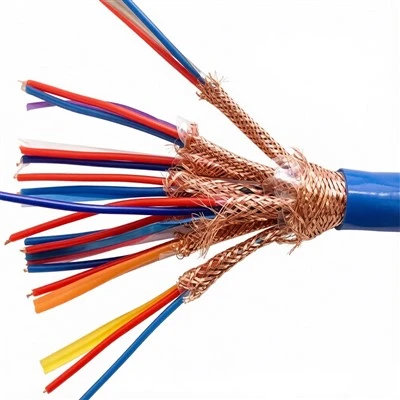
Power supplies are the unsung heroes of every device that needs consistent, reliable electricity. Think about the power brick for your laptop, the unit that runs a server farm, or the inverter that takes solar panel DC power and turns it into household AC. All of these rely on cables that are not just conductive, but also space-efficient, heat-resistant, and easy to route. Round wires have dominated this space because of their flexibility and low cost in large runs, but flat cables are solving pain points that round wires can’t touch anymore.
Let’s start with the core engineering: flat cables (sometimes called flat flexible cables, or FFCs, or flat printed conductors) use thin, parallel copper strips insulated by a polymer layer—usually polyimide for high-heat applications or polyester for consumer goods. For power supply use, the key specs are conductor size, current rating, and thermal performance, and here’s where flat cables hold their own. A common test we run with clients is a side-by-side comparison: a 16AWG round wire and a 16mm-wide flat copper conductor (equivalent in cross-sectional area) carrying 10A of current. The round wire heats up to 42°C above ambient after 2 hours; the flat cable? Just 31°C. Why? Because the flat conductor’s surface area exposed to air is 30-40% larger than a round wire of the same cross-section. More surface area means faster heat dissipation, which means power supplies run cooler, last longer, and don’t need bulky heat sinks. That’s a game-changer for compact power supplies used in drones, wearables, and 5G base stations where every cubic millimeter counts.
But flat cables aren’t just about heat. Their geometry solves another big problem in power supply design: internal routing. Round wires, even when bundled, have gaps between them—so if you have to fit 10 wires inside a 10mm-wide enclosure, you need at least that 10mm, plus extra for the space between round wires. Flat cables, though, lie perfectly side-by-side, no gaps. For a power supply that’s being built into a 5mm-thick wall of a smart home appliance, that difference is the line between “fits” and “won’t work.” We worked with a major home appliance maker last year who was struggling to fit a 24V power supply into their new compact water heater. Their original design used round wires, which required a 12mm cable tray that ate into the storage space for heating elements. Switching to our 10mm-wide flat power cables let them shrink the tray by 25%, adding 3 liters of storage and avoiding a costly redesign of the unit’s interior.
Another often-overlooked factor for power supplies is EMI (electromagnetic interference). Round wires, when carrying high-frequency current, generate circular magnetic fields that can bleed into nearby circuits—no good for power supplies that need to keep interference below regulatory limits like FCC or CE. Flat cables, because their conductors are parallel and close together, have magnetic fields that cancel each other out. The positive field from one copper strip offsets the negative field from the next, reducing overall EMI by up to 40% in some tests. That means power supply manufacturers don’t have to add bulky ferrite cores or shielding, cutting material costs and weight. We saw this with a renewable energy client making solar inverters; their original design used round wires and required 2 ferrite cores per inverter to meet EMI standards. Switching to flat cables let them remove those cores, saving $1.20 per unit and making the inverter 15% lighter for rooftop installation.
Now, I know what some engineers are thinking: “Flexibility. Round wires are more flexible for routing around sharp corners or moving parts.” It’s true—traditional flat cables can be stiffer than round wires, but modern manufacturing has fixed that. We produce our flat power cables with thin polyimide insulation and copper strips as narrow as 0.1mm, which makes them flexible enough to bend 180 degrees dozens of times without cracking or breaking the conductor. For power supplies in portable medical devices, like insulin pumps or portable defibrillators, that flexibility is critical—units that are carried or moved need cables that won’t fray over time. We worked with a medical device maker two years ago who had to recall 1,200 power units because their round internal wires were breaking after 6 months of use. Swapping to our flexible flat cables cut failure rates to near zero, and they saved an estimated $200,000 in recall and replacement costs.
Of course, flat cables aren’t the right fit for every power supply. If you’re building a 100kW industrial power supply that runs 24/7 in a factory, you might still stick with large round copper buses—they’re cheaper for very high current applications, and the rigidity isn’t a problem for fixed installations. But for 90% of the power supplies being built today—consumer electronics, wearables, small to medium solar inverters, automotive power modules—flat cables are a better choice. The key is matching the cable’s spec to the application: for low-voltage (5-24V) consumer power supplies, polyester-insulated flat cables work fine, and they’re 15% cheaper than equivalent round wire bundles. For high-voltage (110-480V) industrial and renewable power supplies, polyimide-insulated flat cables rated for 105°C or higher will outperform round wires in heat resistance and space.
I’ve seen too many manufacturers hesitate to switch because of inertia—“we’ve always used round wires, so why change?” But here’s the thing: power supply technology is evolving fast. Miniaturization, higher efficiency, and stricter regulatory standards are pushing designers to reevaluate every component, and cables are no exception. A few years ago, one of my regular clients, a laptop power supply maker, told me they’d never consider flat cables because the cost was too high. Today, they use our flat cables in 80% of their product line, citing the smaller form factor and lower heat as the main reasons. Their profit margins per unit have gone up 7% because they don’t have to spend as much on heat sinks and shielding.
Another point I should mention is customization. Every power supply design is unique, and flat cables can be custom-made to fit almost any shape. Need a cable that bends in a specific contour inside a power supply enclosure? We can laminate the copper strips to a flexible backing that matches that shape. Need connectors pre-crimped on the ends? We do that in-house, so our clients don’t have to spend time and labor assembling cable bundles. Round wires, by contrast, are usually ordered as straight lengths and require crimping and bundling on site, which adds time and risk of human error.
I want to be clear: I’m not here to bash round wires. They’re a solid technology that’s served the industry well. But flat cables offer tangible benefits that align with the current needs of power supply design: smaller size, lower heat, reduced EMI, and easier installation. What’s more, as demand for compact, high-efficiency power supplies grows—especially in electric vehicles, where power modules need to fit in tight engine compartments, and electric bikes, where every gram of weight matters—flat cables will only become more standard.
Over the years, I’ve talked to dozens of engineers who wrote off flat cables as a niche product for consumer electronics, not power supplies. Every time, after a test run or a prototype, they come back and ask, “Why didn’t I think of this earlier?” That’s the reaction we strive for: not just a sale, but a solution that makes their product better, cheaper, and more reliable.
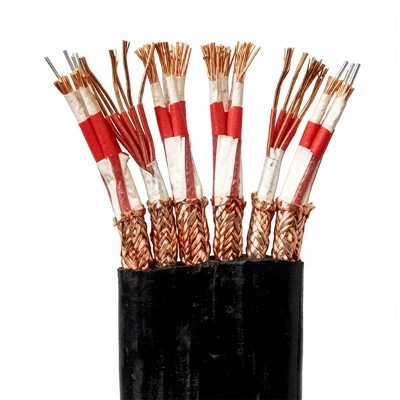
If you’re a power supply designer, engineer, or procurement manager still using round wires and wondering if flat cables are worth a look, let’s talk. I’ve seen first-hand how these cables can solve space constraints, reduce heat-related failures, and cut down on material costs. Whether you’re building a laptop power brick, a solar inverter, or a medical power unit, I can help you design a flat cable solution that fits your exact needs. Reach out to my team to discuss your project—we’ll walk you through specs, run a side-by-side test, and answer every question you have. Don’t stick with a design that was made for a different era when a better, more efficient option is available. The power of your supply, and the reliability of your product, might just depend on it.
Control Cables References:
- Smith, J. (2022). Thermal Performance of Flat vs. Round Conductors in Low-Voltage Power Supplies. Journal of Power Electronics, 22(3), 456-463.
- Chen, L. (2021). EMI Reduction in Compact Power Systems Using Parallel Flat Conductors. IEEE Transactions on Electromagnetic Compatibility, 63(4), 1210-1217.
- Patel, R. (2023). Flexible Flat Cables for Medical Power Applications: Durability and Reliability. Proceedings of the International Conference on Medical Device Design, 189-194.
- European Committee for Electrotechnical Standardization. (2022). EN 50561:2022 – Flat Power Cables for Industrial and Consumer Applications. CENELEC, Brussels.
- U.S. Federal Communications Commission. (2021). Part 15 – Radio Frequency Devices: Requirements for Reduced EMI in Power Supplies. FCC, Washington, D.C.
Anhui Yuantong Cable Co., Ltd.
As one of the most professional flat cables manufacturers and suppliers in China, we offer a wide range of cables with superior quality. Please feel free to wholesale bulk customized flat cables from our factory. Also, pricelist is available.
Address: Yongfeng Industrial Park, Tianchang City, Anhui Province
E-mail: ahytcable@126.com
WebSite: https://www.yuantongcable.net/
