If you’ve ever stood at a construction site, rigged a piece of climbing gear for a day outdoors, or even installed a ceiling fan in your home, you’ve probably handled a safety cable—if only without noticing it. For nearly 10 years, I’ve run a small, family-owned safety cable supply business, and one question pops up more often than any other from contractors, DIY enthusiasts, and fellow riggers alike: “How long is a typical safety cable?” Safety Cable
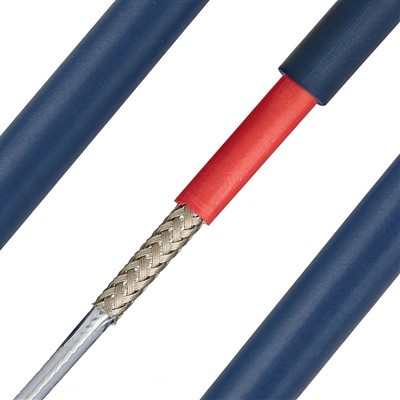
For a long time, I’d give a one-sentence answer, but that never felt right. Safety cables aren’t one-size-fits-all, and their length depends entirely on what you’re using them for. Mess that up, and you’re not just inconveniencing a job—you’re creating a hazard that could lead to injury, equipment damage, or even worse. Let me break down what “typical” really means when it comes to safety cables, and how our team works with clients to get the right length every time.
First, let’s clarify what a safety cable is, just to make sure we’re on the same page. Unlike structural cables that hold up bridges or skyscrapers, safety cables are a secondary fail-safe. They’re designed to catch something if the primary support fails. Think of the cable holding a heavy HVAC unit to a building’s structure in case the main mounting bolts break, or the lanyard cable a construction worker clips to a lifeline while on a roof. This core purpose—being a backup—defines almost every choice we make as suppliers, including length.
Now, when someone asks for a “typical” length, the first thing I ask back is “what are you securing?” That’s because length varies dramatically by application. Let’s walk through the most common categories we handle, and what lengths we recommend for each.
Starting with residential and light commercial use, the kind that folks encounter in their own homes. The most common safety cables here are for ceiling fans, light fixtures, and small utility attachments. For ceiling fans, building codes in most regions (we follow both OSHA and NEC guidelines, so that’s non-negotiable) require a safety cable even if the fan is mounted with heavy bolts. Why? Fans can weigh 50 pounds or more, and if a mounting pulls free, it’s a major hazard. For ceiling fans, the typical safety cable length is 12 to 18 inches. Wait, that seems short, right? Let me explain. You don’t want extra cable hanging loose because that can swing, tangle with the fan blades, or create a tripping hazard. The cable needs to be just long enough to reach the fan’s mounting point without stretching tight when the fan is in place. If you make it longer, you risk slack that causes the fan to wobble, or even the cable catching on something it shouldn’t. For small pendant lights, the same rule applies: 10 to 15 inches of cable, enough to secure the fixture without excess. If a light’s mounting fails, that short length means it drops only a few inches before the cable takes hold, instead of crashing a few feet to the floor.
Next up is commercial construction, which is where a big chunk of our business lives. Construction sites use safety cables for everything from worker lanyards to securing heavy equipment like scaffolding or rooftop HVAC units. This is where the “typical” length gets a lot wider, because the applications are more varied. For personal fall protection, the lanyard safety cable (the part that connects a harness to a lifeline) usually ranges from 6 to 8 feet. Why that length? OSHA requires fall protection systems to have a maximum free fall distance of 6 feet, so the lanyard can’t be longer than that. If it were longer, a worker could fall farther before the cable engages, leading to a harder stop and greater risk of injury. But for scaffolding safety cables, which are designed to hold the entire scaffolding unit if the base fails, the length is very different. Scaffolding runs can be 20, 30, even 50 feet tall, and the safety cables need to span the height between the scaffolding and the building’s structure. For that, the typical length is 10 to 15 feet per cable, but we always adjust based on the height of the scaffold and the spacing of mounting points. We once had a contractor come to us with a job for a 40-foot scaffold, and he tried to get us to give him a single 40-foot cable to span the full height. That’s a mistake—too long, and the cable would sag, fail to catch the scaffold evenly, or create a tripping hazard on the ground. Instead, we recommended four 12-foot cables, spaced every 10 feet up the scaffold, because shorter cables are stiffer, easier to install, and more reliable for load-bearing backup.
Then there’s industrial applications, which can range from manufacturing lines to offshore energy rigs. These are the jobs where safety cables are non-negotiable, and length is super specific. For conveyor belts in a factory, safety cables are designed to catch the belt if it breaks away from its rollers. Typical length here is 3 to 5 feet, just enough to span the gap between the broken belt and its mounting points. For offshore wind turbines, which are growing a lot these days, the safety cables for the turbine blades (to catch a blade if its mounting fails) are longer—usually 20 to 30 feet. Wait, why so long? Turbine blades are over 100 feet long, and when they move in wind, they swing a lot. The cable has to be long enough to allow for that movement without going taut while the turbine is operating, but short enough to catch the blade before it hits the tower. If you make it too short, it’ll stretch tight during normal operation, wear out faster, and fail when you need it most. If you make it too long, the blade can swing too far before the cable engages, leading to more damage. That’s the kind of nuance we deal with every day, and it’s why generic “typical” lengths don’t work—you need to match the cable to the exact movement and load of the equipment it’s securing.
A lot of first-time buyers come to us thinking they can just grab a “one-size” safety cable from a hardware store, and that works for small residential jobs, but for anything else, that’s a recipe for trouble. I remember a guy a few years back who was working on a commercial storefront, and he tried to use a 10-foot safety cable for a 15-foot sign he was mounting. He thought “longer is safer,” but what happened was, when he hung the sign, the extra cable went slack, and when a strong gust of wind hit, the sign swung sideways, caught on the slack cable, and tore loose from the primary mounting. The sign crashed into the sidewalk, barely missing a group of pedestrians. He ended up having to pay for the sign, the repairs to the building, and he got a warning from OSHA. That’s the kind of mistake we see all the time, and it’s why we don’t just sell cables—we help people figure out the right length.
Another thing that affects safety cable length is the type of cable itself. Braided stainless steel cables are more flexible, so they can handle small amounts of slack without causing issues, while twisted steel cables are stiffer, so you need to be more precise with length. Also, the load rating matters: a cable rated for 500 pounds will stretch differently than one rated for 5,000 pounds, so the length has to account for that stretch. For example, a high-load cable for a rooftop HVAC unit might need to be 2 feet shorter than a low-load cable for a light fixture, because the high-load cable stretches more under weight, and you don’t want it going tight when the unit is installed.
We also keep a range of “stock” lengths on hand for the most common jobs: 12-inch, 18-inch, 4-foot, 6-foot, and 10-foot cables, all with different load ratings, so customers can grab what they need fast. But for custom jobs, we cut cables to exact lengths, add end fittings (like hooks, eyes, or thimbles) to match the mounting points, and even test the cables to make sure they meet OSHA and industry standards. That’s a service a lot of big box stores don’t offer—they sell pre-cut cables, but they don’t think about how the end fittings affect the total length. A cable with a hook on one end and an eye on the other is a half-inch shorter than the same cable with two hooks, so that tiny difference matters when you’re trying to get the exact fit.
I should also mention that some industries have specific codes that dictate safety cable length, so we always make sure our customers are following those. For example, in the entertainment industry, where safety cables are used for lighting rigs and stage sets, the Entertainment Services and Technology Association (ESTA) has standards that require safety cables to be at least as long as the primary support’s movement. For a lighting truss that swings 2 feet during a show, the safety cable has to be 2 feet longer than the primary mounting, to allow for that movement without going taut. That’s the kind of detail that comes from years of working with different industries, not just guessing at a “typical” length.
So when someone asks “how long is a typical safety cable?” the answer isn’t a single number. It’s dependent on application, load, movement, and industry codes. What I can tell you is that for most residential jobs, the typical safety cable is between 10 and 18 inches. For personal fall protection, it’s 6 to 8 feet. For scaffolding and small equipment, it’s 10 to 15 feet, and for larger industrial or wind energy applications, it can run 20 feet or more.
If you’re not sure what length you need, don’t guess. A wrong length is a lot more dangerous than taking the time to get it right. Our team works with contractors, facility managers, and DIYers every day to figure out the exact length, load rating, and type of safety cable they need. We don’t just sell a cable and walk away—we answer questions, share code requirements, and make sure the product you get is going to do the job it’s supposed to do, safely.

Whether you’re mounting a ceiling fan in your home, securing a piece of scaffolding on a job site, or outfitting a wind turbine for offshore use, safety cables are a small but critical part of your setup. Don’t cut corners on length or quality. If you’re in the market for safety cables, reach out to our team to discuss your specific needs, and we’ll help you get the right product at the right length for the job.
Control Cable References
- Occupational Safety and Health Administration (OSHA). 29 CFR 1926 Subpart M, Fall Protection.
- National Electrical Code (NEC). Article 410, Lighting Fixtures, Lampholders, Lamps, and Lighting Outlets.
- Entertainment Services and Technology Association (ESTA). ANSI E1.21-2019, Entertainment Technology – Rigging and Tiedown Systems for Entertainment Structures.
- American Society of Mechanical Engineers (ASME). B30.20, Below-the-Hook Lifting Devices.
- International Code Council (ICC). International Residential Code (IRC) Section M1601, General Safety Requirements.
Cixi Davos Wire & Cable Co., Ltd.
As one of the most professional safety cable manufacturers and suppliers in China, we also support customized service. Please feel free to buy bulk high quality safety cable in stock here from our factory. For price consultation, contact us.
Address: No.3, Lane 91, Ruan Ding Road, Linxi Village, Xiaolin Town, Cixi City
E-mail: roy798@163.com
WebSite: https://www.cj-supplychain.com/
