Let’s talk about a question I get at least once a week from new and returning customers alike: Does a glue applicator really need to be calibrated? I’m the operations manager at a glue applicator supply company—we’ve been building, servicing, and calibrating precision applicators for packaging, automotive, furniture, and electronics manufacturers for over 12 years now—and for most of that time, I would have given a quick, half-hearted “Yes, of course” without explaining why. But lately, I’ve watched plants cut corners on calibration to save a few hours of downtime or a couple hundred dollars in service fees, only to end up with glue waste, product defects, and weeks of lost production when their line goes down unexpectedly. If you’re a plant manager, maintenance lead, or production engineer staring at a stack of work orders or a delayed shipment because your glue isn’t applying right, this post is for you. Glue Applicator
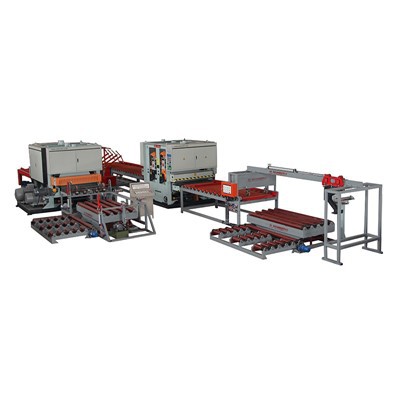
First, let’s get one thing straight: not all glue applicators are the same. We supply everything from simple manual bench applicators for small batch furniture work to high-speed robotic systems that apply 12 beads of adhesive in a single second for consumer packaging. The calibration needs for a manual unit used to assemble picture frames are way different than for a robotic system running 24/7 on a snack food packaging line—but that doesn’t mean either can skip it entirely. Calibration, at its core, is the process of making sure your applicator is applying exactly the volume, pattern, and placement of glue it’s programmed to. For a manual unit, that might mean checking that every trigger pull dispenses 0.5 mL of glue, not 0.3 or 0.7 mL. For a robotic system, that could mean verifying that a bead applied to the side of a cereal box is 8 mm wide, centered 10 mm from the edge, and not running outside the cardboard to cause peeling or sticky packaging.
I remember a customer call from a mid-sized automotive parts plant about three years ago. They had a line that door panels, and after a new production run change, their adhesive bonds were failing at a rate of 12%—way above their acceptable 0.5% threshold. They tried changing glue batches, adjusting line speed, even replacing applicator nozzles, and nothing worked. When we sent a service tech out to calibrate their robotic applicators, he found that the internal pressure regulators had drifted just 7 psi over six months. That drift might sound tiny, but for a system applying hot melt adhesive at 180°C, that meant each bead was 22% thinner than it should be. By recalibrating the pressure, nozzle alignment, and speed of the robotic arm, we got their defect rate down to 0.3% in less than four hours. The customer told us later that the cost of that calibration was less than 10% of the lost revenue and rework they had incurred in the two weeks before we arrived. That’s the kind of math no plant can afford to ignore.
Wait, you might be thinking—my applicator worked fine when I installed it. Why would it drift on its own? That’s a great question, and it’s tied directly to how these systems operate. Let’s break down the common factors that cause uncalibrated drift over time. First, thermal cycling. Most industrial glue applicators, especially hot melt units, run at consistent high temperatures to keep the adhesive liquid enough to flow. Every time the system turns on and off, or the ambient temperature in the plant fluctuates (which is common in facilities that load docks or have uninsulated production areas), the internal components—pressure sensors, nozzles, even the hose that carries glue to the applicator—expand and contract. Over hundreds of cycles, that tiny movement adds up, throwing off the volume and placement of glue. Second, wear and tear. Nozzles get clogged with dried glue, internal seals wear down from repeated pressure changes, and motors that drive the glue pumps lose a little precision every time they cycle. Even a brand-new nozzle, if it’s not aligned correctly, will apply an uneven bead. Third, line speed changes. A lot of plants adjust production rates to meet demand, and if you speed up or slow down your line without adjusting the applicator’s settings, the ratio of glue application to line movement gets out of whack. For example, if your line slows by 10% but your applicator is still dispensing glue at the same rate, you’ll end up with thick, messy beads that create gaps or squeeze out onto finished products.
I’ve had customers argue with me that they check their glue application by hand, so they don’t need calibration. “I run a test bead every morning, and it looks fine,” they’ll say. But here’s the difference between a visual check and calibrated measurement: the human eye can only see so much. A bead that looks perfectly even to you could be 15% thinner at one end than the other—and that’s the exact kind of inconsistency that causes a bond to fail when it’s under stress, like when a customer pulls open a cereal box or a car door slams shut. We once had a customer in the furniture industry who relied on visual checks for 18 months before their custom cabinet manufacturer started getting complaints about doors falling off hinges. A calibrated test found that their manual glue applicator’s trigger was off by 0.2 mL per pull—enough that the glue on the edge of each door frame was just thin enough to fail the manufacturer’s 12-month durability test. Calibration doesn’t just catch obvious problems; it catches the tiny, invisible ones that lead to big headaches later.
Now, let’s talk about frequency. How often do you need to calibrate your glue applicator? The short answer is: it depends on your system and your operating conditions. For manual bench applicators used for small, low-volume jobs, we recommend calibration every 6 months, or whenever you change glue types, nozzle sizes, or line setups. For high-speed robotic applicators running 24/7 in dusty, high-temperature plants, we recommend calibration every 3 months, plus a quick spot check every week. If you’re running a new applicator, or one that’s had maintenance work done (like a nozzle replacement or seal change), you should calibrate it right away—don’t assume that repair fixed the alignment or pressure settings. We also always advise customers to calibrate before a big production run, like a holiday order or a new product launch, to avoid any last-minute surprises.
I know what some of you are thinking next: “Calibration sounds expensive and time-consuming.” Let’s do a quick cost-benefit breakdown, because that’s what matters most to production teams. A single calibration service call for a standard industrial applicator usually costs between $350 and $800, depending on the system type and how far the tech has to travel. Compare that to the cost of reworking defective products: if you’re a snack food plant and a bad batch of packaging costs $10,000 in lost product and rework, that’s way more than a calibration. Or think about downtime: if your line goes down for 8 hours to fix a defect-related issue, that’s thousands of dollars in lost production for every hour your line is idle. We’ve had customers tell us that a single uncalibrated applicator once cost them $45,000 in a single week of lost orders and rework. That’s not an exaggeration—that’s real, on-the-job cost that comes from skipping something as simple as calibration.
Another big benefit of calibration that people rarely talk about: glue waste. Glue is a big expense for most manufacturing operations, and an uncalibrated applicator can waste 10-25% of your adhesive over time. If you’re using a high-quality hot melt adhesive that costs $15 per kilogram, that’s hundreds, even thousands of dollars a month going down the drain because your applicator is applying too much glue. Calibrating your system to apply exactly the right volume cuts that waste, saving you money on materials without sacrificing product quality. We had a customer in the electronics industry that switched to calibrated applicators and cut their glue costs by 18% in the first six months, just by applying less overage glue. That’s pure profit they would have left on the table otherwise.
Wait, can you calibrate a glue applicator yourself, or do you need a professional? That’s another common question. For basic manual applicators, you can do simple calibration checks at your plant with a gram scale and a stopwatch. The process is: apply a test bead of glue, weigh it, and adjust the applicator’s settings until the weight matches the recommended volume for your job. But for complex robotic applicators, or systems with advanced pressure controls, we always recommend working with a trained service tech. Robotic systems have multiple moving parts, and calibrating them incorrectly can cause more damage—like a nozzle that’s misaligned and hits a moving line, causing costly crashes. At our company, we offer both on-site calibration services and remote calibration support for customers who prefer to do it in-house, and we always provide clear documentation of the calibration results, so you can track performance over time.
I’ll wrap this up with a story from last month, that drives this whole point home. We had a first-time customer who runs a small packaging plant for local craft food products. They had a manual glue applicator that they’d used for 5 years, never calibrated, and were having trouble with their shipping boxes coming apart during shipping. They thought the glue was bad, so they switched brands, tried new boxes, and nothing worked. When we came out to calibrate their applicator, we found that the pressure gauge was reading 15 psi lower than it should have been, so the glue beads were too thin to hold the boxes closed. After calibration, their defect rate dropped from 8% to 0.2%, and they told us that that calibration was the difference between them losing a big wholesale order and keeping it.
So to answer the original question: yes, a glue applicator does need to be calibrated. Not because there’s something inherently wrong with the applicator you bought, but because the conditions it operates in, the wear and tear it goes through, and the demands of your production line will cause it to drift over time. Skipping calibration might save you a few hours or a few dollars in the short term, but it will almost always lead to bigger costs down the road: defects, rework, lost production, and unhappy customers. If you’re not sure how often to calibrate your specific applicator, or you’re noticing issues with glue application, don’t wait until you have a big problem. Reach out to our team to connect on your needs. We’ll help you figure out the right calibration schedule, whether you need on-site service, or guidance on in-house calibration, so your applicators run smoothly and your production stays on track.
Hot-press for Plywood References:
- Manufacturing Performance Institute. (2021). Maintenance Best Practices for Precision Dispensing Equipment. Retrieved from industry trade publications on industrial manufacturing equipment.
- Society of Plastics Engineers. (2019). Hot Melt Adhesive Application and Calibration for Automotive Assembly. Annual Technical Conference Proceedings.
- Packaging Machinery Manufacturers Institute. (2022). Downtime Cost Analysis for Secondary Packaging Lines. Industry Benchmark Report.
Jiashan Changle Machinery Manufacturing Co., Ltd.
Address: Building 12, Zone A, Wanyang Innovation City, No. 23 Yucao South Road, Ganyao Town, Jiashan County, Jiaxing City, Zhejiang Province
E-mail: Changle84615620@163.com
WebSite: https://www.changlejx.com/
