If you’ve ever stood in front of a rack of pipe elbows at a job site or stared at a spec sheet trying to pick the right part, you’ve probably thought, “Wait… what even is this pressure rating, and why does it matter anyway?” As a pipe elbow supplier, I get this question all the time—and honestly, it’s the stuff that makes or breaks a project. Skimp on this rating, and you’re looking at leaks, downtime, or way worse. Let’s break this down like we’re chatting over a coffee at the warehouse, no stuffy jargon overload. Pipe Elbow

First, let’s kill a myth right out the gate: a pipe elbow’s pressure rating isn’t just a random number stamped on the side. It’s a standardized (but not always identical across every region) measure of how much internal pressure the elbow can handle safely over its lifespan. Think of it like a workout max for a runner—push past that, and things start to crack, not just hiccup.
Now, let’s get into how that number actually gets set, because that’s where most folks get tripped up. It’s not just a quick test with a pressure gauge. Elbows (especially the welded or forged ones we sell) go through a whole rigmarole of calculations and real-world testing to get their rating. The big factors? The material first—steel, stainless, PVC, brass, whatever—each has a max safe stress level. Then there’s the wall thickness: a thicker-walled 90-degree elbow will have a way higher rating than a thin, schedule 10 version, no question. Oh, and the angle too? A 45-degree elbow has a better pressure rating than a 90, because it has less stress concentration at the bend (that’s why we don’t use 90s for high-pressure runs if we can help it).
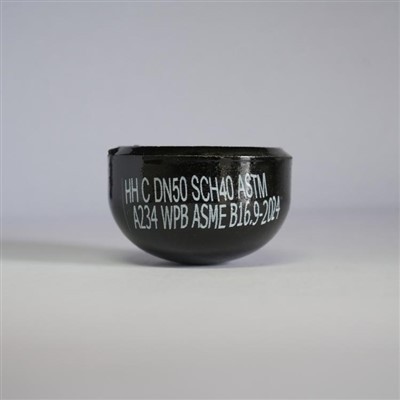
Wait, let’s clarify what ratings we actually use day-to-day, because this is where the confusion hits. Most of our customers deal with two main rating systems: ASME B16.9 for forged/welded steel elbows (super common in oil and gas, chemical plants), and ASTM D2675 for plastic elbows (PVC, CPVC, used more in plumbing, irrigation). ASME ratings are usually listed as “Class” numbers—like Class 150, Class 300, Class 600. A Class 150 steel elbow is rated for around 285 psi at room temp, right? But here’s the catch: that number drops when the temp goes up. Go above 100°F, and that Class 150 elbow might only handle 150 psi at 300°F. That’s a huge gap—so many people forget the temperature factor and end up ordering the wrong part. Plastic elbows are similar, but their temp-based rating drops way faster than metal, which is why we always flag that for our water treatment or irrigation clients.
Another thing: pressure rating vs. working pressure vs. test pressure. These three are not the same, no matter how many times you see them mixed up. Let’s keep this simple for anyone who’s not an engineer. Pressure rating is the absolute maximum the elbow can handle at a specific temp, for a long time (like 20+ years). Working pressure is what you actually run day-to-day—usually 70-80% of the rating, just to leave a safety buffer. Test pressure is what you use during installation to check for leaks—1.5 times the working pressure, usually, but that’s temporary, so it doesn’t count as part of the long-term rating. I can’t tell you how many times I’ve had a customer ask, “Why does my test pressure work but the elbow leaks at normal use?” because they mixed working pressure with test pressure. Oops.
Now, why does this matter for real projects? Let’s use an example. A guy named Mike once called us panicking last month—his team installed a Class 150 elbow for a high-temp boiler line, and it blew a week in. Turns out, he looked at the Class 150 number and didn’t check the temp correction: that elbow was rated for 150 psi at his boiler’s 250°F line, but he’d been running it at 200 psi. We swapped him to a Class 300 elbow, corrected for temp, and it’s still running smooth three months later. That’s why we always go back to specs first, not just the number.
Wait, and let’s talk about the stuff we see that’s not up to par. Cheap elbows from no-name suppliers? They might stamp a Class 300 on it, but the wall thickness is thinner than it should be, or the material is a cheaper alloy that rusts faster at high pressure. We get this all the time—customers bring in elbow they bought online and ask us to test it, and 9 times out of 10, it’s underrated. We only source elbows from certified mills that have third-party testing records, because cutting corners here isn’t worth the risk.
So, how do you pick the right elbow for your job? Let’s make a step-by-step that’s actually easy to follow: 1. Write down the max temp and max pressure of your system, not just room temp numbers. 2. Match your pipe material (steel, PVC, etc.) to the correct rating standard (ASME, ASTM, etc.). 3. Calculate the pressure rating with the temp correction factor—don’t skip this, I beg you. 4. Add a 20-30% safety buffer, because nothing goes perfectly in the field. If that number lands between two classes, go higher. No one ever got in trouble for using a slightly overrated elbow, but they will get in big trouble for an underrated one.
As a pipe elbow supplier, my job isn’t just to sell you a part—it’s to make sure you don’t have a headache (or a leak) down the line. I’ve spent 10+ years in this game, and I’d rather send a slightly more expensive elbow that works for 20 years than a cheap one that fails in 6 months and costs you thousands in downtime. Last quarter, we worked with a wastewater plant that had a elbow leak that shut down a treatment line for 3 days—they came back to us, and we helped them spec the right rated elbows so that never happens again. That’s the stuff that matters.
Wait, one last thing for the DIY folks too—this isn’t just for big industrial jobs. If you’re plumbing a backyard pool or a new irrigation line, don’t grab whatever elbow is cheapest at the hardware store. Check the pressure and temp specs for your water heater or pump, pick a elbow rated for that, and you won’t be dealing with a flooded patio next summer. I’ve had a few customers tell me they used our elbows for their pool lines, and they haven’t had a leak in 5 years—small projects, but they care just as much as the big guys.
So, if you’re staring at a spec sheet, or you’re not even sure what numbers you need to pull, hit us up. I’m not going to push the most expensive elbow on you—I’ll walk through your system details, correct for temp, confirm the rating, and make sure you get exactly what you need. No confusing jargon, no hidden fees, just good advice and parts that last. Don’t wait until your elbow blows mid-project—reach out before you buy, and we’ll make it painless.
Pipe Elbow References:
- ASME B16.9-2023, Factory-Made Wrought Steel Buttwelding Fittings
- ASTM D2675-21, Standard Specification for Plastic Pipe Fittings for Pressure Applications
- Pressure Technology Association (PTA) Guideline for Pipe Fitting Pressure Rating and Application
Hebei Haihao Group Huadian High Pressure Pipe Fittings Co., Ltd.
As one of the most professional pipe elbow manufacturers and suppliers in China, we are able to meet the needs of the majority of our customers. Please rest assured to wholesale high quality pipe elbow made in China here from our factory. For price consultation, contact us.
Address: Donglin Industrial Zone, Mengcun County, Cangzhou City, Hebei Province, China
E-mail: haihaohuadian@outlook.com
WebSite: https://www.hhfittings.com/
