If you’ve ever shopped around for a prefab aircraft hangar, you know the first question is almost always about the base build cost. But once you start digging, there’s a second, far more practical question that hangs over every conversation: how much does insulation actually add to the total price? As the owner of a prefab aircraft hangar supplier, I get this question at least a dozen times a week, and for good reason. Insulation isn’t just a nice extra—it’s what keeps your planes protected, cuts long-term operating costs, and keeps your hangar usable year-round, even in extreme temperatures. Prefab Aircraft Hangar
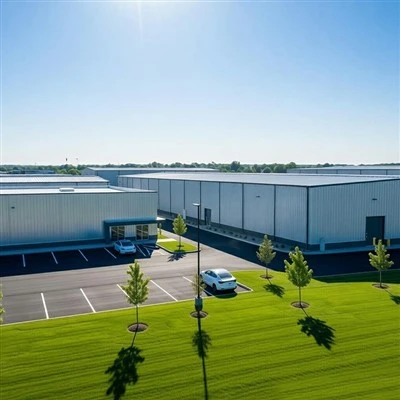
First, let’s get one thing straight: there’s no one-size-fits-all answer. The cost of adding insulation to a prefab aircraft hangar depends on half a dozen key factors, from the size and type of hangar you’re ordering, to the climate you’ll be operating in, to the specific insulation material you choose. Over the 12 years I’ve been in this business, I’ve worked with everyone from small private pilots with 4,000 sq ft hangars to regional aviation companies with 50,000 sq ft facilities, and I’ve seen insulation add anywhere from 5% to 22% to the total base build cost. Let me break that down, starting with the basics of why insulation matters for aircraft hangars specifically—because this isn’t the same as insulating a residential garage.
Aircraft hangars have unique challenges. Unlike a home, where you’re insulating for human comfort, here you’re insulating to control temperature and humidity levels that can damage plane parts. Even small shifts in moisture can cause corrosion on aluminum airframes, rust on steel components, or degrade wiring and avionics over time. Temperature extremes matter too: if you’re in a place with freezing winters, you need to keep hangar temperatures above freezing to prevent fuel lines from icing, and if you’re in a hot, arid climate, insulation cuts down on solar heat gain that can warp panel edges or speed up paint degradation. So insulation isn’t a luxury—it’s a core part of protecting your investment.
Now, let’s talk about the factors that drive the insulation cost add-on, starting with hangar size and type. Base build costs for prefab hangars are calculated on a per-square-foot basis, but that number drops as size increases because of economies of scale. For a small, 40×100 ft (4,000 sq ft) private hangar, the base build cost is typically around $35 per sq ft, so a total base build of $140,000. Adding standard insulation here might add around 7% to 10%, or $9,800 to $14,000. For a much larger hangar, say a 200×250 ft (50,000 sq ft) facility for a small airline fleet, the base build is around $28 per sq ft, or $1.4 million total. That same standard insulation might only add 5% to 7%, or $70,000 to $98,000. The per-square-foot add-on cost goes down for bigger projects because the labor for installing insulation doesn’t scale linearly with size—installers don’t take twice as long to insulate twice the space, so the cost per square foot of insulation drops.
Hangar type also matters a lot. We specialize in two main types of prefab hangars: clear-span structures and modified pole barn hangars. Clear-span hangars, which use engineered steel trusses to eliminate interior columns, are the go-to for large facilities that need to move planes around easily. Their walls and roofs are made of single steel panels in the base build, so adding insulation requires removing those panels, inserting insulation blankets, and re-sealing them—labor that’s more involved than insulating pole barn hangars. Pole barn hangars, which use wooden posts for support, have exterior panels that are easier to access, so insulation installation is faster, cutting down on labor costs. That means insulation adds about 2% less to a pole barn hangar than it does to a clear-span model of the same size.
Next, the biggest variable in insulation cost: the type of insulation material you choose. Most of our clients pick from three options, and each has a different price point and performance level. The cheapest and most common is fiberglass batts, the same material used in residential walls, but specially made for commercial steel structures. Fiberglass batts cost between $0.30 and $0.50 per sq ft installed, with a thermal resistance (R-value) of around R-3 to R-3.5 per inch. For a hangar in a moderate climate—think parts of the southern U.S., or coastal regions with mild winters—R-19 to R-30 is enough, so fiberglass insulation here would add between 7% and 10% to the base build cost.
The middle option is rigid foam board insulation, which is denser than fiberglass and has a higher R-value per inch, around R-5 to R-6. That means it performs better at blocking both heat and cold, which is why it’s popular in climates with extreme temperatures—like the northern U.S., where winters drop well below freezing, or the Southwest, where summer heat is relentless. Rigid foam also resists moisture, which is a big plus in areas with high humidity, since it prevents mold growth inside wall cavities. The downside? It’s more expensive, costing between $0.70 and $1.20 per sq ft installed. That pushes the total add-on cost to between 12% and 16% for most climates, depending on the R-value you need. For example, a hangar in Minnesota might need R-38 for walls and R-49 for the roof, which would come out to around 14% of the base build cost.
The premium option is spray foam insulation, which we only recommend for clients with the most demanding needs. Spray foam is applied as a liquid that expands to fill every gap in walls, roofs, and even around window and door frames, creating an airtight seal that eliminates air leaks entirely. That’s a game-changer for temperature control and humidity management—studies show spray foam can reduce heating and cooling costs by up to 40% compared to fiberglass. The R-value for spray foam is even higher, around R-6 to R-7 per inch, so a 1-inch layer is enough for most climates. But the cost is steep: spray foam runs between $1.50 and $3.00 per sq ft installed, so it adds anywhere from 18% to 22% to the base build cost, depending on the size of the hangar. I usually only recommend spray foam for clients in places with temperature swings of 50 degrees or more, or for hangars that will be used as maintenance facilities, where consistent temperature is critical for working on planes.
Another factor many clients don’t think about: the type and size of hangar doors. Hangar doors are some of the biggest sources of air leaks, and insulating them adds to the total cost too. A standard 40 ft wide by 14 ft tall fabric hangar door adds almost nothing to insulation costs because it’s not designed for thermal performance. But if you opt for an insulated steel roll-up door or sectional door, those add between 5% and 10% of the door’s cost to the total insulation add-on. For example, a 100 ft wide insulated sectional hangar door can cost $25,000 to $40,000, so adding insulation to the door adds an extra $1,250 to $4,000 to your total project cost. It’s a small add-on, but it’s one that can cut your hangar’s energy bill by hundreds of dollars a year, so I always recommend it if you’re spending the money on insulation for the walls and roof.
Now, let’s put this all together with a real example to make it concrete. Last year, we worked with a small private pilot in Colorado who wanted a 40×100 ft clear-span hangar for his single-engine Cessna. His base build cost was $140,000. He lives in a climate with cold winters (average low of 20 degrees F in January) and warm summers, so he chose rigid foam insulation for walls and roof, plus an insulated roll-up door. His total insulation add-on? We quoted him $16,800, which works out to 12% of the base build cost. That included the rigid foam panels, installation, and the insulated door. A year later, he told me his monthly energy costs to keep the hangar above freezing in winter were $120, compared to his neighbor’s uninsulated hangar, which paid $350 a month for the same service. That’s a $2,760 annual savings, so he recouped the insulation cost in about 6 years—well before the hangar’s 50-year lifespan is up.
Another example: a regional aviation company in Texas that ordered a 150×200 ft (30,000 sq ft) clear-span hangar to store two small jet planes. They opted for fiberglass insulation, since Texas has mild winters and hot, humid summers, so the R-19 fiberglass was enough for their needs. Their base build cost was $840,000, and the insulation added $58,800, or 7% of the total. Their main goal was to prevent humidity-related corrosion on their jets, and the fiberglass insulation paired with a vapor barrier on the walls did exactly that. They haven’t had any corrosion issues in the 18 months since the hangar was built, which saved them an estimated $12,000 in unplanned maintenance in that time.
I also want to address a common misconception I hear all the time: “Insulation is too expensive now, so I’ll skip it and save money.” Here’s the truth: skipping insulation might save you 5-20% upfront, but it will cost you way more in the long run. Uninsulated hangars have massive temperature swings, which lead to higher energy bills for heating and cooling, and higher risk of corrosion, wiring damage, and paint degradation on your planes. I’ve had clients who skipped insulation to save $10,000 on a 4,000 sq ft hangar, only to spend $25,000 on corrosion repairs on their planes three years later. It’s a false economy.
That said, I’m also a realist—insulation is an added cost, and I never pressure clients to go for the most expensive option if it doesn’t fit their needs. If you’re a private pilot with a small hangar and you only need basic temperature control, fiberglass insulation is more than enough, and it’s a great value. If you’re a commercial operator with a large fleet, spray foam might be worth the upfront cost to cut down on long-term operating expenses.
Now, if you’re in the market for a prefab aircraft hangar, how do you figure out what insulation will cost you? The first step is to share a few key details with your supplier: the size of the hangar, your location (climate is the biggest factor here), what types of planes you’ll be storing, and whether you’ll use the hangar for maintenance or just storage. A reputable supplier will walk you through the different insulation options, their costs, and the long-term benefits, so you can make a decision that fits your budget and your needs.
At the end of the day, the cost of insulation isn’t just a line item on your project quote—it’s an investment in protecting your planes, reducing operating costs, and making your hangar usable every day, year-round. Over the 12 years I’ve been in this business, I’ve seen time and again that the clients who take the time to choose the right insulation for their needs end up with better outcomes, lower long-term costs, and fewer headaches.
If you’re ready to get a personalized quote for a prefab aircraft hangar, including a breakdown of insulation costs tailored to your location and needs, we’re here to help. Reach out to our team to discuss your project, ask any questions you have about insulation or hangar design, and get a transparent, no-obligation quote that fits your budget.
Steel Fabrication Building References
ASHRAE. (2021). HVAC Applications Handbook, Chapter 20: Commercial Refrigerated Facilities and Industrial Insulation. American Society of Heating, Refrigerating and Air-Conditioning Engineers.
FAA. (2018). Aircraft Hangar Design and Maintenance Guidelines. Federal Aviation Administration, Aviation Safety Branch.
U.S. Department of Energy. (2022). Insulation for Commercial Buildings: Cost, Performance, and Energy Savings. Office of Energy Efficiency and Renewable Energy.
Steel Structures Painting Council. (2020). Corrosion Control in Aircraft Storage and Maintenance Facilities. National Association of Corrosion Engineers.
Shenyang Huaying Weiye Steel Structure Co., Ltd.
Shenyang Huaying Weiye Steel Structure Co., Ltd. is one of the most professional prefab aircraft hangar manufacturers and suppliers in China, featured by quality products and good price. Please rest assured to wholesale CE approved prefab aircraft hangar made in China here and get quotation from our factory. We also accept customized orders.
Address: Shenyang Huaying Weiye Steel Structure Co., Ltd., Hongxing Road, Yuhong District, Shenyang City, Liaoning Province, China.
E-mail: syhywy.ss@gmail.com
WebSite: https://www.steelstructurehy.com/
