Hey everyone, if you’re working with aluminum parts, you’ve probably wondered at some point: can you actually CNC machine aluminum to near net shape? I get this question all the time from folks looking to cut down on material waste, speed up production, or get parts that are almost finished straight off the mill without a ton of extra work. As a CNC machining supplier that’s been grinding aluminum parts for customers in aerospace, automotive, and consumer electronics for years, let me break this down like we’re chatting over a coffee (minus the actual spill risk from coolant, obvi). Aluminum CNC Machining

First, let’s get what “near net shape” actually means, because it’s not just a fancy buzzword. Near net shape (NNS) is when you manufacture a part that’s super close to its final dimensions—only a few thousandths of an inch over, so you don’t have to do much post-machining like grinding, polishing, or extra milling. For aluminum, specifically, this isn’t just possible—it’s one of the biggest reasons aluminum is such a popular material for CNC work. But it’s not just slapping a block of aluminum on a mill and calling it a day, right? I’ve seen new machinists mess this up all the time because they skip a few key steps.
Let’s start with why aluminum is perfect for NNS CNC work in the first place. Aluminum has a low melting point (around 1220°F, compared to steel’s 2750°F), which means it cuts smoothly with the right tools. It also has a high thermal conductivity, so the heat from the cutter doesn’t get stuck in the part (that’s a big one—heat can warp parts or mess up tool life). That makes it way easier to hold tight tolerances when you’re taking cuts that are almost final. Compare that to, say, titanium, which is way harder to machine and needs slower speeds, so you can’t get as close to net shape without burning or cracking the tool.
Now, the stuff that actually makes it work. First up: stock selection. If you’re trying to get to near net shape, you can’t use a raw block that’s way bigger than your part. We always recommend starting with “near net shape stock” to begin with—like extruded aluminum blanks that are already cut to the rough outline of your part, plus only 0.020 to 0.050 inches of material per side for the final finish pass. Wait, that’s tiny—so if you go wider than that, you’re just wasting aluminum (which is expensive, by the way) and adding hours to your machining time. Some guys use billet, but extruded is better for NNS because it has consistent grain structure, so it doesn’t warp as much when you cut it. Oh, and always get stock with straight edges and true flatness—if your raw stock is already warped, your finished NNS part will be too.
Next: tooling. This is make or break. For aluminum, you need carbide tools with sharp edges—no dull HSS tools here. We use solid carbide end mills with a high positive rake angle; that’s the angle of the cutting edge that helps lift the aluminum chips instead of scraping them, which reduces heat and keeps the cut clean. For NNS work, we also use tools with a higher number of flutes—like 3 or 4 flutes, instead of 2. More flutes mean you can take a faster feed rate, which means you get through the cut quicker, less time for heat buildup. But you have to make sure the tools are properly coated—we use TiN or TiCN coatings, not the thicker coatings you’d use for steel, because those can rub against the aluminum and cause built-up edge (BUE). BUE is when tiny bits of aluminum stick to the cutter edge, which messes up the finish and can make your dimensions off. We check tools for BUE every few parts; if we see it, we swap the tool before it ruins the NNS part.
Then there’s the machine setup. You can’t just lock the part into the vise and start cutting if you want tight tolerances. We use a lot of zero-point clamping systems for NNS work because they’re super repeatable—each time you lock a part in, it’s within 0.0005 inches of the last one, so you don’t have to re-tru the part every time. That’s critical for near net shape, because if your part moves even a little during a cut, your final dimensions will be off. We also use coolant specifically for aluminum—generic coolant can cause corrosion, which messes up the surface finish. Our coolant is synthetic, with a low oil content, so it keeps the tool cool and flushes chips away without leaving gunk on the part. One mistake we see a lot with new shops is using too much coolant, though—if you flood the part, it can cause thermal expansion, and when the part cools down, it warps. So we use just enough to keep the tool and part cool, not a river.
Tolerances are another big part of near net shape. Most NNS aluminum parts we make are held to ±0.001 to ±0.005 inches. That’s tight, but it’s doable with a 3-axis CNC mill or even a 5-axis, depending on the part complexity. For parts with curved surfaces or tight holes, we use probing tools to check dimensions mid-cycle—so if a cut is a little off, we can adjust the next pass instead of finishing the whole part and having to rework it. Probing adds a few minutes to the cycle, but it saves us from scrapping parts, which is way more expensive in the long run. Oh, and we always account for material expansion when we’re programming. Aluminum expands about 11.7 microinches per inch per degree Fahrenheit—so if your shop is 70°F, and your cut is generating heat that brings the part up to 120°F, a 10-inch part will expand by about 0.00058 inches. We program a small adjustment for that, so when the part cools down, it’s exactly the right size.
Now, can it work for high-volume parts too? A lot of people think near net shape is only for low-volume prototypes, but no—we do NNS aluminum parts in runs of 10,000 and up. The key there is optimizing the tool paths. We use trochoidal milling for rough cuts, which is a tool path that cuts in a spiral instead of straight down. That reduces the load on the tool, lets us run faster speeds, and produces smaller chips, which are easier to flush away. For finish cuts, we use a light stepover—like 0.005 inches per flute—so the cut is super clean and we don’t have to do any extra sanding. We recently did a run of aluminum heat sinks for a LED manufacturer; they needed 10,000 parts, each with 12 fins that were only 0.020 inches thick, and they wanted near net shape so they didn’t have to assemble extra parts. Using NNS stock, optimized tool paths, and 5-axis machining, we got each part done in 2 minutes, and only had 0.001 inches of extra material on the final surface. The customer saved 30% on material costs and cut their production time in half compared to using traditional machining.
But wait, there are limits, right? You can’t machine every aluminum part to near net shape. Thin-walled parts, for example—like a aluminum cup that’s 0.030 inches thick—can warp when you take cuts that are too close to net shape. We fix that by using dedicated workholding that supports the walls, or leaving a tiny bit of extra material and doing a final cut with a very light tool load. Also, parts with complex internal features—like a manifold with small passages—might need a little extra material for tool access, so they might not be as close to net shape. But even then, we can get within 0.010 inches, which is way better than traditional machining.
Let me also talk about a common myth: that near net shape machining is only for aerospace or medical parts that need super high precision. No way—we do NNS aluminum parts for consumer electronics, like laptop hinges and phone frames, where tolerances are tight but not as extreme. A customer came to us a while back with a phone frame prototype; they were machining it with a traditional shop and wasting 60% of the raw aluminum block. We switched them to extruded near net shape stock, adjusted the tool paths, and got their material waste down to 15%. They went from 5-day lead times to 2 days, and the parts were actually more consistent because we had less material variation. That’s the thing about NNS aluminum—it’s not just about precision, it’s about efficiency.
Now, if you’re thinking about trying this for your own parts, what should you look for in a supplier? First, ask if they have experience with aluminum specifically, not just general CNC work. Aluminum is way different than steel or plastic, so a shop that only does steel will probably mess up your NNS parts. Second, ask about their tooling and workholding—do they use carbide tools with the right coatings, do they have zero-point clamping, do they use probing? Those are the details that make NNS work. Third, ask about their tolerance capabilities—can they hold ±0.002 inches on a run of parts? If they can’t, they’re not equipped for near net shape.
At the end of the day, CNC machining aluminum to near net shape isn’t some fancy trick only for big aerospace companies. It’s a practical, cost-effective way to get parts that are almost finished straight off the mill, no extra work required. We’ve been doing it for years, and we’ve helped all kinds of customers cut costs, speed up production, and get parts that work better because there’s less post-machining.
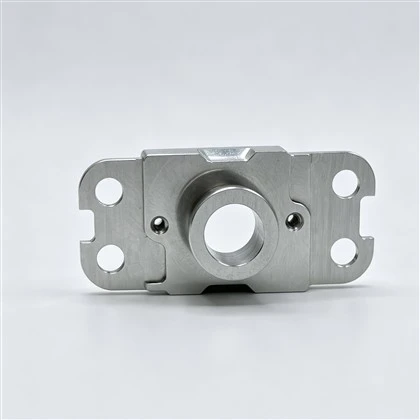
If you’ve got a part you’re working on—whether it’s a prototype for a new product, a high-volume run for your business, or something in between—we can help you figure out if near net shape aluminum is right for you. Shoot us a message to start chatting through your requirements, talk through stock options, tooling, and what tolerance you need. No jargon, no pressure—just straight talk about getting your parts made right.
CNC Turning Services References
- D.K. Aspinwall, “Machining of Aluminum Alloys,” CIRP Annals – Manufacturing Technology, 2001
- E. Budinski, K.G. Budinski, “Surface Properties of Aluminum After Machining,” Wear, 2010
- J. Tlusty, “High-Speed Machining of Light Alloys,” Manufacturing Processes for Light Alloys, 1999
- T.H. Kosel, “Near Net Shape Manufacturing: Principles and Applications,” CRC Press, 2015
- American Machine Tool Distributors’ Association, “CNC Machining Best Practices for Aluminum,” 2018
Dongguan Bosi Precision Co., Ltd.
With abundant experience, we are one of the most professional aluminum CNC machining manufacturers and suppliers in China. We warmly welcome you to buy high quality aluminum CNC machining made in China here from our factory. We also accept customized orders.
Address: Room 101, Building2, No. 30 Shangsheng Road, Changan, Dongguan, Guangdong
E-mail: irene@bosiprecision.com
WebSite: https://www.bosiprecision.com/
