If you’ve ever stopped at a 400mm traffic signal at rush hour, you might not think twice about the tiny difference each bulb makes—unless you’re the person responsible for making sure those signals stay on, on budget. As a supplier specializing exclusively in 400mm traffic lamps, I get this question all the time: What’s the real energy-saving rate for a 400mm traffic lamp, anyway? It’s not a one-number answer, but it’s a question that hits close to home for our team, because we don’t just sell parts—we design and source these lamps with municipalities, transit authorities, and small town public works teams who have to balance safety and tight budgets every single day. 400mm Traffic Lamp
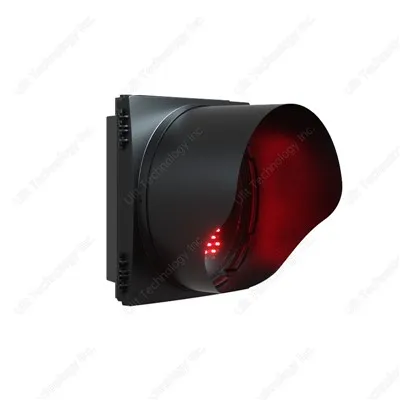
Let’s start with the basics, because that’s where the math gets clear. For decades, almost every traffic lamp on the road was incandescent. Those old bulbs used a filament heated to thousands of degrees to produce light, which means 90% of the energy they used turned into heat, not visibility. A standard 400mm incandescent traffic lamp, the kind you’d still see in small, older towns, pulls about 150 watts of power each, and most don’t last more than 1,000 hours before burning out. That’s a big problem for places with hundreds of signals—each one drawing that same 150 watts 24/7 adds up fast. For example, a single intersection with three 400mm incandescent lamps (red, yellow, green) running 24/7 uses around 3.9 kilowatt-hours (kWh) a day, which adds up to more than 1,400 kWh a year just for that one light. Multiply that by 100 intersections, and you’re looking at 140,000 kWh a year for just the incandescent lamps—enough to power 13 average American homes for a month, all just for stoplights.
Now, let’s talk about the 400mm LED traffic lamps we supply now, and the energy savings that come with them. First, the size is key here—400mm is the standard diameter for the lens, the one that fits most standard traffic signal housings, so swapping out an incandescent for an LED is as simple as unscrewing the old one and twisting in the new, no extra wiring needed. Our 400mm LED traffic lamps pull between 20 and 30 watts, depending on the application. Wait, that’s only a 80% reduction? No, wait—hold on, there’s more. The incandescent lamp I mentioned earlier was 150 watts, but almost all of that was wasted as heat. The LED lamp produces almost all its energy as visible light, so the brightness is comparable, or even better, than the old incandescent. A 400mm LED lamp delivers around 3,000 lumens of consistent, white-balanced light, which is the same visibility as a 120-watt incandescent lamp, meaning you don’t have to worry about drivers missing a red light because the signal is dim. That’s a critical point—savings don’t mean sacrificing safety, which is non-negotiable for every project we work on.
When you do the actual side-by-side energy comparison, that 150-watt incandescent vs. 25-watt LED comes out to an 83% energy saving. That’s the hard number, but let’s put it in real-world terms that our customers care about. A municipality with 500 400mm traffic lamps, all running 24/7, would use around 9.1 million kWh a year with incandescents, or just 1.5 million kWh with LEDs. That’s a $73,000 difference in annual electricity costs, based on the average 8 cents per kWh that U.S. public transit authorities pay for power. But wait, the savings don’t stop there. Incandescent lamps need to be replaced every 1,000 hours, which is about every 40 days—so a small town with 500 lamps would be buying more than 4,500 bulbs a year, at roughly $10 each, that’s $45,000 just in bulb costs, plus labor costs for someone to drive around, climb poles, and swap them out, which averages another $200 per bulb. LED lamps last 50,000 to 100,000 hours—we warranty our 400mm LED lamps for 10 years, or 50,000 hours, whichever comes first. That means a single lamp only needs to be replaced about once every 6 years, and in some cases, even longer. So that same small town would only buy about 83 bulbs a year, cutting replacement costs by more than 90%, too.
But here’s the thing—no two 400mm traffic lamps are the same. I’ve had customers come to us after buying cheap off-brand lamps from a big online retailer, thinking they were getting a good deal, only to call us six months later complaining that their energy bills dropped, but their lamp life was half what they expected. That’s why as a specialized 400mm traffic lamp supplier, we don’t just sell a generic LED—we design lamps specifically for the 400mm footprint, because that size has specific performance needs. The 400mm lens is larger than smaller signal sizes, so it needs a light source that spreads evenly across the whole lens, no dark spots at the top or bottom that would make the signal hard to see for someone in a tall truck or a car on a hill. That even distribution also matters for energy efficiency—if the light is wasted on the edges of the lens instead of being focused where drivers look, you’re not getting the visibility you need, which means sometimes public works teams crank up the power to make it brighter, eating into your energy savings.
Another factor that affects the energy saving rate is the type of driver unit in the lamp. Some cheap lamps use driver units that waste 10-15% of the LED’s power, turning that into heat instead of usable light. Our 400mm traffic lamps use constant-current driver units that are 95% efficient, so almost every watt of power you pay for turns into light, not wasted as heat. That adds a few extra percentage points to the saving rate. We also test every lamp to make sure it meets the MUTCD (Manual on Uniform Traffic Control Devices) standards, so you know it’s visible from the required distance, day and night, in rain, snow, and fog. A lamp that doesn’t meet MUTCD standards might look brighter on a test bench, but in real-world conditions, you’ll have to run it at a higher power to get that same visibility, which lowers your energy savings.
We also work with customers to optimize their energy savings beyond just the lamp itself. For example, many transit authorities are adding adaptive traffic control systems, which adjust the brightness of the 400mm lamps based on how much traffic is there. Late at night, when there are almost no cars on the road, you can dim the red and yellow lamps by 50% without any loss of visibility for the small number of drivers still out. That cuts energy use by another 30-40% in off-peak hours, bringing the total annual saving for a 400mm lamp up to around 90% compared to the old incandescents. We make our lamps compatible with most adaptive control systems, so our customers don’t have to worry about buying new hardware to get that extra savings.
I want to be transparent, though—no one gets a 100% saving rate. There’s always a small amount of power needed to keep the lamp’s electronics running, and if you’re in an area with extreme cold or heat, some lamps will draw a little extra power to maintain consistent performance. But that’s why choosing the right 400mm traffic lamp matters so much. Last year, we worked with a small city in northern Minnesota that had old incandescent lamps that would burn out in cold temperatures, and their energy bills were through the roof. They switched to our 400mm LED lamps, and their utility company reported a 86% drop in power use for their traffic signals, which was enough to cover the cost of the entire lamp replacement project in less than two years. That’s the kind of real result we care about, not just lab numbers.
A common mistake we see is when someone compares 400mm LED lamps to other LED sizes, like 300mm or 500mm, which have different energy needs. Our 400mm lamps are sized specifically for standard intersections, so using a lamp that’s too small would mean less brightness, and a lamp that’s too large would waste energy on excess light. That’s why sticking with the 400mm size for most standard intersections is the most efficient choice, and why our specialized supply of 400mm traffic lamps is designed to fit that exact need.
If you’re a public works manager, transit director, or small town mayor looking to cut energy costs without sacrificing safety, the energy saving rate of a 400mm traffic lamp isn’t just a number—it’s a way to free up budget for other critical projects, like road repairs, sidewalk upgrades, or affordable public transit. We’ve worked with hundreds of teams across the country to install these lamps, and we can help you calculate exactly how much you could save, based on your current number of intersections, power rates, and local conditions.

If you’d like to talk through your project, ask specific questions about our 400mm traffic lamps, or get a custom quote for your area, don’t hesitate to reach out. We’re here to help you make the switch to energy-efficient lighting that works for your community, not against it.
300mm Traffic Lamp References
- Federal Highway Administration. (2021). Manual on Uniform Traffic Control Devices (MUTCD), 11th Edition. U.S. Department of Transportation.
- Lighting Research Center, Rensselaer Polytechnic Institute. (2022). Traffic Signal Lamp Energy Efficiency Study. RPI.
- International Association of Public Works Officials. (2023). Municipal Infrastructure Energy Savings Report. IAPWO.
Ulit Technology Inc.
As one of the most experienced 400mm traffic lamp manufacturers and suppliers in China, we offer a wide range of products with superior quality. We warmly welcome you to wholesale bulk durable 400mm traffic lamp from our factory. If you have any enquiry about cooperation, please feel free to email us.
Address: NO.2 Mudan Road, Nan’an District, Chongqing, China
E-mail: cqulit@sina.com
WebSite: https://www.ulitcn.com/
