If you’ve ever stocked kitchenware or placed a large catering order, you’ve probably stared at a shelf of platters and wondered: is an oval platter or a rectangular platter the better pick for my needs? For years, as someone who’s supplied oval platters to restaurants, event planners, and home cooks across North America for over 12 years, I’ve heard this question dozens of times. Most people assume it’s just a matter of shape—“it looks nice with my tableware” or “it fits better on my counter”—but the truth is, the difference runs far deeper. It’s tied to ergonomics, food presentation, food safety, event logistics, and even how your guests experience a meal. Let’s break it down, straight from someone who’s loaded more platters into delivery trucks than I can count. Oval Platters
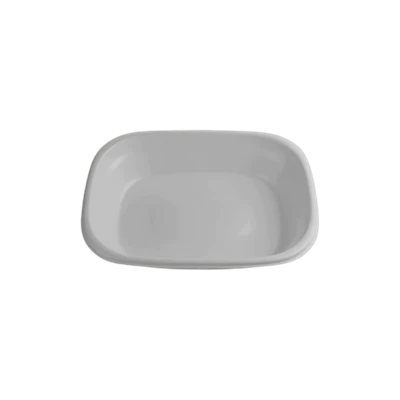
First, let’s talk about core function, because that’s where the biggest gap shows up. I started my supply business after working as a line cook at a 500-seat steakhouse in Chicago, where we rotated platter shapes weekly based on what we were serving. Back then, our head chef, a no-nonsense guy named Joe, would yell at us if we tried to put a side of roasted root veggies on a round platter for a banquet—said it wasted space and made plating look messy. That’s when I noticed how oval platters were designed specifically for long, uneven food items, while rectangular platters were built for stacking and uniform portions.
Oval platters have a stretched, symmetrical shape with two pointed ends and curved sides. Think of them as a bridge between round and rectangular: they have more length than a circle, but softer edges than a sharp rectangle. This shape is purpose-built for food that’s long or irregularly shaped. If you’re serving steaks, salmon fillets, whole roasted chickens, asparagus spears, or skewers, an oval platter is non-negotiable. When you lay a 12-inch ribeye on a rectangular platter, you either have to curl the meat to fit (which ruins presentation and lets juices run off the edges) or leave 2-3 inches of empty space at one end of the platter. I’ve seen that exact mistake cost a catering client 10% of their tip at a wedding, because the steak platters looked half-empty and messy. Oval platters eliminate that problem: their length is calibrated to accommodate long food items without forcing you to compromise. Most of the oval platters I supply come in lengths from 10 inches for appetizers up to 24 inches for whole roasted meats, so every cut fits neatly.
Rectangular platters, by contrast, are all about flat, even surfaces. Their straight sides and right angles make them ideal for food that’s portioned uniformly, or items that need to be stacked without tipping. Think of sandwiches, sliders, veggie crudité platters, cookie platters, or cheese boards with multiple small items. If you’re serving a party of 20 with mini turkey sliders, a rectangular platter lets you arrange 10 on the top half and 10 on the bottom, separated neatly, without wasting curved space or having food slide off angled edges. That same straight design also makes rectangular platters easier to stack and store—something that’s a huge deal for busy restaurants and event companies with limited storage space. I once worked with a food truck owner who switched from oval to rectangular platters for his lunch service and cut his storage needs by 30%, because he could stack 6 rectangular platters in the same space as 4 oval ones.
Next, let’s get into ergonomics and handling, a part of the difference that most people don’t notice until they’re balancing a hot platter over a dinner table. Oval platters are lighter for their surface area, and their curved sides make them easier to carry with one hand—perfect for waitstaff who need to carry multiple platters at once. The tapered ends of an oval platter also make it easier to reach around a table; if you’re passing a platter of garlic bread, the pointed ends fit neatly between place settings, so you don’t have to lift the entire platter over a guest’s plate. I’ve had waiters tell me that switching to oval platters cut down on dropped platter incidents by 25% in their first month, because the shape is more balanced when carried.
Rectangular platters, on the other hand, are heavier for their size, and their sharp corners can be a hazard. If you’re carrying a full rectangular platter of hot food, the corners dig into your palm if you’re not holding it perfectly, leading to fatigue or even small cuts during long service. That said, their larger flat surface makes them better for buffet setups, where platters are placed on a table for guests to serve themselves. Rectangular platters can be lined up side-by-side on a long buffet table without leaving gaps, and their straight edges mean you can fit more platters per linear foot of table space. For large events with 100+ guests, that space efficiency is a big win—you don’t have to waste 2 feet of table space on curved oval platters that take up more room.
Food safety and presentation are two more critical areas where the difference shows up, and these are the details that separate good service from great service. Oval platters have less surface area relative to their perimeter, which means there are fewer edges where bacteria can accumulate, and less space for food to touch the air and cool down too fast. Wait a second—let me explain that. If you have two platters that hold the same amount of food, an oval platter will have a smaller total edge around the food than a rectangular one. That means less exposed food surface, so hot food stays hotter longer, and cold food stays colder, without needing to reheat or refill as often. I’ve supplied oval platters to a chain of 100 family restaurants, and their kitchen team told me that food waste from underheated platters dropped by 18% after switching, because the oval shape retained temperature better.
For presentation, oval platters have a timeless, elegant look that works for formal events. Their curved edges draw the eye along the length of the platter, so if you’re arranging a line of food (like grilled veggies or roasts), it creates a natural flow that feels intentional. We supply oval platters for most high-end weddings and corporate galas, because they pair well with both formal china and minimalist table settings. Rectangular platters, however, have a modern, sleek look that’s perfect for casual events, food trucks, and social media-friendly setups. The straight lines of a rectangular platter make food photos pop—just scroll through Instagram, and you’ll see that most “aesthetic” food posts use rectangular platters for uniform, grid-like arrangements. That’s not a coincidence; the shape is designed to create clean, structured visuals that translate well online.
Wait, but what about when someone needs both? I get that question all the time from my clients, especially ones that do a mix of formal events and casual catering. The good news is that both shapes have their place, and the best choice depends on what you’re serving, how you’re serving it, and where you’re storing it. For example, if you’re a caterer who does both steak dinners and cocktail parties, you might keep a set of large oval platters for the steaks and whole birds, and a set of medium rectangular platters for the sliders and crudité. It’s not an either/or question—it’s a when/where question.
I also want to talk about the common myths that people have about these two platters. A lot of people assume that oval platters are more expensive because they’re less common, but that’s not true. The cost difference is actually minimal, as long as you order in bulk. Another myth is that rectangular platters are only for casual use, but I’ve seen them used in Michelin-starred restaurants for cheese courses and charcuterie boards, because their straight edges allow for precise, artistic arrangements of multiple small items.
Over the years, I’ve learned that the best way to choose between the two is to ask three simple questions: 1) What food am I serving? If it’s long or irregular, go oval; if it’s uniform or portioned, go rectangular. 2) How many people am I serving, and where is the platter going? For buffets and large events where space is tight, go rectangular; for table service where passing and carrying matters, go oval. 3) Do I have limited storage? If you’re short on space, rectangular platters stack more efficiently, so they’re the better pick.
At the end of the day, my job as an oval platter supplier isn’t just to sell you platters—it’s to help you pick the right one for your business. I’ve had clients come to me thinking they needed a certain shape, and after talking through their needs, they end up with a mix of both, which saves them money, reduces waste, and makes their guests happier. If you’re not sure which shape is right for your next event or restaurant, I’m here to help. We offer custom sizes, durable materials that last for years, and bulk pricing for all types of businesses. Whether you need a small set for home use or 500 platters for a wedding, we can work with you to find the perfect fit for your needs.
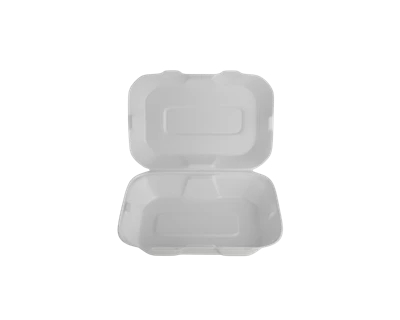
If you’re ready to talk through your requirements, don’t hesitate to reach out. We’d be happy to answer any questions you have and help you select the platters that will make your next meal or event a success.
Compartment Trays References
- Food Service and Hospitality Association. (2022). Platter Ergonomics and Operational Efficiency for Food Service Providers. National Restaurant Association.
- Culinary Institute of America. (2021). Plating and Presentation Techniques for Modern Catering. Wiley Publishing.
- Storage Solutions for Commercial Kitchens. (2023). Space Optimization for Food Service Equipment. Food Service Equipment Association.
- Food Safety and Inspection Service. (2022). Temperature Retention for Hot and Cold Food Service. U.S. Department of Agriculture.
Bio Earth Technology Co., Ltd.
As one of the most professional oval platters manufacturers and suppliers, we also support customized service. Please feel free to buy bulk high quality oval platters for sale here from our factory. For quotation and free sample, contact us now.
Address: No. 8-3, Baixi, 2nd Neighborhood, Tongxiao Township, Miaoli County 357001, Taiwan (R.O.C.)
E-mail: Services@bioearthtech.com
WebSite: https://www.bioearthtech.com/
