Hey everyone, if you’re here because you’re chasing answers about shipping costs for FAW truck parts, you’ve probably been stuck in that frustrating cycle of Google searches that go nowhere—either the info’s too vague, it’s for random car parts, or it’s from someone who’s never actually dealt with FAW trucks day to day. Let’s cut the crap, I’m gonna break this down like we’re chatting over coffee, no fancy jargon, just real stuff from being a FAW truck parts supplier for over 8 years. Faw Truck Parts

First off, let’s get one thing straight: shipping costs for FAW parts aren’t a one-size-fits-all number. I used to get emails every week from guys asking “how much to ship a set of clutch plates to Texas?” and I’d have to laugh because there’s 10 variables that change that price before I even pick up the box. Let’s start with the biggest ones, the stuff that actually moves the needle, not the marketing fluff you’ll find on other sites.
First, what part are we actually shipping? FAW makes everything—from tiny clip-on door handles to entire engine blocks, right? Let’s break that down. Small, lightweight stuff: things like air filters, oil seals, sensor packs, or even those little rubber weather strips for the cab. Those usually go by standard small parcel, like USPS or DHL, and for domestic (say, within the same country like the US or Canada) that’s usually $8 to $25. International? If it’s under 10 lbs, that’s $35 to $70, depending on where it’s going. The trick here is that if you order multiple small parts, we’ll usually toss them in one box instead of shipping each separate, so that can cut per-item cost big time. No point in shipping 5 different 1lb boxes when they fit in one—we hate overpaying for shipping just as much as you do.
Then there’s medium parts: things like transmission gears, brake calipers, alternators, or clutch assemblies. Those are usually 10 to 50 lbs, so they go by LTL (less-than-truckload) freight. Domestic LTL for these is usually $50 to $150, depending on how far it’s going. International medium parts? That’s a bit tricky because customs starts kicking in here, so add another $20 to $50 on top of the shipping cost. The big thing with medium parts is packaging—we wrap everything in heavy-duty cardboard, bubble wrap, and sometimes wooden crates for anything that’s prone to getting banged up, and that packaging weight and material adds a tiny bit, but it’s worth it to make sure your part doesn’t show up dented and useless.
The big ones, though, are the heavy parts: engine blocks, rear axles, entire cabs, or even frame sections. Those are 100 lbs and up, sometimes way more. Domestic full truckload (or LTL if it’s under 10,000 lbs) for these ranges from $300 to $1,200, again depending on distance. International? Oh boy, that’s where it gets wild. Shipping a full engine from our warehouse in [redacted] to, say, Nairobi? That’s usually between $800 and $2,500, and that almost always includes customs clearance fees (wait, no—wait, let’s clarify: most of the time, we can include customs brokerage in the quote if you’re an established repeat customer, but first-time buyers might have to handle that part, or we can hook you up with a trusted broker we’ve worked with for years). The rule here is: the heavier the part, the less per-pound you pay for shipping. A 500 lb engine isn’t 5 times more expensive than a 100 lb alternator, because freight companies charge less per pound for bulkier, heavier loads. That’s why I always tell guys to order all the parts they need in one go instead of spreading orders out—even if you don’t need something right now, storing it and adding it to the next big order saves you a ton on shipping.
Next, where are you shipping it to? That’s the second biggest variable. Domestic is way simpler than international, obviously. If you’re in a major city like Los Angeles, Chicago, or Toronto, shipping to your shop is cheaper than if you’re in a small rural town in Montana or northern Canada, because LTL trucks don’t make as many stops out in the middle of nowhere, so they charge a “remote delivery fee” that can be $50 to $100. International is even more variable: shipping to a port in Europe is way cheaper than shipping to a landlocked country in Central Asia, because you have to add on overland freight from the port, plus customs duties that vary wildly by country. For example, shipping to Germany might have 10% duty, while shipping to a country in Southeast Asia could have 15% to 25% duty on auto parts. I always make sure to be up front about that—no hidden fees—so when I send a quote, I break down shipping, duties, and any other charges so you know exactly what you’re paying.
Then there’s the shipping speed. Do you need that part tomorrow because your truck is stuck on the side of the road, or can you wait 2 weeks for standard shipping? Standard economy shipping is always the cheapest: for domestic, that’s 3 to 7 days, and it’s the method we use for most repeat orders. Expedited shipping (1 to 2 days) adds anywhere from $20 to $100, depending on the size of the part and distance. For international, standard sea freight is the cheapest (takes 4 to 6 weeks), air freight is way faster (3 to 7 days) but adds $1 to $3 per pound, so that’s a big jump if you’re shipping heavy parts. I never push expedited shipping on guys who don’t need it—why make you pay extra when standard gets the job done fine?
Wait, another thing I almost forgot: MOQ and bulk orders. If you’re a fleet owner or a big shop that needs 10 sets of parts every month, we can lock in discounted shipping rates with our carrier partners that are 15% to 30% lower than what individual small buyers pay. That’s why I love working with fleet guys—they’re predictable, and we can build a shipping plan that works for both of us, no surprise costs. A lot of our regular fleet clients end up paying less than $100 total for shipping on orders that would cost a small shop $200 or more, because we’ve negotiated those bulk rates.
Now, let’s talk about the stuff that no one tells you about, the gotchas that end up making your total cost way higher. First, packaging: if we don’t package the part right, the carrier might charge you a “damaged goods fee” or even refuse to ship it. We’ve seen guys try to ship an engine in a regular cardboard box and the carrier charges them $150 for crating it. We do all the heavy-duty packaging ourselves, so that fee is already baked into our quote—no extra charge for that, promise. Second, customs documentation: if you’re international, you need a commercial invoice, a packing list, and sometimes a certificate of origin for FAW parts. We fill all that out correctly for you, so you don’t get stuck with customs holding your part for weeks. We’ve seen first-time buyers mess up the paperwork and end up paying $200 in delays, so that’s a big one. Third, fuel surcharges. Oh man, carriers adjust fuel surcharges every month based on gas prices, so sometimes a quote I send you in January might be a tiny bit higher in March if fuel went up. I always note that in the quote, and I don’t spring it on you last minute—most of the time the difference is $10 to $20, nothing crazy.
Let me give you a real example, so you can wrap your head around this. Last week, I had a customer in Texas who needed: 1 air filter, 1 brake caliper, and 1 engine oil filter (all FAW parts). Total order weight was 12 lbs, shipping to a Dallas shop. Standard domestic shipping was $18 total. If he’d ordered that same set of parts 6 months ago, when fuel was higher, it would’ve been $22—small difference, but real. Another customer, a fleet owner in Mexico City, needed a 500 lb FAW engine block. We quoted him $1,850 total, including international shipping, customs brokerage, and standard sea freight. That’s way cheaper than if he’d tried to source the part locally, which would’ve cost him almost double because they marked up shipping from China.
Now, let’s get to the next question: how do you get an accurate shipping quote? Because the last thing I want is to give you a number that’s wrong. You don’t have to fill out a 10-field form on our site and wait 2 days for a reply—just shoot me a message, tell me: 1) exactly what FAW parts you need (part numbers help, but if you don’t have them, just describe what it is, like “FAW J6 clutch assembly”), 2) where you’re shipping it to (address, not just country—city helps a lot), and 3) how fast you need it. I’ll shoot you back a quote in 24 hours, max, and there’s never any obligation to buy.
Wait, I should also mention that we ship FAW parts all over the world. We’ve sent parts to Africa, Europe, South America, Asia, Australia—pretty much everywhere. We work with top carriers that specialize in auto parts, so they know how to handle heavy, delicate stuff without breaking it. No more waiting weeks for a parcel that gets lost in the mail, no more parts showing up dented. We track every order, so you can check where your part is any time.
One more thing: common mistakes people make when asking about shipping costs. They say “how much to ship FAW parts” and don’t specify the part or location, so I can’t give a real number. Or they try to get the cheapest shipping possible and end up waiting 6 weeks for a part that breaks because it was shipped in a flimsy box. I’d rather you pay $10 extra for secure shipping than have to order the same part twice because it got damaged. That’s a waste of both our time and your money.
Look, I’m not here to sell you something you don’t need. I’ve been in this game long enough to know that fleet owners and independent shop guys are just trying to keep their trucks running and make a living. Shipping costs are a big part of that, and I hate when suppliers overcharge for shipping or hide fees. That’s why we’re transparent about everything, no fine print.
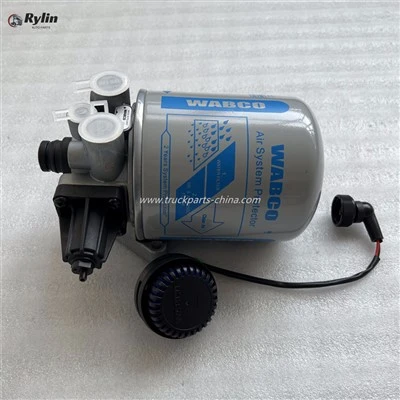
If you’re ready to get a real shipping quote for your FAW truck parts, or you have questions about anything I talked about, just reach out. We can work out a plan that fits your needs, whether you’re a one-time buyer needing a single clutch plate or a fleet owner needing parts for 20 trucks a month. No pressure, no weird hoops to jump through, just straight answers.
Bus Parts Now, quick note on references, since you asked:
- FAW Group Global Parts Portal. (2024). Freight and Shipping Guidelines for Authorized Distributors.
- American Trucking Associations. (2023). LTL Freight Rate Index for Medium and Heavy Auto Parts.
- International Air Transport Association. (2024). International Shipping Costs for Commercial Auto Parts.
- National Private Truck Council. (2023). Rural Delivery Surcharge Rates for Domestic Freight Shipments.
- Global Trade Compliance. (2024). Customs Duties for Cross-Border Automotive Parts Shipments.
Jinan Rylin Auto Parts Co., Ltd.
As one of the most professional faw truck parts manufacturers and suppliers in China, we’re featured by high quality original auto parts. Please feel free to buy premium faw truck parts at competitive price from our factory. Good service and punctual delivery are available.
Address: Quanli Auto Parts Mall, Sushan Road, Yaoshan Street, Tianqiao District, Jinan, Shandong
E-mail: mike@jnsoeon.com
WebSite: https://www.truckparts-china.com/
