If you’ve ever worked with CNC die sinker EDM (electrical discharge machining), you know that the process is as much about the electrode as it is about the machine itself. I’ve been a CNC die sinker EDM supplier for over a decade, and I can’t tell you how many times I’ve walked a new customer through a part that should have been perfect—until the electrode disintegrated mid-run, leaving a lousy, unusable cavity and hours of wasted work. The electrode isn’t just a tool here; it’s the core of every job. So today, let’s break down exactly what these electrodes are made of, why material choice matters, and how that plays into picking the right EDM setup for your work. CNC Die Sinker EDM

First, let’s get the basics straight: in CNC die sinker EDM, the electrode is a custom-shaped piece that you lower into a dielectric fluid bath (usually deionized water or oil) with a workpiece. When you apply a high voltage across the tiny gap between them, it creates controlled electrical sparks that erode material from the workpiece to get the exact shape you need. The electrode has to withstand thousands of these sparks without melting, deforming, or transferring too much material to the workpiece—otherwise, your final part will be off-spec. That’s why material selection is one of the first things I discuss with every new customer, even before we talk about machine specs or job timelines.
Let’s start with the most common electrode material we supply: graphite. If you do any amount of work with die sinker EDM, you’ve probably heard of graphite electrodes, and there’s a reason they’re the workhorse of the industry. Graphite is a form of carbon that’s processed into dense, uniform blocks, and it’s unmatched for a lot of EDM jobs. The biggest upside is its high melting point—around 3,600 degrees Celsius, which is way higher than the temperatures generated by EDM sparks (usually in the 8,000 to 12,000 degree range). That means it barely wears down during machining, especially in roughing passes where you’re removing a lot of material quickly.
For a lot of our customers, especially those making large die molds for automotive parts or consumer electronics, graphite is the go-to. It’s also lightweight compared to other materials, which makes it easier to handle when you’re programming the CNC to lower it into the tank with micron-level precision. The particle size of graphite matters a lot, too. We offer different grades: coarse graphite for roughing, which is cheaper and removes material fast, and fine or ultra-fine graphite for finishing passes. Fine graphite gives a smoother surface finish on the workpiece, which cuts down on secondary polishing work that adds time and cost to a job.
That said, graphite has downsides. It’s brittle, so if you’re machining complex, tiny geometries—like a mold for a medical component with 0.1mm diameter features—it can chip or crack during the machining process or when you’re handling it to mount it to the machine. Also, it produces fine carbon dust when it erodes, which can be a hazard if your machine doesn’t have a good filtration system. We always make sure our customers know to pair graphite electrodes with proper dielectric fluid filtration and dust extraction to keep their workspace safe and their machine running smoothly.
Next up, copper. Copper electrodes are the second most common material, and I recommend them a lot for jobs where graphite isn’t the right fit. Copper has excellent thermal and electrical conductivity, which means it produces a more consistent spark than graphite, especially in finishing passes. That consistency translates to a higher-quality surface finish, and it’s less prone to wear when you’re working with hard workpiece materials like tool steel or titanium—common in aerospace and mold making.
Copper is way more durable than graphite, too. It’s malleable, not brittle, so it’s ideal for complex, detailed geometries that would break if you tried to machine them from graphite. We work with a lot of medical device manufacturers that need tiny, intricate features for surgical tools, and copper electrodes are perfect for that because we can machine tiny, fine details without the risk of chipping. The downside of copper is its higher cost—both the material itself and the machining time. Copper is denser than graphite, so it takes longer to machine, and it wears faster during roughing passes, which means you might need to replace it mid-job, adding to material costs over time. There’s also something called copper-tungsten, a composite material that blends copper’s conductivity with tungsten’s strength, which is great for jobs that need both detail and durability, like EDMing deep, narrow cavities. It’s more expensive than pure copper, but the wear resistance makes it worth it for high-precision, long-run jobs.
Another material we supply, though less common, is silver tungsten. This is the premium option for the most demanding EDM jobs. Silver has even better electrical conductivity than copper, so it creates very stable sparks, and tungsten adds the high wear resistance. It’s used in ultra-precision applications, like making molds for microchips or aerospace components where even a tiny deviation in the part can lead to failure. The catch? It’s extremely expensive, so we only recommend it for jobs where graphite and copper just can’t deliver the required precision or longevity. We never push silver tungsten on a customer if a cheaper material will work—our job is to solve their problems, not upsell them on unnecessary materials.
I also get a lot of questions about other materials, like aluminum or brass. Aluminum is lightweight, so it’s sometimes used for very large, low-precision jobs where cost is a top priority, but it wears too fast for most standard die sinker EDM work. Brass is occasionally used for small, simple jobs, but its conductivity is lower than copper, so it doesn’t give the same surface finish, and it wears quickly, making it a poor choice for most commercial applications. We don’t stock these materials regularly because they rarely meet the needs of our customers, so we only supply them if a customer has a very specific, small-scale job that requires them.
Now, here’s what I always tell people: the right electrode material isn’t just about performance—it’s about balancing job requirements, cost, and turnaround time. If you’re running a high-volume roughing job for a car door mold, graphite is almost always the best choice because it’s fast, cheap, and durable. If you’re making a tiny mold for a pacemaker component, you need copper or copper-tungsten to get the fine details right. If you’re working on a microelectronic component where even a 0.001mm error is a dealbreaker, silver tungsten is the only way to go.
I’ve seen too many customers make the mistake of picking the cheapest electrode material without thinking through their job. Last year, a customer came to us with a job to machine a set of small mold inserts for phone cases. They had tried using graphite electrodes from another supplier, but the graphite chipped during machining, and the surface finish was so bad they had to spend 10 extra hours polishing each insert. We swapped them for fine-grain copper electrodes, and they cut their total job time by 15% because we didn’t have to do the extra polishing. That’s the kind of difference getting the electrode material right makes.
Another thing to consider when you’re working with electrodes is the size and complexity of the feature. Large, shallow cavities work well with graphite because it’s easy to machine in large blocks, and the wear is minimal. Deep, narrow cavities, though—those are where copper shines. The high conductivity of copper means the spark is more focused, so you can machine deep without the sides of the cavity eroding unevenly, something that’s way harder to do with graphite. We also offer custom-machined electrodes, by the way—we don’t just sell raw material. We work with your CAD files to machine the exact shape you need, with the right particle size or alloy, so you don’t have to do any extra work.
If you’re still new to CNC die sinker EDM, or if you’re dealing with a job that’s giving you trouble, don’t overcomplicate it. Pick up the phone, reach out, and we can walk through your requirements step by step. We’ll ask you about your workpiece material, the size and complexity of the cavity, your required surface finish, and your turnaround time, and we’ll recommend the right electrode material for your job. We also offer testing for small batches if you’re not sure which material to use, so you don’t have to commit to a whole batch of expensive electrodes that won’t work.
At the end of the day, the electrode is the unsung hero of die sinker EDM. A great machine with a bad electrode will produce bad parts, but a good electrode paired with a solid machine will deliver consistent, high-quality results every time. We’ve built our business on helping customers pick the right electrode material, and our track record of long-term partnerships is proof that approach works. Whether you’re a small shop just getting started with EDM or a large manufacturer looking to streamline your production, we have the materials, the expertise, and the custom machining capabilities to meet your needs.
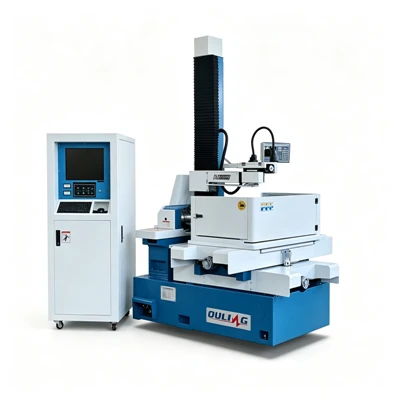
If you’re ready to talk through your next CNC die sinker EDM project and figure out the best electrode material for your job, feel free to reach out. We’re here to answer your questions, provide samples if needed, and help you get the results you’re looking for.
Upgraded High Speed Wire EDM References:
- Kunick, M. (2005). Electrical Discharge Machining (EDM) for Tool and Die Making. Industrial Press Inc.
- Pandey, P. C., & Shan, H. S. (2003). Modern Machining Processes. Tata McGraw-Hill Education.
- McGeough, J. A. (1988). Advanced Methods of Machining. Chapman and Hall.
- Campbell, R. (2019). Graphite Electrode Materials for EDM: A Guide for Manufacturers. SME International.
- Toshiba Machine Co. (2021). Die Sinker EDM Electrode Material Selection Handbook.
Taizhou Ouling CNC Equipment Co., Ltd.
As one of the most professional CNC die sinker EDM manufacturers and suppliers in China, we’re featured by quality products and good price. Please rest assured to buy advanced CNC die sinker EDM made in China here from our factory. Welcome to contact us for quotation.
Address: No. 9 jingang Road, Yangzhou City Jiangsu Province, China
E-mail: 574751243@qq.com
WebSite: https://www.oulingedm.com/
