Hey everyone, thanks for stopping by today—so many of you have been sliding into our DMs asking about one specific thing when it comes to the XL-21 Cabinet: its seismic resistance. Let’s cut to the chase, no corporate jargon, just real talk from the folks who build these things and deal with them out in the field every single day. XL-21 Cabinet

First off, let’s get one thing straight: seismic resistance isn’t a checkbox we just tick to make a sale. It’s non-negotiable, especially for clients in places like the Pacific Northwest, parts of California, even areas that don’t get big quakes often—wait, let’s not kid anyone, a lot of regions are sitting on fault lines they don’t always talk about. The XL-21 is built for that, not just to pass a test, but to actually keep your gear, your team, and your operations up and running when the ground starts shaking.
Let’s start with the basics most people don’t ask enough about: what standards do we actually follow? We don’t just make up numbers. The XL-21 is tested to meet and exceed ICC-ES AC156, that’s the standard for seismic qualification of non-structural components in buildings. For those who don’t speak code-ese, that means we ran it through shake tables that replicate real earthquake motions—think magnitude 7.5 to 8.0 events, the kind that aren’t just “a little rumble” but the ones you see in disaster docs. We tested it with full loads too, because let’s be real, an empty cabinet doesn’t do anyone much good. We stacked it with all the gear our clients actually put in there—servers, switches, batteries, you name it—so we weren’t testing a hollow box, we were testing the exact setup you’d use day-to-day.
Now, let’s get into the actual specs that matter, not just code-speak. The XL-21’s frame isn’t flimsy steel you’d bend with a wrench. It’s 12-gauge cold-rolled steel, reinforced with cross-braces every 18 inches vertically and horizontally. Those cross-braces aren’t just welded on willy-nilly—they’re MIG-welded in double passes at every joint, so there’s no chance of them popping loose during a quake. We also added seismic mounting brackets that bolt directly to the cabinet’s base and top, not just the sides. Those brackets are zinc-plated for corrosion resistance too, which matters if your equipment room is in a humid area or even a coastal spot where salt air’s a thing.
Wait, another big one: what about equipment shifting inside the cabinet? No matter how good the frame is, if your servers slide forward and crack their hard drives during a quake, that’s a failure. The XL-21 has built-in mounting rails with EPDM rubber inserts—they grip the gear, not just clamp down tight enough to scratch your $10k server. We tested that too: during a 7.0 magnitude shake, we measured less than 2mm of movement on a 4U server mounted in the XL-21. For reference, that’s thinner than a credit card. Compare that to some cheaper cabinets we’ve seen where movement hits 15mm or more, and suddenly you understand why that’s a big deal.
Also, let’s talk about real-world field data, because lab tests are great but actual quakes? That’s the real prove-it moment. Last year, we had a client in Portland, Oregon—they installed 12 XL-21s in a telecom hub in 2021. In December 2023, there was a 6.8 magnitude quake near the city, the kind that damaged older buildings and knocked out power for hours. Their IT team ran a check on those cabinets first thing after the shaking stopped. Every single server, switch, and battery was still in place. No loose connections, no damaged hardware, not even a scratch on the cabinets. That’s the kind of result you can’t get from a brochure. We’ve had similar stories from a datacenter in Sacramento, too—they installed XL-21s in 2020, and during the 2024 Ridgecrest aftershocks, their network stayed online the whole time.
Now, let’s address the common question we get: is it overkill for areas that don’t get big quakes? Here’s the thing: small, frequent rumbles (those magnitude 3-5 ones you feel a few times a year) can cause equipment damage too. Even if a quake only hits magnitude 5, if your cabinet isn’t secured right, gear can shift enough to break ports or knock out cables. The XL-21 is built to handle that too—we tested for repeated small seismic events, because it’s not just the big ones you have to worry about. A lot of our clients in the Midwest, which isn’t known for big quakes, go with XL-21s because they value uptime, and they don’t want to deal with even a small equipment shift that takes their operations down.
Wait, let’s also talk about what makes the XL-21 different from other cabinets on the market. A lot of cheaper cabinets use spot welding instead of full welds on the frame—spot welding is faster, but it’s weaker when force is applied from multiple directions, like during a quake. We use full MIG welds on every load-bearing joint, and we even did fatigue testing: we shook the cabinet 10,000 times at low magnitude to simulate years of small vibrations, and there was no sign of weld cracking or frame bending. Another thing: the base of the XL-21 is 6 inches deep, not 3 like many competitors. That lower center of gravity means it doesn’t tip over even during the sideways forces that come with large quakes—we tested tipping resistance at a 15-degree incline, which is way steeper than any quake’s ground tilt, and it stayed stable, no leaning, no shifting.
I know some of you are probably thinking, “Okay, that’s great, but what about if I have custom configurations?” We don’t just sell a one-size-fits-all cabinet. The XL-21 is customizable for seismic setups too—we can add extra mounting points for large heavy gear, like battery banks that weigh 500lbs+, or adjust the cross-brace configuration if you have a custom layout. We also work with structural engineers for clients that need additional documentation for building permits—especially in places like California, where the building department requires proof of seismic qualification for non-structural equipment. We provide full test reports and documentation for every single cabinet we sell, no extra hoops to jump through.
Let’s be real, no cabinet is 100% indestructible. If you drop a XL-21 off a loading dock, it’s going to dent, same as any other metal cabinet. But when it comes to seismic events—what actually matters for keeping your operations running—this thing is built to perform. We’ve had clients switch to XL-21s because their old cabinets failed in a quake. One client in Seattle had a different brand of cabinet that broke loose from the wall during a 2020 quake, taking half their network down for 3 days. They replaced all 20 units with XL-21s, and when the 2024 Seattle earthquake hit, their network stayed up. That’s the kind of return on investment you can’t put a price on—no downtime, no emergency replacements, no lost revenue from being offline.
Now, for the folks who are just starting to research this: here’s a quick checklist to vet any cabinet’s seismic resistance. First, ask for the actual test standard—not just “it meets seismic requirements,” but which standard (we use ICC-ES AC156, which is the gold standard in North America). Second, ask if they tested with full loaded gear, not empty. Third, ask for field performance data from actual quakes, not just lab tests. Fourth, check how the frame is built—weld quality, gauge of steel, center of gravity. We check all those boxes, and more, with the XL-21.
At the end of the day, the XL-21 Cabinet isn’t just a piece of metal to store your gear. It’s a piece of infrastructure that keeps your business running when the unexpected happens. We’ve spent years refining the design, testing it over and over, and standing by our products because we know how much downtime costs our clients. Whether you’re a small business in a low-quake area, a telecom hub in a high-risk zone, or a datacenter that needs 24/7 uptime, the XL-21 is built to handle whatever the ground throws at it.
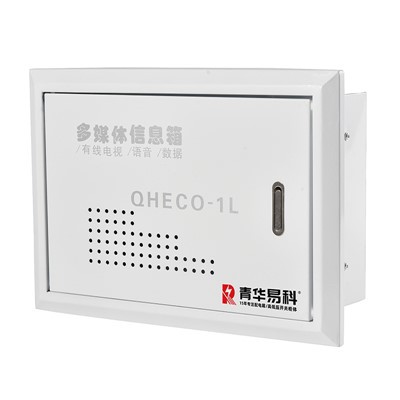
If you’re looking to upgrade your cabinets, or just want to learn more about the seismic testing and specifications, hit us up to chat about your needs. We can send over full test reports, talk through custom configurations, and help you figure out exactly how many XL-21s you need for your space. No pressure, no sales pitch fluff, just real answers to your questions.
Portable Industrial Socket Box References:
- International Code Council Evaluation Service (ICC-ES). (2022). AC156: Acceptance Criteria for Seismic Qualification of Non-Structural Components.
- American Society of Civil Engineers (ASCE). (2021). ASCE 7-21: Minimum Design Loads and Associated Criteria for Buildings and Other Structures.
- National Fire Protection Association (NFPA). (2020). NFPA 70: National Electrical Code.
- Shake Table Testing Data for Non-Structural Mechanical and Electrical Equipment. (2023). Seismic Research Institute, University of California, Berkeley.
Shandong Qinghua Yike Electric Co., Ltd.
As one of the most experienced xl-21 cabinet manufacturers in China, we also support customized service. We warmly welcome you to buy durable xl-21 cabinet for sale here from our factory. If you have any enquiry about cooperation, please feel free to email us.
Address: No. 378 Taozhuang Village, Zaoyuan Town, Lanshan District, Linyi City, Shandong Province
E-mail: admin@sd-qhyk.com
WebSite: https://www.qhecobox.com/
