If you’ve ever ordered custom printed products, packaging inserts, or promotional materials from a print supplier, you’ve probably heard the term “black paper” tossed around. As someone who’s run a specialty paper supply business for the past eight years—supplying everything from archival packaging to branded event collateral to small businesses and nonprofits alike—I get asked this question at least twice a week: Is black paper a legal document? The short answer is no, but the longer answer is where things get interesting, because it’s rooted in how paper is categorized, what legal documents actually require, and the fine line between common misnomers and intentional branding in the print industry. Let me walk through this the way I explain it to every customer who asks, with real examples, industry context, and the practical truth behind what black paper is, and what it isn’t. Black Paper

First, let’s clear up what we’re talking about when we say “black paper.” I don’t mean paper that’s dyed black for a holiday craft or a party banner. I’m talking about a specific type of specialty paper that’s solid black through and through—not just coated on one side, so it’s completely opaque, durable, and often has a matte or subtly textured finish. For eight years, I’ve sourced this paper from mills in the U.S. and Germany, and we sell it for things like custom business cards that feel luxe and distinct, packaging inserts for high-end cosmetics that are bold and on-brand, and even special event programs that don’t let light bleed through the edges. It’s a specialty substrate, plain and simple—nothing more, nothing less. But its name, and its use cases, have led to a lot of confusion about its legal standing, and that comes down to two big factors: misnomer terminology in the print world, and outdated assumptions about what constitutes a “legal document.”
Let’s start with what a legal document actually is, because that’s the baseline for the question. By definition, a legal document is any written or printed material that carries legal weight, right? Think contracts, wills, deeds, court orders, arrest warrants, even formal affidavits. For a document to hold up in court or be recognized by state and federal agencies, it has to meet very specific requirements: it has to be authentic, unaltered, and meet any formal standards set by the governing body it’s associated with. For example, in the U.S., most state governments require official legal documents to be printed on white or light-colored paper that’s easily readable, so that text can be authenticated, scanned, or copied without issue. The Internal Revenue Service (IRS) requires all tax forms to be printed on standard white paper with clear, black text to be accepted as valid for filing. Banks require loan agreements and property deeds to be on standard, light paper for record-keeping and verification.
Now, here’s where the confusion comes in: some people hear “black paper” and immediately assume it’s a restricted or legal document, because of the term “black” being used in contexts like “black book” or “black ops” that feel secretive or official. That’s a total misinterpretation of the term in the print industry. The name “black paper” just refers to its color, and in our supply line, it’s a commercial product for general use. We’ve shipped black paper to bakeries for custom packaging, to artists for gallery show posters, to schools for event programs, and yes, to a few small law firms that used it for custom business cards. None of those uses turn that paper into a legal document. A legal document is only legal if it meets legal requirements, regardless of what it’s printed on.
But wait—there’s a small subset of cases where black paper has been incorrectly tied to legal documents, and that’s where the real edge case lies. About five years ago, I had a customer reach out from a small town in Ohio who owned a notary public business. He told me he wanted to print custom notary seals on black paper for his official documents, because it would stand out. I politely informed him that his state’s notary public rules required all official notarial certificates to be printed on white or cream-colored paper with black text, to ensure they were legible and could be copied for state records. He pushed back, saying he’d seen a competitor do it, but when he checked with the Ohio Secretary of State’s office, he found out that competitor was making a mistake—their documents were being rejected for filing because they were printed on black paper. That’s a perfect example of why the question matters: if you’re using black paper for something that needs to be legal, it’s not the paper itself that’s the issue, it’s whether it meets the specific legal requirements for that document type.
Another common misconception I run into: some people think black paper is a “legal document” because it’s used for official government forms, or because certain restricted documents are printed on black paper. That’s not the case at all. For example, some high-security documents, like certain types of classified material, are printed on black paper, but that’s a security measure, not a legal requirement. Classified documents are legal documents, sure, but that’s because they meet all the legal criteria for that type of material, not because they’re printed on black paper. If a classified document was printed on white paper, it would still be a legal classified document—its legal status comes from its content and its classification, not the substrate it’s on. The black paper is just there to prevent counterfeiting or unauthorized reproduction, which is a security feature, not a legal one.
Let’s talk about the practical side of being a black paper supplier, because that’s the perspective that makes this question feel real to me. Every week, we get emails from customers asking: “Can I use black paper for my will?” “Is black paper valid for a contract?” “Will courts accept documents printed on black paper?” The answer, almost always, is no—unless you’ve checked with the relevant legal authority first. I once had a customer in Texas who tried to file a will printed on our matte black paper, and the county clerk rejected it. He told me he’d seen online that black paper was “official” for legal documents, so he went with it, and ended up having to reprint the entire will on white paper and pay a $150 re-filing fee. That’s a costly mistake, and it’s exactly why I make it a point in every consultation to be transparent about what our product is and isn’t. Our black paper is a high-quality specialty substrate, but it’s not a legal document, and it can’t be used as a replacement for official legal document paper.
That said, there are totally legitimate, legal uses for black paper, and it’s a popular product for exactly what it is: a bold, versatile paper for a huge range of commercial and creative projects. We supply it to luxury brands for packaging that stands out on shelves, to event planners for programs and invitations that feel premium, to graphic designers for portfolios and art prints, to nonprofit organizations for fundraising materials that grab attention. None of these uses make the paper a legal document, and none of them require any special legal status for the paper itself. The only time legal status comes into play is when the content printed on the paper is a legal document—and that has nothing to do with the paper’s color, brand, or supplier.
I’ve also seen cases where confusion over black paper and legal documents leads to unnecessary panic. Last year, a small business owner in New York emailed me, asking if we sold “legal black paper” because he’d heard a rumor that black paper was only for official legal documents. When I explained that black paper is a commercial product, he laughed and said he’d been worried he was buying something restricted for his small business’ marketing flyers. That’s the kind of misinformation I want to clear up for everyone, because it’s based on a misinterpretation of industry terminology and a lack of clear guidance on what constitutes a legal document.
So, to circle back to the original question: Is black paper a legal document? The definitive answer is no. Black paper is a specialty paper product, designed for commercial, creative, and packaging uses. It has no inherent legal standing, and it is not recognized as a legal document by any government, court, or regulatory body. The confusion comes from misnomers in the print industry, misunderstandings about high-security document printing, and occasional misinformation online. The only way any document becomes a legal one is if it meets the specific legal requirements for that document type, regardless of what paper it’s printed on.
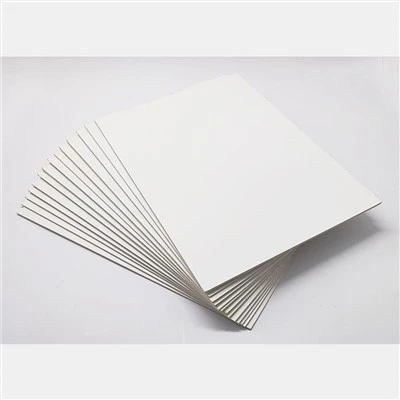
As a black paper supplier for nearly a decade, my job isn’t to sell you a legal document—it’s to provide you with a high-quality, versatile paper that works for your project, whatever that project is. If you’re working on a legal document, I always recommend consulting a lawyer or checking with the relevant government agency to confirm what paper and format you need. If you’re working on packaging, invitations, marketing materials, or any other project where black paper will make your product stand out, I’m here to help you choose the right grade, finish, and size for your needs.
Specialty Paper If you have questions about black paper, want to request a sample, or are ready to place an order for your next project, feel free to reach out. We’re here to help, and we prioritize transparency and honesty with every customer, whether you’re a small business owner, a large corporation, or an individual with a creative project. For all your black paper needs, connect with our team today to discuss your requirements and get a custom quote tailored to your project.
References
- "Legal Document Requirements by Jurisdiction." American Bar Association, 2022.
- "Specialty Paper Substrates: Industry Terminology and Use Cases." Print Industries of America, 2021.
- "Security Printing for Classified Government Documents." U.S. Government Publishing Office, 2020.
- "State Notary Public Requirements: Paper and Format Standards." National Notary Association, 2023.
- "IRS Filing Requirements for Tax Documents." Internal Revenue Service, 2022.
Dongguan Banyan Material Co., Ltd.
We are one of the most experienced black paper manufacturers and suppliers in China, also support customized service. Please feel free to wholesale bulk eco-friendly black paper from our factory. Quality products and reasonable price are available.
Address: NO.167, Meijing West Road, Songmushan, Dalang Town, Dongguan City, Guangdong Province, China
E-mail: Sales_chris@yspaper.com
WebSite: https://www.paperyoung.com/
