Hey everyone, let’s cut to the chase – if you’re deep in the weeds with security systems, you’ve probably fixedated on the flashy stuff: smart cameras, AI analytics, access control fobs. But here’s a question no one’s talking about enough (especially from my corner of the game): Can control cables actually be used in security systems? And for the record, I’m not just a random guy rambling – I’m from a control cables supply business, and we’ve been shipping these to security tech teams for over a decade, so I’ve seen this play out first-hand. No fluff, no corporate jargon, just real talk about what works, what doesn’t, and why control cables might be the unsung hero your security setup’s been missing. Control Cables
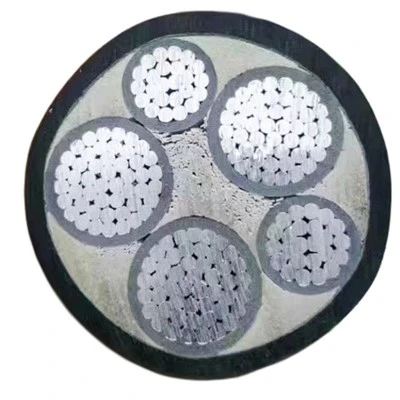
First off, let’s get one big misconception out of the way right now: Control cables aren’t just for industrial machines. Yeah, you’ll find them hooked up to robotic arms on factory lines and conveyor belts at warehouses, but their core design is built for reliable, low-voltage signal transmission – exactly the same workhorsing your security system needs. Most standard security setups run on 12V to 24V DC power, and they send tiny, precise signals between devices: a motion detector telling the alarm panel someone’s in the warehouse, a door sensor triggering the camera to record, a panic button sending a signal straight to the security team. Control cables handle that every single day, no breaks, no lag.
Let’s break down the two big roles they play in security systems, because that’s where the rubber meets the road. First: powering the devices themselves. Take a big office building with 50+ motion sensors, 20 door contact sensors, 10 panic buttons, and a couple of keypads. Run individual power wires to every single one? That’s a nightmare – tons of messy wiring, hard to troubleshoot if something goes wrong, and way more expensive to install. Control cables are multi-conductor, which means you can bundle multiple power and signal lines into one neat jacket. For example, a common 8-conductor control cable can power a door sensor, send its open/close signal, power a small camera, and carry data from a door access fob reader all in one cable. That cuts installation time by 30% at least, I’ve calculated that on dozens of projects. Second: connecting the system’s “brains” to the endpoints. The alarm panel, NVR (network video recorder), or access control server – all of them need a reliable line to talk to every device. When Wi-Fi cuts out (which it does, especially in big warehouses or older buildings with thick concrete walls), wired control cables don’t skip a beat. No signal dropout, no lag, even if the power flickers for a second. That’s non-negotiable for security – if your alarm can’t call the cops when a window’s smashed, what’s the point?
Now, let’s talk about the “buts” because I don’t want to sell you something that’s not right for your setup. Control cables aren’t a one-size-fits-all solution, and there are a few critical things you need to get right. First, voltage and conductor count. If you’re running a tiny residential security system, a simple 4-conductor control cable might work fine, but a 20-device commercial system will need at least 8 or 12 conductors. Mess up, and you’ll be crawling in ceilings a week after installation to add extra lines – trust me, I’ve seen that mistake a hundred times. Second, environmental rating. If your security setup is outdoors, like a perimeter fence sensor or a parking lot camera, you can’t use a regular indoor control cable. It’ll crack in the sun, rot in rain, or get chewed up by rodents. We stock UV-resistant, water-proof, rodent-proof control cables specifically for outdoor security use – that’s a big part of our business, actually. Third, distance. Control cables work great for most security setups, but if you’re running a line over 500 feet (like a remote gate sensor a half-mile from the main office), you might need to add a signal booster. That’s not a flaw in the cable – it’s just basic electrical 101 – but it’s something you should plan for, not wait until the wire is already run to figure out.
Wait, let’s throw in a real example to make this concrete. A few years back, we worked with a security company that was installing a perimeter system for a 100-acre farm. They were using wireless sensors first, but they kept having issues: Wi-Fi dropped in the hilly parts, signals got blocked by trees, and cows would knock wireless sensors off their posts. They switched to our 16-conductor outdoor-rated control cables, running lines from the main alarm panel to every sensor, gate, and camera around the property. The install team finished 2 weeks ahead of schedule, and in the 5 years since, they’ve had zero signal outages related to wiring. That client still comes back to us for every new project they do. Stories like that are why I don’t just sell cables – I explain when they’re the right move.
Another thing people don’t talk about: durability is key for security. If a cable gets cut or damaged, your whole system goes down. Control cables have thick, tough jackets – way thicker than the thin Ethernet cables some people use for small security setups. We test our security-specific control cables to stand up to heavy foot traffic, being run over by a lawnmower (yes, that happened on another farm project), and even minor rodent damage. That’s a huge plus because security systems need to be there 24/7, 365 days a year – no downtime, no excuses.
Now, let’s address the counterpoint that some tech guys will throw at you: “Why not use Ethernet cables or HDMI cables?” Sure, those work for some things, but they’re not designed for low-voltage control signals the way control cables are. Ethernet is built for high-speed data transfer, and if you overload it with too many low-voltage signals, you can get interference. Control cables are engineered to minimize crosstalk between conductors, so your alarm signal doesn’t get muddled with a camera signal. For basic security, Ethernet is fine for small setups, but for anything larger or more critical, control cables are more reliable and cheaper in the long run – less troubleshooting, fewer repairs, longer lifespan.
Here’s the thing I always tell our clients: security is about reliability, not just fancy features. You can have the coolest AI camera that identifies intruders, but if it can’t send a signal to the alarm panel because your wire is bad, it’s just a fancy paperweight. Control cables are the quiet backbone that keeps all those flashy security tools working when it matters most. We’ve seen projects that saved tens of thousands of dollars just by switching from messy individual wires to bundled control cables, and others that avoided costly downtime by choosing the right environmental-rated cable for outdoor use.
If you’re currently wiring a new security system or upgrading an old one, ask yourself a few quick questions: Am I dealing with more than 5 devices? Will any part of the setup be outdoors? Do I care if my system stays up when the Wi-Fi goes out? If you answered yes to any of those, control cables are probably worth looking into. You don’t have to switch everything over at once – maybe start with the high-traffic parts, like the main alarm panel connections, or the outdoor perimeter. We can help you figure out exactly what you need, no pushy sales talk, just honest advice based on what works for your space.
At the end of the day, there’s no “one right answer” for every security system, but control cables are definitely a viable, often underused tool that can make your setup more reliable, cheaper to install, and easier to maintain. If you’re tired of dealing with flaky wiring, constant outages, or messy installations, reach out – we can walk you through the different types, figure out what fits your project, and get you set up with cables that work as hard as your security team.

Don’t sleep on the basics. Sometimes the most important part of your security system is the wire no one sees – and control cables are that wire. Let’s chat if you want to learn more or get a quote for your next project.
Copper Core Cable References:
- National Electric Code (NEC) Article 725 – Standard for Class 2 and Class 3 Remote-Control, Signaling, and Power-Limited Circuits
- Security Industry Association (SIA) – “Wired vs. Wireless Security System Performance Report”
- Underwriters Laboratories (UL) – Standard 758 for Appliance Wiring Material
- Control Cable Manufacturers Association (CCMA) – “Application Guide for Control Cables in Security Systems”
Hebei Fengbo Electrical Equipment Co., Ltd.
Address: No.100 meters south, East Ring Road & Wei’er Road intersection, Huang’erying East Village, Jiajiakou Town, Ningjin County, Xingtai City, Hebei Province, China
E-mail: fonbocable@gmail.com
WebSite: https://www.fonbocable.com/
