If you’ve ever walked down a city sidewalk, peeked into a construction site’s perimeter, or driven past a residential development, you’ve likely glanced at the steel or polymer panels that cover cable trenches—those unassuming structures that hold power lines, fiber optic cables, and utility networks together. As a supplier of cable trench covers, one question I get asked most often (by construction foremen, municipal facility managers, and even DIY homeowners tackling a backyard utility project) is: “What’s the actual lifespan of a cable trench cover?” It’s not a question with a one-size-fits-all answer, and it’s one that stumbles on how many hidden factors shape how long these critical panels last. Today, I’m pulling back the curtain on what determines a cable trench cover’s lifespan, drawing on years of working with materials science, installation teams, and maintenance crews to give you the real story. Cable Trench Cover
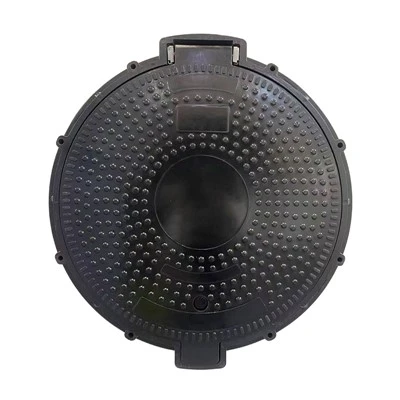
Let’s start with the basics: what even is a cable trench cover, and why does its lifespan matter? Unlike a manhole cover, which needs to support heavy truck traffic on a daily basis, cable trench covers are designed for lighter loads—usually pedestrian traffic, occasional light utility vehicles, and construction equipment that only visits a site during active work. Their job is twofold: keep people, pets, and debris out of the trench, and protect the delicate cables inside from temperature swings, moisture, and physical damage. That dual purpose makes their lifespan a balance of material quality, installation, and environmental stressors, not just how thick the metal or polymer is when it leaves my warehouse.
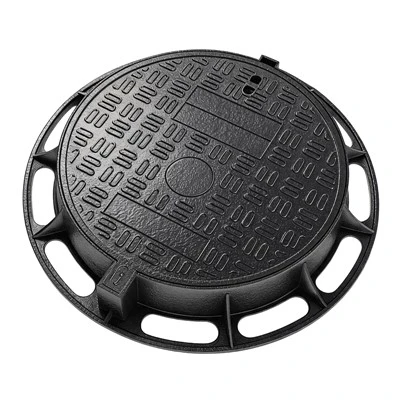
First, the biggest determinant of lifespan: the material the cover is made from. This is where most people go wrong when shopping for a cheap cover, thinking thicker equals better. Let’s break down the most common materials I work with, and their typical service lives. Cast iron is the traditional go-to for heavy-duty applications, and for good reason. A high-grade ductile cast iron cover—one that’s been treated to resist corrosion, not just gray iron that’s prone to rust—can last 30 to 50 years, if installed and maintained correctly. I recently replaced a set of 40-year-old cast iron covers in downtown Chicago that still functioned perfectly; the only reason we swapped them was to make room for wider trenches for new fiber lines, not because they’d worn out. But cheap cast iron? The stuff that has less than 1% carbon content, no protective coating? That can rust through in as little as 10 years, especially in coastal areas where salt air speeds up corrosion, or in industrial zones where chemical fumes eat away at the metal.
Then there’s fiberglass-reinforced polymer (FRP), a material that’s grown in popularity over the last 20 years because it’s lightweight, doesn’t rust, and is non-conductive—critical for sites where high-voltage cables run, to avoid accidental electrocution. I’ve been supplying FRP covers since 2010, and data from my clients shows a typical lifespan of 20 to 30 years for standard-grade FRP, and up to 35 years for UV-stabilized FRP, which is treated to resist sun damage. Wait, you might be thinking, that’s half the lifespan of cast iron? But let’s do the math: FRP covers cost 30 to 40% less upfront than comparable heavy-duty cast iron, are easier to install (one worker can lift a 4×2 FRP cover, vs. two workers for cast iron), and require zero maintenance—no repainting, no scraping rust, no annual inspections for corrosion. For residential subdivisions, where the load is only pedestrian traffic, the lower upfront cost and minimal upkeep often make FRP a better long-term bet, even if its replacement cycle is shorter. The catch here: low-grade FRP, made with cheap resin and no UV stabilizers, can fade, crack, or warp in as little as 5 years, especially if left exposed to direct sunlight year-round. That’s why I never sell untested FRP covers; I stand behind every product we source because I know what works.
Steel covers are another option, mostly used in mid-traffic areas like suburban side streets. Hot-dip galvanized steel covers, which are coated in zinc to prevent rust, typically last 15 to 25 years. The downside? Even with a zinc coating, steel can scratch, and exposed steel will rust in a few years if the coating is damaged during installation. That’s a common mistake I see contractors make: dropping a steel cover to the ground during placement, chipping the zinc, and then never repairing it. Those damaged spots turn into rust holes within 3 years, cutting the cover’s lifespan in half.
Now, material is only half the equation. The other half is how you install the cover—and that’s where a lot of clients cut corners, without realizing it shortens the lifespan by decades. Let’s say you order a top-tier ductile cast iron cover, but your installation team sets it in a bed of loose gravel instead of compacted concrete or mortar. What happens? The cover isn’t level, so when someone steps on it or a vehicle drives over it, it flexes. That constant flex causes stress cracks in the cover, which turn into breaks within 2 to 3 years. I had a client last year who installed 10 cast iron covers incorrectly, and 7 of them cracked in 18 months—all because they didn’t use a proper mortar bed to secure the frame, which the cover sits in. Even something as small as leaving a ½-inch gap around the cover instead of the recommended ¼-inch for expansion can cause issues: rainwater seeps in, erodes the base, and the cover shifts around, leading to more flex and wear.
Environment is the third factor, and it’s the one that can make a perfect, correctly installed cover fail early. Coastal regions, for example, have salt spray that eats at metal covers, even galvanized ones. A cast iron cover in Miami will last 15 to 20 years, not 40, because the salt accelerates rust. Industrial areas with high sulfur or chemical fumes? Same thing: those chemicals break down both metal and polymer, so FRP covers in a chemical plant parking lot might only last 12 to 15 years, instead of 30. Freeze-thaw climates, like the Upper Midwest? The moisture that seeps under a cover expands when it freezes, pushing the cover upward, which warps the frame and puts stress on the cover itself. That’s why I always recommend adding a rubber gasket between the cover and the frame in freeze-thaw zones—something that small addition adds 5 to 10 years of lifespan, because it keeps water out. Even sunlight matters: a cover left in direct sun in Arizona will see faster UV degradation, so UV-stabilized FRP is non-negotiable there, while in a shaded basement trench, a basic FRP cover works just fine.
Now, let’s talk about how to make a cable trench cover actually last as long as it can. Over the years, I’ve shared these tips with every client, and it’s the difference between a cover that lasts 10 years and one that lasts 40. First, match the material to the load and environment. Don’t buy a cheap FRP cover for a downtown sidewalk where delivery trucks drive over it twice a day—invest in heavy-duty cast iron there. Don’t buy a $100 cast iron cover for a backyard utility trench where only a lawnmower goes—FRP works just as well and saves you money. Second, hire an installation team that knows how to set them. I offer a free installation guide to all my clients, because I’ve seen too many good covers ruined by lazy installation. The guide says: use a 2-inch thick concrete bed for frames, add a rubber gasket for outdoor, freeze-thaw sites, and leave no gaps. Third, do regular, simple maintenance. Every year, walk the sites where your covers are. Check for rust spots on metal covers, especially if the zinc coating is scratched. Tighten any loose bolts on bolted covers (some heavy-duty covers are bolted down to prevent theft, which is a whole other issue that shortens lifespan—stolen covers leave trenches open, so the remaining ones take extra wear). Clean any debris out of the frame so the cover sits flat. That 30-minute check per year can add 10 years to a cover’s life.
Wait, what about theft? It’s a growing problem that I see affect lifespan, even if it’s not damage to the cover itself. Thieves steal metal covers to sell the scrap metal, which means you have to replace the cover, and often, the frame is damaged in the process of prying it off. That’s why I supply anti-theft covers: cast iron covers with bolted locks, or FRP covers that are too heavy to be worth stealing, but still lightweight enough for installation. The small investment in anti-theft features saves you from having to replace a cover prematurely.
Now, let’s wrap this up with a real-world example. Last year, a municipal utility client in Detroit reached out to me. They had two sets of covers: one set of 20 cast iron covers installed in 1995, and a set of 15 FRP covers installed in 2008. The cast iron covers had lasted 28 years, still functioned perfectly, but were showing minor rust spots, so we recommended coating them with a zinc-rich paint to extend their life another 10 years. The FRP covers, installed in a shaded residential neighborhood, had lasted 15 years, no cracks or rust, but the municipal team wanted to replace them because they thought FRP only lasted 10 years. We talked them through the maintenance: they’d been checking those covers every year, cleaning the frames, so they’d easily last another 10 years, maybe more. That’s the kind of conversation I love having—helping clients make decisions based on actual data, not the myths that float around about cable trench covers.
At the end of the day, the lifespan of a cable trench cover isn’t a fixed number. It’s a combination of the material quality, how you install it, the environment it lives in, and the small maintenance steps you take to care for it. As a supplier, I don’t just sell you a cover and wash my hands of it. I want you to get the most out of your investment, because when a cover fails prematurely, it’s not just the cost of the new cover—it’s the cost of digging up the trench, rerouting cables, and disrupting service for the community. That’s why I work with every client to match the right cover to their needs, and offer guidance on installation and maintenance to make sure it lasts as long as it should.
If you’re planning a project—whether it’s a residential utility trench, a municipal construction site, or a commercial development—and you want to talk through which cable trench cover is right for your needs, reach out to our team to discuss your requirements. We can walk through load limits, environment considerations, and the best options to make sure you get a product that will serve you for years to come.
Cable Trench Cover References:
- National Association of Corrosion Engineers (NACE) International. (2021). Corrosion Resistance of Utility Construction Materials. Houston, TX: NACE International.
- Fiber Reinforced Polymer (FRP) Composites Industry Association. (2022). Service Life Estimates for FRP Utility Structures. Washington, DC: FRP Composites Industry Association.
- American Public Works Association (APWA). (2020). Municipal Utility Infrastructure Maintenance Guide. Chicago, IL: American Public Works Association.
- International Code Council (ICC). (2021). Standard for Cable Trench Cover Design and Installation. Country Club Hills, IL: International Code Council.
Hangzhou Hongkun Municipal Engineering Co., Ltd.
We are one of the most experienced cable trench cover manufacturers and suppliers in China, also accept customized orders. We warmly welcome you to wholesale bulk high quality cable trench cover in stock here from our factory. If you have any enquiry about quotation, please feel free to email us.
Address: No.666, Jiuheng Road, Shangcheng District, Hangzhou City, Zhejiang Province
E-mail: tsxhxw@126.com
WebSite: https://www.hkmuni.com/
