If you’ve ever worked with industrial machinery, pneumatic tools, or even something as mundane as a paint sprayer, you’ve probably used a pneumatic system without even realizing it. But have you ever stopped to wonder how those systems keep running smoothly, without sputtering, clogging, or causing damage? That’s where a pneumatic filter regulator comes in — and if you’re new to the world of pneumatic parts, this is going to be your go-to guide for the basics, straight from a supplier who’s been in the game for years. Filter Regulator

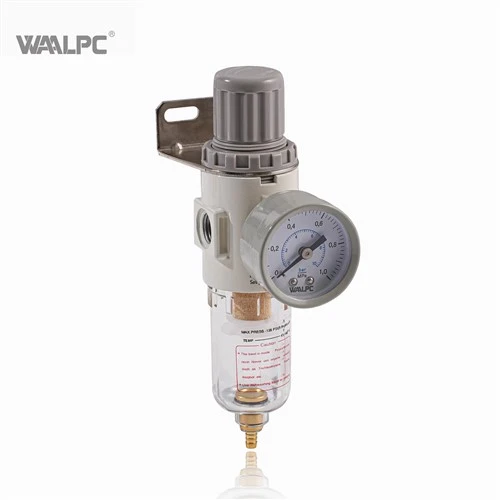
First, let’s break it down like we’re chatting over coffee (no stuffy engineering jargon, I promise). A pneumatic filter regulator is basically two important parts in one compact device that lives in your air line — the pipe that carries compressed air from your compressor to your tools or machines. Think of it as a gatekeeper and a stabilizer rolled into one. It does two key jobs: first, it cleans the compressed air so there’s no gunk ruining your equipment, and second, it keeps the air pressure steady, so your tools don’t work too hard or too fast.
Let’s start with why that first job matters. Compressed air from your compressor isn’t pure, dry air. It’s usually loaded with water vapor, tiny oil droplets from the compressor’s lubrication, and even dust or metal shavings that get pulled in from the factory floor. If that air hits a pneumatic tool or a delicate machine part, all that gunk builds up over time. That means stuck valves, clogged hoses, tools that wear out twice as fast, and unexpected downtime — which every shop manager knows is a killer for productivity. The filter part of this device traps all that stuff before it can cause trouble. It’s like a coffee filter, but for air — you pour the dirty, air through, and only the clean stuff comes out the other end.
Now the regulator part, that’s the pressure control. Compressors usually pump out air at way higher pressures than most tools can handle. For example, a compressor might run at 150 PSI, but a nail gun only needs 90 PSI, and a delicate labeling machine might need just 50 PSI. If you run full 150 PSI through those tools, you’ll break them, or they’ll work erratically. The regulator steps in here: you twist a knob, set the pressure you need, and it automatically adjusts the incoming high-pressure air down to that exact steady level. If the air pressure dips a little, it boosts it back up; if it spikes, it cuts it back. No more guessing, no more wasted energy running at too high a pressure, no more broken tools.
You might be thinking, “Wait, why not just use a separate filter and a separate regulator? That seems cheaper.” Sure, you could, but let’s be real — most shops don’t have the space for two extra devices on every air line, and it’s way more convenient to have one unit that does both jobs. Plus, when the two parts are built as one, they’re calibrated to work together better than if you pick random ones from different brands. That’s the kind of thing we hear all the time from our customers: they tried separate parts, had issues with misaligned pressure or leftover gunk getting through, and switched to our combo units once they realized how much easier and more reliable it is.
Now, let’s talk about where you’d actually use these things. Pneumatic filter regulators are everywhere, even if you don’t see them. If you run a woodworking shop, you’ll find them on the lines feeding nail guns, sanders, and CNC routers. If you’re in automotive manufacturing, they’re on the lines for painting cars, operating robot arms, and running assembly tools. Even smaller operations, like a sign shop using air-powered plasma cutters or a bakery using pneumatic packaging machines, rely on these. Anywhere compressed air is used, there’s almost always a filter regulator somewhere in the line, usually close to the tool itself for extra precision.
But it’s not one-size-fits-all, right? Let’s get into the different types, because that’s where a lot of first-time buyers get confused. The main differences are in the filter’s micron rating (that’s how small the particles it traps are) and the regulator’s pressure range. For example, a general-purpose unit might have a 5-micron filter, which is great for trapping most dust and water, works for pressures up to 150 PSI, and is perfect for most tools. But if you’re working with super delicate equipment, like medical devices or electronics, you might need a 1-micron filter to catch even the tiniest particles that could damage sensitive parts. And if you’re using a heavy-duty machine that runs at 200 PSI, you’ll need a unit rated for higher pressures, not the standard 150 PSI one.
Another thing to note is the auto-drain vs. manual-drain feature on the filter. Over time, the trapped water and gunk build up in the filter’s bowl, and you have to get rid of it otherwise it’ll back up into your line. A manual-drain means you have to twist a valve or pull a plug to empty the bowl — that’s fine for lines where someone is checking it regularly, but if you have a line that runs 24/7 without anyone nearby, an auto-drain is way better. It automatically flushes out the buildup at set intervals, so you don’t have to worry about it getting clogged. That’s a big time-saver for our industrial customers who run lights-out operations.
Now, let’s clear up a common myth: some people think filter regulators just “waste” air, but that’s not true. The regulator only takes the pressure you need, so you’re not running extra air that you don’t use. In fact, using the right pressure for your tools saves you money on electricity, because your compressor doesn’t have to work as hard to push extra high-pressure air through hoses. And the filter keeps your tools running longer, so you’re not spending money on replacements or repairs every few months. We’ve had customers tell us that switching to the right filter regulator cut their tool maintenance costs by almost 30% — that’s a big win for any business, big or small.
So, when should you replace your pneumatic filter regulator? It’s not a set-it-and-forget-it part, but it doesn’t need replacing every year, either. You’ll know it’s time when you notice your tools are acting up — sputtering, inconsistent pressure, or if your filter bowl is getting clogged no matter how often you drain it. If you’re seeing water in your air tools, that’s a sign the filter isn’t working as well as it should. Or if the regulator won’t hold a steady pressure anymore, that’s another red flag. Our team always recommends inspecting them at least once a year, or more often if you’re running in a dusty or high-moisture environment.
Now, as someone who’s been supplying these parts for years, I can tell you that the biggest mistake we see customers make is buying the cheapest filter regulator they can find. Sure, it’s cheaper upfront, but it’s not built to last. Cheap parts often have flimsy bowls that crack, filters that get clogged easily, and regulators that can’t hold steady pressure. That means more downtime, more repairs, and in the long run, you’re spending way more than if you’d just gotten a reliable unit to begin with. We build our filter regulators with heavy-duty bowls, metal parts instead of plastic, and calibrated regulators that last for thousands of hours of use — we stand by that, and we back every unit with a warranty, because we know how important it is for your operations to keep running.
Wait, let’s also touch on something that’s super important for small business owners: sizing your filter regulator correctly. If you get one that’s too small for your air line, it’ll restrict the air flow, so your tools won’t run as fast as they should. If you get one that’s too big, it’s a waste of money and unnecessary bulk. That’s why we always ask our customers a few quick questions before suggesting a unit: what’s the line size you’re using, what’s the maximum air pressure in your system, and what kind of tools or machines are you connecting it to. It’s not guesswork, it’s just making sure you get the right part for your specific needs, not a one-size-fits-all that doesn’t work for you.
I remember a few years back, we had a customer who ran a small auto body shop. He was using a cheap filter he’d bought online, and every few months, his paint sprayers would get clogged, leading to messy paint jobs and lost work. He finally reached out to us, and we recommended a medium-duty filter regulator with a 1-micron filter, perfect for his painting tools. He told us later that since he installed it, he hasn’t had a clogged sprayer, and his paint job quality went way up — that’s the kind of result we love to see. It’s not just about selling a part, it’s about helping someone avoid headaches and make their business run better.
Another thing: maintenance tips for your filter regulator, so it lasts as long as possible. First, check the pressure setting regularly. Sometimes, after a compressor cycle, the pressure can shift a little, so you should double-check that your regulator is set to the right level every few weeks. Second, clean or replace the filter element as needed. If you have a manual drain, empty the bowl every week or so, and if your filter is a disposable one, replace it every 6 months (or more often if you’re in a super dirty environment). Third, make sure the unit is mounted correctly — usually, it should be mounted upright, so the water in the bowl drains properly, and within easy reach so you can adjust the pressure or drain it without trouble.
Okay, let’s wrap this up. A pneumatic filter regulator is a small but critical part of any compressed air system. It cleans your air to protect your tools, keeps pressure steady to make your work consistent, saves you money on energy and repairs, and fits right into your line without taking up extra space. Whether you’re a small shop owner with a few nail guns or a factory manager with dozens of pneumatic machines, getting the right filter regulator is one of those small investments that makes a huge difference in how your operations run.
If you’re not sure which one you need, or you’ve been dealing with inconsistent air pressure or clogged tools, we’re here to help. We work with all kinds of businesses, from small workshops to large industrial facilities, and we can walk you through choosing the right unit, answer any questions you have about installation or maintenance, and make sure you get a part that fits your needs and your budget. Don’t let subpar air quality or wobbly pressure hold your work back — reach out to us to start chatting about your requirements today.
Air Lubricators References
- Compressed Air and Gas Institute. (2021). “Pneumatic System Components: Filter-Regulator Combinations.” Industry Technical Report.
- Parker Hannifin Corporation. (2022). “Guidelines for Selecting and Maintaining Filter-Regulator Units for Industrial Air Systems.” Product Application Note.
- Occupational Safety and Health Administration (OSHA). (2020). “Compressed Air Safety for Industrial Machinery and Tools.” Safety Bulletin.
- SMC Corporation. (2021). “Micron Rating and Filtration Efficiency in Pneumatic Filters.” Technical Data Sheet.
- Fluid Power Society. (2022). “Cost Savings from Proper Pressure Regulation and Filtration in Pneumatic Systems.” Industry White Paper.
Hangzhou Evershine Pneumatic Import & Export Co., Ltd.
Hangzhou Evershine Pneumatic Import & Export Co., Ltd. is one of the most professional filter regulator manufacturers and suppliers in China, featured by high quality pneumatic components. Please rest assured to wholesale bulk durable filter regulator from our factory. Welcome to contact us for custom service and OEM service.
Address: Hengkun Smart Industrial Park, No.176, Golf Road, Yinhu Street, Fuyang District, Hangzhou City, Zhejiang Province, China 311400
E-mail: Felix@waalpc.com
WebSite: https://www.evspneu.com/
